

The aviation industry depends on thousands of precisely engineered components working together to ensure aircraft operate safely, efficiently, and reliably. From fasteners and fittings to complex structural and mechanical components, every aircraft part has an important function. Understanding the different types of parts used in aviation is essential for airlines, maintenance organizations, aircraft operators, and aviation professionals.
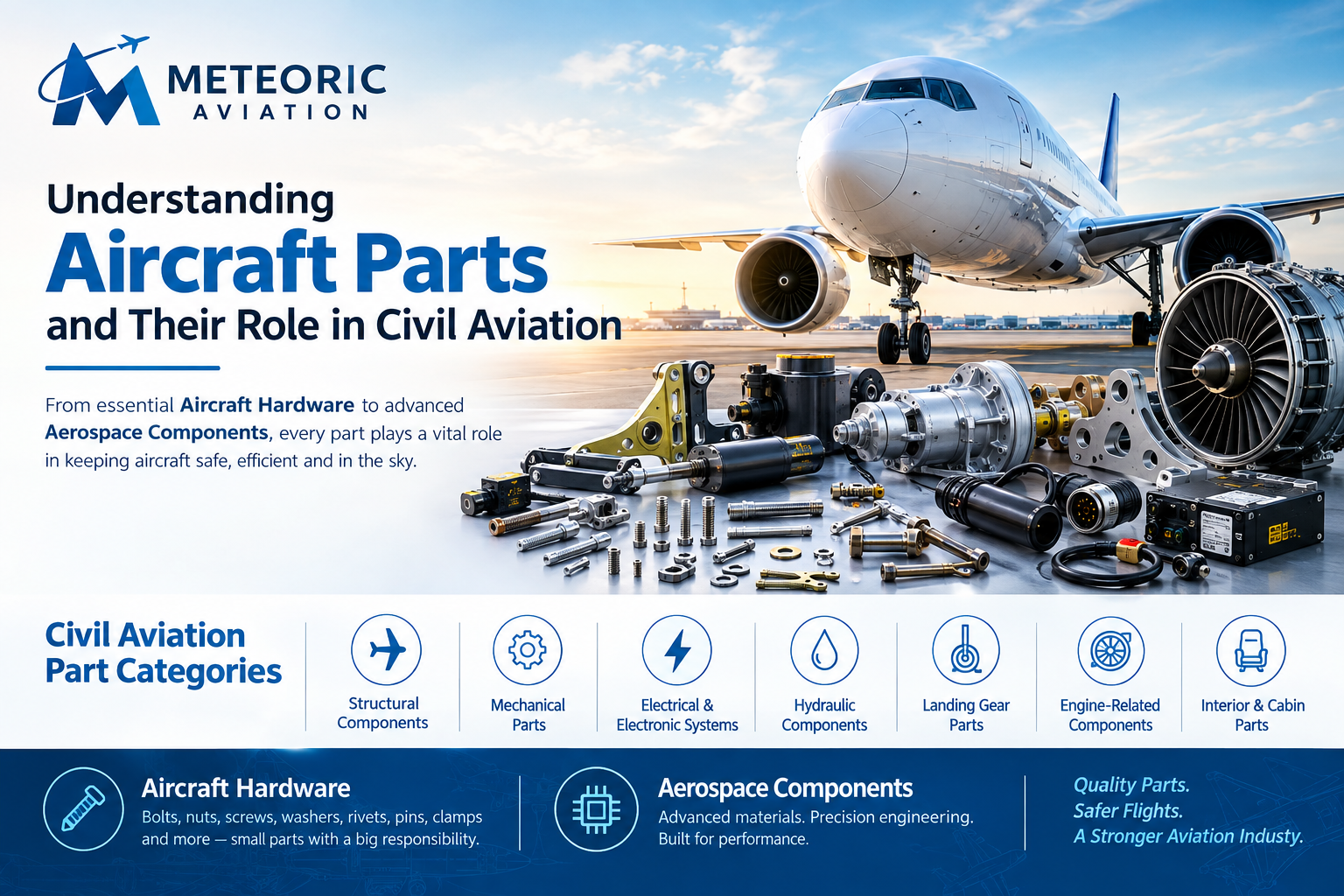
Exploring Civil Aviation Part Categories
Aircraft parts can be grouped into several civil aviation part categories, depending on their purpose, location, and technical specifications. These categories can include structural components, mechanical parts, electrical systems, hydraulic components, landing gear parts, engine-related components, and various interior and cabin parts.
Structural parts form an important part of an aircraft's overall construction. They help maintain the aircraft's strength and integrity during flight. Mechanical components, meanwhile, support systems such as flight controls, landing gear, doors, and other moving assemblies.
Electrical and electronic components are equally important in modern aircraft. Avionics, sensors, wiring, connectors, and control systems help pilots and aircraft systems monitor and manage critical functions.
The Importance of Aircraft Hardware
Aircraft Hardware represents many of the smaller but essential components required to assemble, maintain, and repair aircraft. These can include bolts, nuts, screws, washers, rivets, pins, clamps, brackets, and specialized fasteners.
Although these components may appear relatively simple, aviation hardware must meet demanding specifications. Aircraft operate under changing temperatures, vibration, pressure, and significant mechanical loads. Consequently, hardware used in aviation applications must be manufactured and selected according to appropriate technical and quality requirements.
Proper identification and sourcing of Aircraft Hardware can also help maintenance teams reduce downtime and ensure that replacement components are suitable for their intended applications.
Understanding Aerospace Components
The term Aerospace Components covers a broad range of parts used throughout aircraft and aerospace systems. These components may be manufactured from advanced metals, alloys, composites, and other specialized materials designed for demanding operating environments.
Modern aerospace manufacturing places significant emphasis on precision, durability, weight reduction, and reliability. Even relatively small components can contribute to an aircraft's overall performance and operational efficiency.
Depending on the application, aerospace components may be found in aircraft structures, propulsion systems, landing gear, hydraulic systems, fuel systems, flight controls, and cabin equipment.
Why Quality Matters in Aircraft Parts
Quality and traceability are critical considerations when dealing with aircraft parts. Aviation maintenance requires components that meet the specifications and standards applicable to the aircraft and its particular system.
Using the correct part helps maintenance professionals maintain aircraft reliability while supporting safe and efficient operations. Documentation, identification numbers, specifications, and appropriate certification can also play an important role when sourcing replacement components.
For aviation organizations, having access to reliable aircraft parts information can make it easier to identify suitable components and understand their applications.
Supporting the Aviation Industry
As civil aviation continues to evolve, aircraft manufacturers, airlines, maintenance organizations, and suppliers require increasingly specialized components. Technological developments are also introducing new materials and manufacturing techniques that are changing how aircraft parts are designed and produced.
From essential Aircraft Hardware to sophisticated Aerospace Components, every part contributes to the functionality of an aircraft. Understanding the various civil aviation part categories provides a useful foundation for professionals involved in aircraft maintenance, procurement, manufacturing, and aviation operations.
For businesses and aviation professionals looking for information about aircraft parts and related products, exploring specialized aviation resources can provide valuable insight into available components, applications, and industry requirements.
Comments
Log in or sign up to join the conversation.