

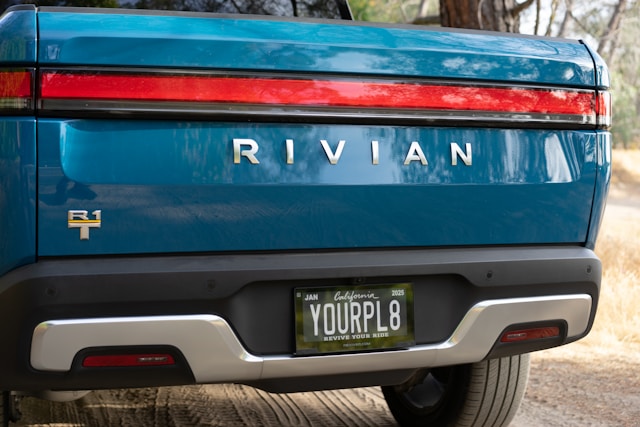
Photo by Clayton Cardinalli on Unsplash
Rivian Automotive (RIVN) has been teetering on the edge for months. The EV startup's high-end R1S and R1T models, once darlings of the adventure-seeking luxury crowd, have struggled as demand cooled following the phase-out of federal tax credits in late 2025. Production scaling issues, persistent cash burn, and competition from Tesla (TSLA) and legacy automakers have left investors jittery.
Hopes pinned on the upcoming R2 – a midsize SUV designed to broaden appeal and drive volume – were tested this week when Rivian detailed pricing and timing. Instead of the eagerly awaited lower-priced base model priced around $45,000 launching, the Rivian Performance trim priced much higher at $57,990 (with Launch Package pushing it near $60,000) will come to market first. The price-competitive model won't arrive until late 2027 – at the earliest.
The news triggered an immediate share drop, amplifying fears that Rivian would remain stuck selling pricier vehicles few could afford in a softening EV market. Without fresh capital or demand catalysts, the company's path to profitability looked increasingly precarious – potentially forcing more dilution, cost cuts, or worse.
Uber to the Rescue!
That changed dramatically yesterday when Uber Technology (UBER) and Rivian announced a landmark partnership. Uber committed to deploying up to 50,000 Rivian vehicles as fully autonomous robotaxis on its platform, starting with an initial order of 10,000 R2-based robotaxis from 2028. The deal includes a direct investment: Uber will put up to $1.25 billion into Rivian, beginning with a firm $300 million commitment and the balance tied to production and deployment milestones. Uber also secured an option for an additional 40,000 vehicles by 2030.
The announcement sent RIVN shares soaring in pre-market and early trading, reflecting investor relief at the scale of the vote of confidence. Rivian's R2 platform – compact, efficient, and built on the company's next-gen architecture – will serve as the hardware backbone for these driverless fleets, integrated with third-party autonomy tech.

What the Deal Means for Rivian's Future
This partnership delivers immediate breathing room. The investment bolsters Rivian's cash position, helping fund R2 ramp-up and ongoing operations amid ongoing per-vehicle losses. More critically, the committed volume—potentially tens of thousands of units—provides production visibility and economies of scale that Rivian desperately needs. Unlike traditional retail sales, fleet deals with Uber could offer steadier order flow and reduce reliance on volatile consumer demand.
Rivian already has a high-profile software and tech alliance with Volkswagen (VWAGY), expected to inject roughly $2 billion more in 2026. The Uber deal complements that by targeting future robotaxi revenue streams, positioning Rivian in the high-growth autonomy space.
However, parallels to Uber's existing Lucid Motors (LCID) deal raise caution. Despite promises to provide 20,000+ vehicles, it hasn't helped LCID stock, which has plunged 70% since the agreement was announced.
Bottom Line
The Uber investment and fleet commitment represent a critical lifeline, injecting capital and securing future demand that could keep Rivian's factories running through the R2 launch window. Yet challenges remain: Rivian still loses money on every vehicle sold, and aggressive scaling could amplify losses before margins improve. The delayed low-cost R2 trims until late 2027 mean Rivian's offerings remain largely out of reach for mainstream buyers in the near term, limiting organic consumer growth.



Comments
Log in or sign up to join the conversation.