

Many people felt the brunt of a weak currency, skyrocketing inflation, and economic uncertainty as the Turkish lira fell to a new record low against the US dollar on Tuesday.
Turkey's lira was the worst-performing emerging market currency on Tuesday, falling more than 4% to a low of 10.36 vs the US dollar.
Since the inflation rate in October of last year was approximately 20%, an independent committee of academics and former government officials calculated that the rate was closer to 50%.
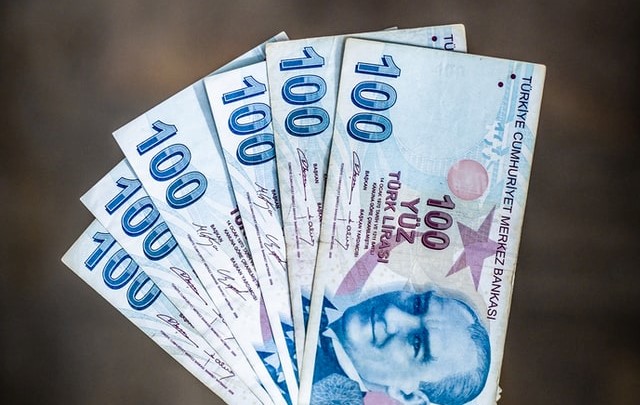
Photo by Omid Armin on Unsplash
Erdogan is a supporter of lowering borrowing prices in order to stimulate economic growth. Economists disagree on the advantages of a depressed currency, and the present implications of this policy may be observed in Turkey.
Imports, gasoline, and basic household essentials have all become much more expensive as a result of inflation, which is pushing up their costs. Furthermore, a diverse spectrum of raw materials is imported into Turkey's industrial sectors. Since September of last year, Turkey's central bank has raised interest rates by 3%.
Foreign investors have fled the nation, while Turkish people have shifted their money into hard currencies such as the US dollar, Euro, and gold. Because of that, the demand for the Turkish lira decreased. This has a dramatic effect on the Forex industry, which is the world’s largest financial market. If there was a period when FX brokers employed promotions for financial traders who traded with the Turkish lira, this is no longer the case. As the competition among FX brokerages grows, they aim to provide benefits to traders who deal with hard currencies such as USD, Euro, and so on.
Turkish President Recep Tayyip Erdogan's first years in power were marked by rapid economic development. Despite this, he believes that the country's economy is robust and that Turkey would ascend to the top once the pandemic is over.
Erdogan's administration has targeted large retail chains in response to rising food prices. To reduce food prices in Turkey, he directed agricultural cooperatives to construct 1,000 additional outlets.
He has recently labeled students who camped out in parks to protest the excessive cost of accommodation as terrorists.
"It's a weird call that the Erdogan camp believes development and employment will win them the next election," currently scheduled for 2023, says emerging market expert Timothy Ash.
What’s Wrong With Turkish Lira?
Turkish President Recep Tayyip Erdogan announced plans to remove ten foreign ambassadors from the nation.
On Monday, the currency hit a record low of 9.82 to the dollar in London time, when it was trading at 9.738 to the dollar.
Turkish President Recep Tayyip Erdogan stated on Saturday that the embassies of the United States and nine other Western countries should be declared "persona non grata" because they advocated for the release of Turkish businessman Osman Kavala.
Despite growing inflation, Turkey's central bank cut its primary interest rate, and experts fear the currency will suffer more if President Recep Tayyip Erdogan continues on this path. It has lost 24 percent versus the US dollar so far this year.
"If Erdogan's threat is carried out," Teneo co-President Wolfango Piccoli said on Monday, "it would cause the largest crisis between Turkey and the Western world since the AKP took government in 2002."
According to Piccoli, "none of the diplomats have been formally notified" of Erdogan's demands, which the Turkish Foreign Ministry has yet to follow. Turkish Foreign Minister Mevlut Cavusoglu, who is in charge of enforcing the instruction, has not responded.
Erdogan's words damaged the lira even further, fueling fears of increasing hostility between the West and Turkey. Investors have been concerned about the central bank's lack of independence from Erdogan as Erdogan has referred to interest rates as "the devil" and thinks that lowering them would cut inflation.
According to Timothy Ash, an emerging markets analyst at BlueBay Asset Management, a lack of Western diplomatic presence in Ankara may have an impact on Turkish President Recep Tayyip Erdogan. "Investment in Turkey will suffer as a consequence of the 10's deterioration of relations with the Erdogan government."
As a consequence of Erdogan's efforts, half of Turkey's top ten trading partners are situated in the ten countries whose ambassadors the Turkish leader targeted. In addition, the alliance includes seven NATO and six EU member nations.
"It is obvious that the Turkish Lira will remain under severe pressure, having hit many record lows in the preceding week," Teneo's Piccoli said.
The lira's value has dropped by one-third since December as a result of its continuous devaluation versus the dollar. It has dropped by more than 20% since September, when the central bank started lowering interest rates, making it the greatest drop among emerging markets.
"This lira move is ludicrous but fully predictable," said Win Thin, global head of currency strategy at New York-based Brown Brothers Harriman. When you're worth less than the Argentine peso, you have to create an impression.
Before the decision was announced, the chairman of Turkey's main business organization advised the central bank not to lose sight of its core aim of decreasing inflation.
According to central bank figures, the government owes $446 billion in foreign currency, which might cause instability if the currency continues to fall.
Turkish companies and the government must repay $13 billion in foreign-currency loans in the last two months of the year. According to the latest current figures, $8 billion is expected to mature over the following ten months, the largest of any given month.
The BIST 100 Index rose after Turkey's central bank said that it would enable the country's currency to appreciate by up to 3% in value. The yield on 10-year government bonds increased by 57 basis points, the most since September.


Comments
Log in or sign up to join the conversation.