


The Federal Reserve is steering through a thicket of macro crosscurrents, and the challenge is sharpening amid a new report that President Trump has been calling Chair Kevin Warsh since he took the helm at the central bank in May.
The Wall Street Journal reports that President Trump has “repeatedly” called Fed Chair Kevin Warsh—discussing AI and Iran, but avoiding interest rates. That backdrop may sharpen the bond market’s sensitivity to any hint of political pressure on the central bank, especially given Trump’s history of urging Warsh’s predecessor to cut rates.
According to the Journal, “The president calls Warsh in bursts… according to people familiar with the matter.” The sources said Trump called “several times in a stretch of days, then quiet for longer periods. Trump has sought Warsh’s counsel on a range of matters, including how the war in Iran and the rapid rise of artificial intelligence are affecting the economy, some of the people said.”
How or if the bond market reacts to this reporting, and whether it’s a sign that Warsh will face rate-cutting pressure, will hinge on traders’ read of the political backdrop. The Journal’s article will surely increase scrutiny of Warsh at his next press conference during the upcoming policy meeting in September, which will include new Fed economic projections.
Fed Chair Kevin Warsh’s debut press conference last month drew a skeptical, cautious reaction from Wall Street, headlined by a rise in long-term Treasury yields as the bond market demanded what some call a “credibility premium.” Analysts criticized the disconnect between Warsh’s hawkish rhetoric on price stability and the Fed’s decision to hold rates steady despite three internal dissents, while his deliberate move to end detailed forward guidance left investors unsettled by the lack of clarity on future rate paths.
Next week’s July report on consumer inflation will provide a key update for deciding if the rise in pricing pressure due to the Iran war is temporary. Reports this week that a new deal is being negotiated to reopen the critical Strait of Hormuz waterway, and thereby facilitate more energy exports, could help keep Treasury yields stable/lower while easing pressure on headline inflation in the months ahead. In that case, the Fed’s patience on rates may look prescient in hindsight.
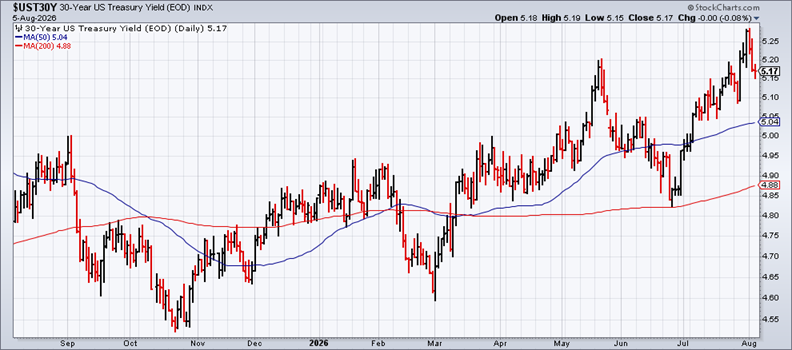
Optimists point to the pullback in the 30-year Treasury yield this week. After rising to a 19-year high on Friday, the most inflation-sensitive maturity has fallen in each of the three trading sessions through Wednesday.
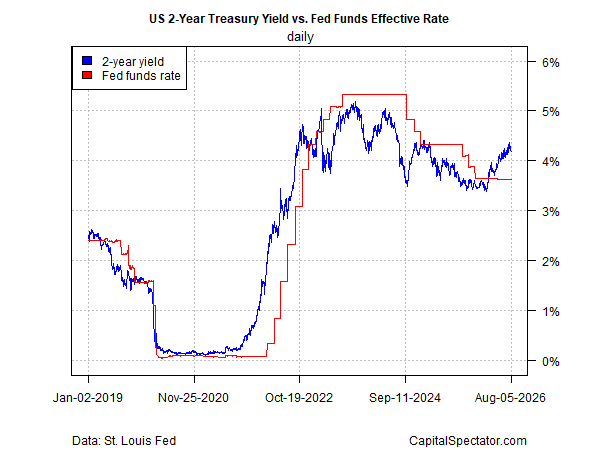
The policy-sensitive 2-year has also fallen in recent days, although it remains well above the effective Fed funds rate – a sign that the market is still pricing in a rate hike.
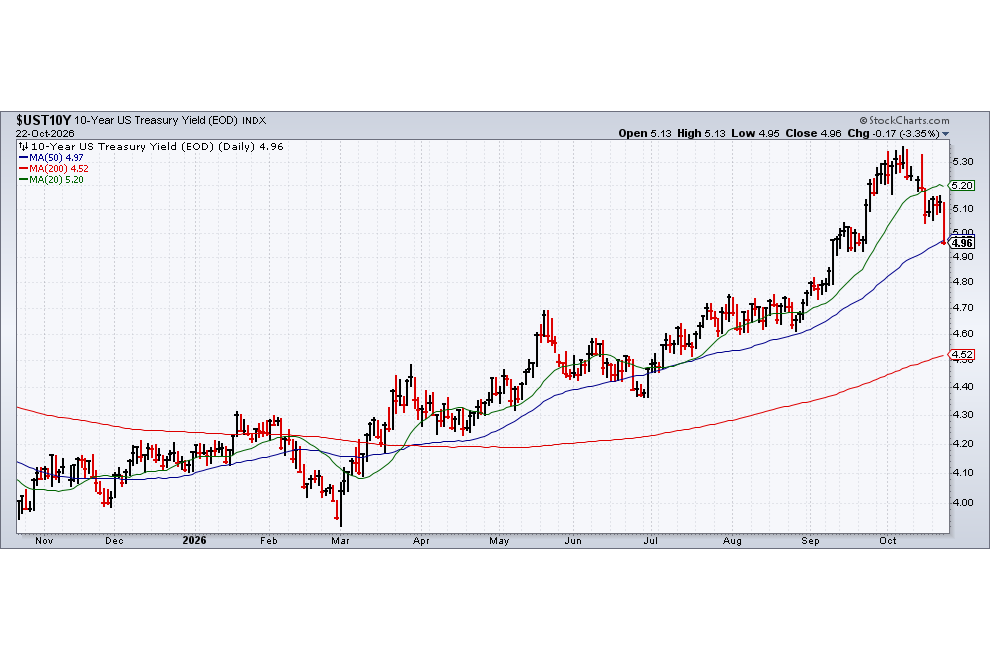
It’s unclear if Treasury yields have peaked or will continue to rise further and raise the pressure on the Fed to hike. Fed funds futures are again pricing the odds of a rate hike next month as basically a coin flip. Yet the fact remains that multiple risk factors are spinning in a grey zone of ambiguity – Iran, inflation, economic activity – and so the Fed still faces an unusually difficult period for managing policy decisions.
A complicating factor is the view by some analysts that the Fed is in danger of losing credibility after Warsh last month offered a vague response regarding whether inflation warranted further tightening. The conclusion on this debate has yet to be determined, and there’s pusback from some economists and market analysts, but the fact that it’s become a talking point on Wall Street isn’t helpful.
Add in new questions about how much influence Trump has over Warsh and the stage is set for ongoing volatility and uncertainty in the bond market.
This much is obvious: If key Treasury yields mount a new run higher, that will be a clear sign that the bond market is losing faith in the Fed.

Comments
Log in or sign up to join the conversation.