

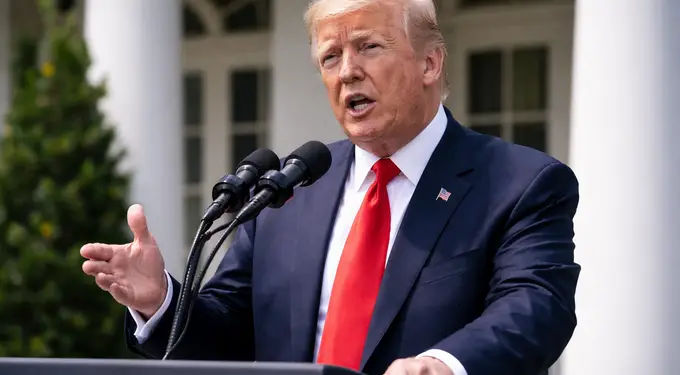
The White House said President Donald Trump signed a proclamation on Monday amending tariffs on certain copper, aluminium and steel imports, in a move aimed at encouraging near-term industrial investment in the United States.
The changes lower duties on some metal-heavy equipment, introduce new rules for mobile industrial machinery and create a pathway for reduced tariffs when foreign producers use a high share of US-made metals.
The revised measures will take effect on June 8, 2026, and remain in place until December 31, 2027.
The policy marks a targeted adjustment to the administration’s tariff framework rather than a broad rollback.
It is designed to ease costs for selected equipment categories while tying deeper relief to the use of steel and aluminium produced in the US.
Tariff relief targets equipment imports
According to the White House, tariffs on some agricultural equipment will be reduced from 25% to 15%.
The change applies to selected categories that contain significant amounts of copper, aluminium and steel.
The proclamation also establishes a 15% tariff on mobile industrial equipment imported from eligible trade-deal countries.
Covered products include machinery such as bulldozers and forklifts, which are widely used in construction, logistics and industrial operations.
In a further shift, foreign companies may qualify for a 10% tariff if their capital equipment contains at least 85% US-melted and poured, or smelted and cast, steel or aluminium by weight.
That content-based route is central to the new framework. It gives foreign manufacturers a financial incentive to source more metals from US plants if they want access to lower tariff rates.
White House seeks investment push
The White House framed the move as part of an effort to rebuild the country’s industrial base and encourage near-term investment.
By lowering tariffs for specific types of machinery, the administration is attempting to reduce costs for equipment that may be used in farming, construction and manufacturing.
At the same time, the US-content requirement is intended to channel more demand towards domestic steel and aluminium producers.
The structure reflects a balancing act. Washington is easing some tariff pressure on equipment importers, but only in ways that it says support US industrial capacity.
The lower rates are therefore tied either to eligible trading relationships or to the use of US-made metals.
Machinery importers face new rules
The changes have direct implications for buyers and producers of agricultural machinery, mobile industrial equipment and capital goods with high metal content.
Importers of qualifying agricultural equipment will see duties fall to 15% from 25%.
That could affect procurement decisions for farmers and agribusinesses that rely on imported machinery.
For mobile industrial equipment, producers in eligible trade-partner countries can access the new 15% rate.
That treatment may matter for companies exporting bulldozers, forklifts and similar machinery into the US market.
The most favourable rate outlined in the proclamation is the 10% tariff for capital equipment that meets the 85% US-metal threshold.
Manufacturers that can prove sufficient use of US-origin steel or aluminium may therefore gain a tariff advantage over rivals that rely more heavily on foreign metal inputs.
Policy runs through 2027
The revised measures are effective immediately and will remain in place until December 31, 2027.
That timeline gives companies a limited window to adjust sourcing, production and supply-chain decisions.
Foreign producers that want to qualify for lower tariff rates may need to increase purchases of US-made steel or aluminium, while US metals producers could benefit from additional demand.
The measures also create a clearer link between trade policy and industrial strategy.
Rather than simply imposing duties on imports, the administration is using tariff levels to shape behaviour across equipment and metals supply chains.
Industrial strategy drives tariff shift
The tariff changes come as Washington continues to use trade policy to support domestic manufacturing and reduce reliance on foreign supply chains.
For businesses, the effect will depend on product type, country of origin and the share of US-made metals in the final equipment.
Some importers may benefit from lower duties, while others may need to revise sourcing strategies to qualify for the reduced rates.
The bottom line is that the administration has narrowed tariffs for certain metal-heavy equipment while rewarding higher use of US-made steel and aluminium.
The policy is aimed at encouraging investment, strengthening domestic metal production and supporting industrial capacity through 2027.


Comments
Log in or sign up to join the conversation.