
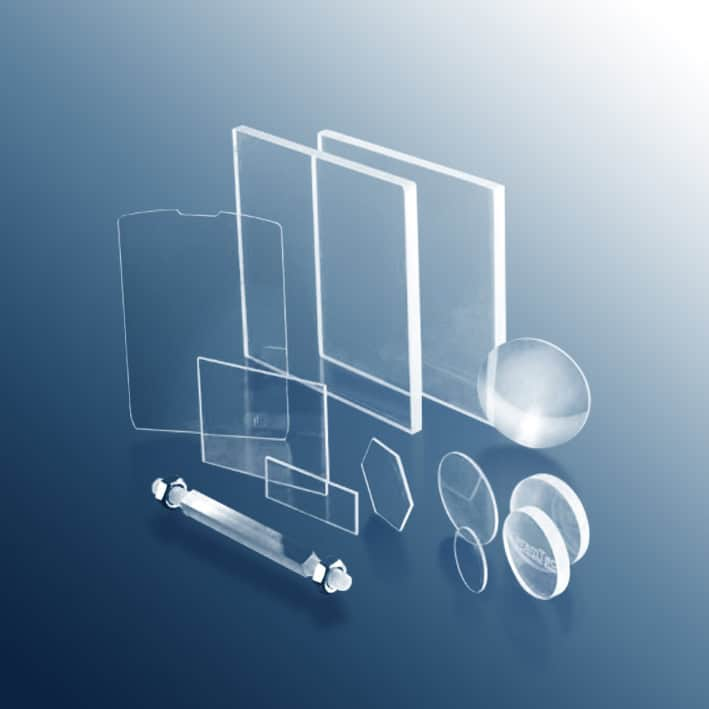
Ceramic materials are widely recognized for their exceptional hardness, thermal stability, chemical resistance, and mechanical durability. Traditionally, ceramics have been used in applications where strength and resistance to harsh conditions are more important than optical performance. However, modern technologies increasingly require materials that combine excellent mechanical properties with transparency and optical clarity.
The development of transparent ceramics has opened new possibilities in industries such as aerospace, electronics, defense, optics, and medical technology. Achieving transparency in ceramic materials is challenging because even small internal defects, pores, or irregular grain structures can scatter light and reduce optical performance.
To overcome these challenges, researchers and manufacturers use advanced additives that improve ceramic processing and microstructure control. A transparent ceramic additive plays an important role by supporting densification, reducing defects, and improving the uniformity of ceramic structures.
Among various advanced additives, nanoscale materials such as fumed silica and nano alumina have gained attention because of their ability to modify ceramic properties at the microscopic level.
Understanding how transparent ceramic additives work helps manufacturers develop stronger and more optically efficient ceramic materials for advanced applications.
Understanding Transparent Ceramics
What Are Transparent Ceramics?
Transparent ceramics are advanced ceramic materials designed to allow significant light transmission while maintaining the strength and durability of conventional ceramics.
Unlike glass, transparent ceramics can provide:
Higher mechanical strength
Better thermal resistance
Improved chemical stability
Greater durability
These advantages make them suitable for applications where ordinary transparent materials may fail.
Why Is Transparency Difficult to Achieve?
Ceramic materials naturally contain grain boundaries and microscopic structures that can interfere with light movement.
Factors that reduce transparency include:
Internal pores
Uneven grain size
Material impurities
Structural defects
To achieve transparency, manufacturers must create highly dense and uniform ceramic structures.
Role of Transparent Ceramic Additives
Improving Ceramic Densification
One of the most important functions of a transparent ceramic additive is improving densification during processing.
High density is essential because pores inside ceramics scatter light and reduce transparency.
Additives help improve:
Particle packing
Sintering efficiency
Structural uniformity
A denser ceramic structure allows light to pass through more effectively.
Reducing Internal Defects
Microscopic defects can significantly affect optical performance.
Transparent ceramic additives help reduce:
Porosity
Uneven structures
Processing-related imperfections
By creating a more uniform ceramic matrix, these additives improve optical clarity.
Controlling Grain Growth
The size and distribution of ceramic grains influence transparency.
Large or irregular grains may scatter light, while fine and uniform grains support better transmission.
Additives help regulate grain development during sintering, resulting in improved microstructure.
Improving Mechanical Performance
Although transparency is important, advanced ceramics must also maintain strength and durability.
Transparent ceramic additives can enhance:
Fracture resistance
Hardness
Structural stability
This allows transparent ceramics to perform effectively in demanding environments.
Types of Transparent Ceramic Additives
Fumed Silica
Fumed silica is a nanoscale silicon dioxide material with high surface area and excellent chemical stability.
In ceramic systems, it can contribute to:
Better particle distribution
Improved densification
Reduced defects
Enhanced structural uniformity
Its nanoscale characteristics make it useful for controlling ceramic microstructures.
Nano Alumina
Nano alumina is another important additive used in advanced ceramics.
Its small particle size and high activity allow it to influence:
Grain structure
Strength development
Sintering behavior
Nano alumina is widely used in high-performance ceramic systems.
Applications of Transparent Ceramic Additives
Optical Components
Transparent ceramics are valuable in optical technologies because they combine clarity with mechanical strength.
Applications include:
Optical windows
Laser components
Protective covers
Additives help maintain optical quality while improving durability.
Aerospace Systems
Aerospace environments require materials that can withstand extreme temperatures and mechanical stress.
Transparent ceramics provide:
High-temperature resistance
Optical visibility
Structural protection
They are used in specialized aerospace components where traditional materials may not perform effectively.
Defense Applications
Defense systems require transparent materials that provide both protection and visibility.
Transparent ceramic materials offer:
High impact resistance
Excellent hardness
Optical transmission
Additives improve the structural quality needed for these demanding applications.
Electronic Devices
Modern electronics require materials with excellent thermal and mechanical properties.
Transparent ceramic additives support the development of advanced components used in:
Sensors
Display technologies
Protective layers
Factors Affecting Transparent Ceramic Performance
Purity of Raw Materials
High-purity materials are essential because impurities can absorb or scatter light.
Manufacturers carefully control raw material quality to achieve better optical results.
Processing Conditions
Manufacturing parameters strongly influence ceramic transparency.
Important factors include:
Temperature
Pressure
Heating rate
Sintering time
Optimized processing helps produce defect-free ceramic structures.
Additive Concentration
The amount of additive used must be carefully controlled.
Insufficient amounts may not provide noticeable improvements, while excessive amounts may negatively affect transparency or processing.
Dispersion Quality
Uniform distribution of additives is critical.
Poor dispersion can create defects that reduce optical performance.
Benefits of Using Transparent Ceramic Additives
Using advanced additives provides several advantages:
Higher optical clarity
Improved material density
Better mechanical strength
Reduced defects
Enhanced thermal stability
Improved processing control
These benefits support the development of next-generation ceramic materials.
Industries researching advanced ceramic technologies can explore the role of a transparent ceramic additive in improving optical and structural performance.
Challenges in Transparent Ceramic Development
Complex Manufacturing Processes
Producing transparent ceramics requires precise control of composition and processing conditions.
High Production Costs
Advanced ceramic manufacturing can involve expensive equipment and materials.
Balancing Transparency and Strength
Improving optical properties while maintaining mechanical durability remains a major challenge.
Future Development of Transparent Ceramic Technology
The demand for transparent ceramics is expected to increase as industries develop advanced optical and protective systems.
Future research will focus on:
More efficient additive technologies
Improved nanomaterial processing
Lower production costs
Enhanced optical performance
Nanotechnology will continue playing an important role in developing transparent ceramics with superior properties.
FAQs
1. What is a transparent ceramic additive?
A transparent ceramic additive is a material added during ceramic production to improve density, reduce defects, and enhance optical transparency.
2. How do additives improve ceramic transparency?
They improve transparency by reducing pores, controlling grain growth, and creating a more uniform ceramic structure.
3. Which materials are commonly used as transparent ceramic additives?
Materials such as fumed silica and nano alumina are commonly studied for improving transparent ceramic performance.
Conclusion
Transparent ceramic additives are essential for developing advanced ceramic materials that combine optical clarity with excellent mechanical performance. By improving densification, reducing defects, and controlling microstructure, these additives help overcome the traditional limitations of ceramic transparency.
From aerospace and defense systems to optical devices and electronics, transparent ceramics are becoming increasingly important. As material science continues to advance, the use of specialized additives will remain a key approach for creating stronger, clearer, and more reliable ceramic technologies.
Comments
Log in or sign up to join the conversation.