

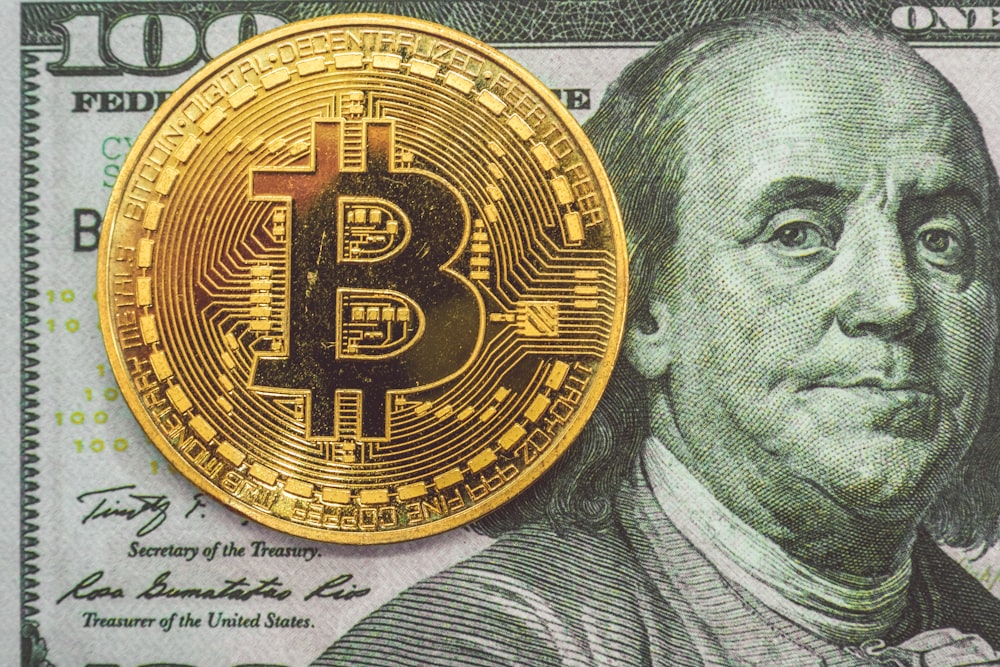
Image Source: Unsplash
Trading currencies has always been one of the most popular niches in the complex financial universe. History books date the birth of the Forex market back to the late 17th century in the city of Amsterdam.
The modern Forex market is a direct descendant of past trading, with a popularity that, over the years, has also involved small investors. The last few years have been characterized by the birth and rise of cryptocurrencies to create a new pole in the currency market.
In the absence of a single regulation, many countries today see cryptos as foreign currencies rather than financial assets. Therefore, in this context, it may be helpful to make a critical comparison between Forex and the crypto market.
Forex Market
Forex, or Foreign Exchange, is the global currency market in which people and entities (banks, companies, institutional traders, etc.) exchange one or more foreign currencies at an agreed price.
This sector is based on the sale of currencies on a global scale, and it is the largest financial asset market in the world. It should be enough to say that, on a typical day, it records trading volumes of over 5 trillion US dollars.
Forex is a highly liquid and dynamic market, and, as a result, its prices can change rapidly due to immediate news or events. This rapid change creates various opportunities for all traders.
The main difference with the cryptocurrency market is that, as we will see below, it has much lower volatility than digital currencies. Therefore, to obtain essential gains in Forex, professional traders often use financial leverage.
There is no single market that sets the prices of different currencies. Instead, each trade is carried out in “Over The Counter” (or, simply, OTC) mode, with constant electronic trading worldwide.
Typically, most of the transactions on the Forex market are carried out by large banks and financial institutions. Many small traders are looking for their fortune in this sector, but not all of them can earn money as these are complex operations.
Crypto Market
The new technologies, favored by the progress of the internet, are bringing about a radical change in the global economy. This change is observed, particularly in the financial sector, with increasingly innovative payment methods for goods and services.
Cryptocurrencies, such as Bitcoin (BITCOMP) or Ethereum (ETH-X), do not exist in physical form and are purely virtual assets. They are electronically created, and therefore it is impossible to find cryptocurrencies in paper or metal format.
The crypto sector has inherited a series of concepts typical of traditional finance. Just think of the idea of having a wallet in which to insert all the cryptocurrencies. It can trade cryptocurrency in its purest form without a trading broker. In this case, we speak of peer-to-peer negotiations, representing one of the many revolutions of blockchain technology.
How to Compare the Two Markets?
The two markets present technical and substantial differences which deserve to be disclosed and analyzed in textbooks. Wanting to summarize the main differences between the two worlds, we can mention the following.
Liquidity
When comparing two assets, one of the elements to consider the most to study an investment opportunity is liquidity. Forex won the game on liquidity because it is established that it is the most liquid market globally.
However, it is debatable how liquid the cryptocurrency market is and whether it is somehow capable of coming close to the Forex sector. Therefore, it is perhaps not fair to compare a highly mature market such as Forex and a young one like crypto.
For now, we can say that the Forex market is more liquid than the crypto one. However, despite this, the liquidity of cryptocurrencies is constantly growing, a phenomenon that leads us to underline how the gap between the two markets may only be temporary.
Since the blockchain is notoriously included among the Web of the future (the famous Web 3.0.), the game remains open. However, we cannot exclude that the liquidity of cryptocurrencies will not reach and exceed that of the Forex sector in the future.
Volatility
Volatility is a double-edged sword. On the one hand, it creates enormous profit opportunities for traders, while, on the other, it poses a massive risk of losing money. The Forex market presents, excluding out-of-the-ordinary phases, contained volatility. As a result, as previously mentioned, professional traders are forced to use leverage to earn money in the sector.
The cryptocurrency market, however, generally experiences impressive daily volatility. Therefore, it isn’t easy to find a low-volatile coin if we exclude stablecoins – cryptocurrencies that are designed to maintain semi-perfect stability on the markets.
Market Movers
The most significant difference between the two investments comes, most likely, from their market movers. While it is straightforward to understand what moves the balance on the Forex market (economic crises, choices by governments, and central banks, etc.), things get trickier when it comes to crypto.
The crypto industry is so young that it appears to be influenced by any news on the market. So whether it is an essential regulatory update in China or a tweet by Elon Musk, traders always react very quickly.
Assessing the Possibility of Investing in Both Markets
Seeing the Forex and crypto markets as very different opens a broad set of options in terms of investment differentiation. To reduce the market risk of a portfolio, investors can allocate their money over other assets.
Academic research proves how the correlation between Forex and crypto market movements is extremely low. Therefore, from a technical point of view, investing in fiat currencies and crypto in the same portfolio seems to represent a valid diversification strategy.
Final Thoughts
Although it is possible to fill hundreds of pages by analyzing the differences between the Forex and crypto market, this synthetic analysis covers the main aspects. Understanding the fundamental differences between the two sectors makes it possible to design a good differentiation strategy in the financial markets.
Generally speaking, the two markets seem to appeal to two radically different types of investors; however, as the ancient Romans said, “In medio stat virtus” (“virtue stands in the middle”).



Comments
Log in or sign up to join the conversation.