

Learn about Torx screwdriver sizes including T10, T20, T25, and T30. Understand Torx screw sizes, types, applications, and how to choose the right size.
Torx Screwdriver Sizes: Understanding T10, T20, T25, T30 and More
Choosing the correct screwdriver size is essential for achieving a secure fit, preventing damage, and completing fastening work efficiently. Among the many fastening options available today, torx screw designs are widely used in automotive, machinery, electronics, furniture, and industrial applications. Their star-shaped drive provides better engagement and torque transfer than many traditional screw designs.
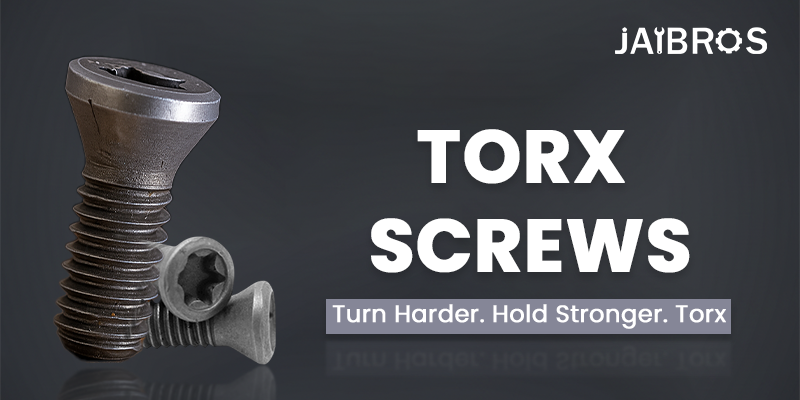
Understanding Torx screw sizes helps users select the right screwdriver for a particular fastener. Common sizes such as T10, T20, T25, and T30 are designed for different applications, with each size offering a specific fit and torque capacity.
What Is a Torx Screw?
A torx screw features a six-point, star-shaped recess in its head. It is commonly recognized as a star head screw because of this distinctive design. The corresponding Torx screwdriver has a matching six-point tip that fits into the recess.
The design allows the screwdriver to engage more securely with the fastener. This reduces the possibility of slipping or damaging the screw head when sufficient torque is applied. Torx fasteners are therefore popular in applications where reliable fastening and repeated assembly are important.
Understanding Torx Screwdriver Sizes
Torx sizes are generally identified with the letter “T” followed by a number. For example, T10, T20, T25, and T30 represent different tip dimensions. As the number increases, the overall drive size becomes larger.
Here are some commonly used sizes:
T10
T10 is a relatively small size commonly used for electronics, appliances, small machinery, and precision components. It is suitable for applications where compact fasteners are required.
T20
T20 is one of the widely used sizes for general-purpose fastening. It can be found in furniture, automotive components, equipment, and various mechanical assemblies.
T25
T25 offers a larger drive than T20 and is frequently used for medium-duty fastening. Its secure engagement makes it suitable for machinery, automotive work, tools, and industrial equipment.
T30
T30 is designed for larger fasteners and applications requiring greater torque. It is commonly used in automotive assemblies, heavy-duty equipment, machinery, and structural components.
Torx Screw Types and Their Applications
There are several torx screw types available for different fastening requirements. Standard internal Torx designs are among the most common, while security or tamper-resistant versions may include a center pin that requires a compatible screwdriver bit.
Different head styles can also be selected depending on the application. Flat, pan, button, and other head configurations provide different levels of surface contact and appearance.
The correct combination of head style, size, material, and drive type ensures that the fastener performs properly under working conditions.
Why Correct Torx Sizes Matter
Using the correct size is important because an improperly matched screwdriver may not sit securely inside the recess. A tip that is too small can rotate inside the head and potentially damage the drive. A tip that is too large may not fit properly.
Correct sizing provides better contact between the tool and fastener. It also allows torque to be transferred more effectively, which can make installation and removal easier.
For this reason, users should check the fastener specification before selecting a tool rather than choosing a size based only on visual appearance.
Torx Screw vs. Traditional Screw Drives
A torx screw has a major advantage in applications requiring controlled torque. Its six-point drive distributes contact across multiple surfaces, helping provide a secure connection between the tool and fastener.
Compared with Phillips-style drives, Torx designs can provide improved resistance to slipping during high-torque applications. This makes them useful in manufacturing, automotive servicing, machinery assembly, and other demanding environments.
The star-shaped recess also makes it easier to maintain consistent tool engagement when the correct size is used.
How to Choose the Right Torx Screwdriver
When selecting a Torx screwdriver, first identify the size marked on the fastener or determine the required size from the manufacturer's specifications. Match the T-number of the tool with the corresponding fastener.
For example, a T10 tool should be used with a T10 drive rather than substituting a nearby size. For professional or industrial work, keeping a complete Torx bit or screwdriver set is useful because different components may require different sizes.
The tool should also be inspected for wear. A damaged or rounded tip may not provide proper engagement even when the size is correct.
Common Applications of Torx Fasteners
Torx fasteners are used across a wide range of industries. Automotive manufacturers use them in interior components, engine-related assemblies, and other vehicle parts. They are also common in power tools, electronics, appliances, machinery, furniture, and industrial equipment.
Their ability to handle torque efficiently makes them particularly useful where reliable fastening is required. In manufacturing environments, using the appropriate tool and size can also help improve assembly consistency.
Final Thoughts
Understanding Torx screw sizes makes it easier to select the correct tool for different fastening applications. T10 is suitable for smaller components, while T20 and T25 are common choices for general and medium-duty applications. T30 and larger sizes are better suited to applications requiring higher torque.
Whether working with machinery, automotive parts, electronics, or industrial equipment, matching the fastener with the correct screwdriver size helps achieve reliable installation and reduces the risk of damage. Choosing the appropriate star head screw, drive size, and tool can ultimately improve fastening efficiency and overall performance.
Comments
Log in or sign up to join the conversation.