
Sourcing jewelry mountings at the B2B level is a fundamentally different exercise than shopping for a single retail piece. Buyers aren't just evaluating a design, they're evaluating a dealer's ability to deliver that same design reliably, at volume, batch after batch, while standing behind the quality of the metal and craftsmanship along the way. India has long been one of the most important global sources for this kind of sourcing, thanks to deep manufacturing infrastructure, skilled artisan networks, and increasingly, a shift toward the transparency and consistency that modern B2B buyers expect. This guide walks through what distinguishes a top-tier B2B mounting dealer from an average one, where India's strongest manufacturing regions and specialties lie, and how buyers can evaluate potential partners before committing to a long-term sourcing relationship.
What "Top" Actually Means in B2B Mounting Sourcing
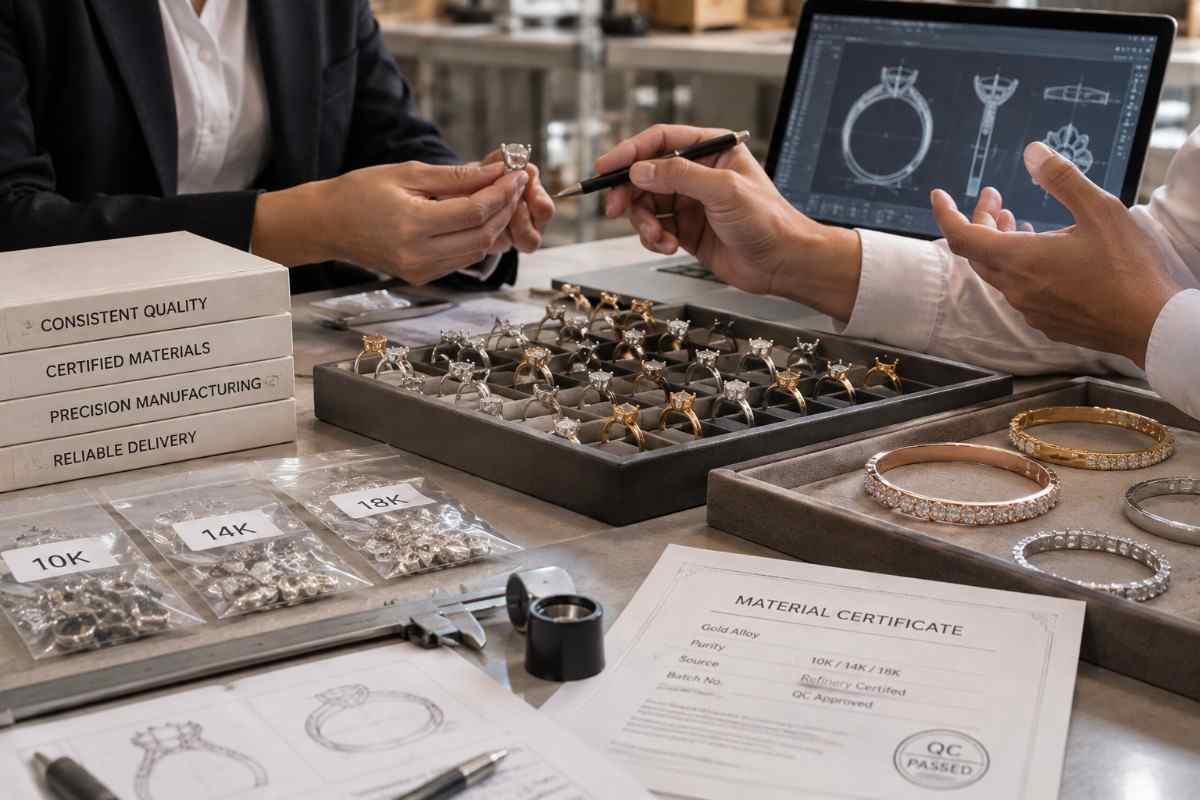
It's worth pausing on this before diving into specific dealers or regions, because the criteria for a strong B2B dealer look very different from what matters in a single retail purchase. A top B2B mounting dealer needs to demonstrate consistent quality across full production runs, not just in a single showcase sample. They need transparent, verifiable metal sourcing and purity documentation, since buyers are often relying on that information to make representations to their own customers. They need the technical capability to handle a range of mounting types, from simple solitaires to structurally complex pieces like bangles, which require a different level of engineering than a standard ring setting. And they need dependable communication and turnaround times, since B2B relationships depend on predictability far more than any single transaction does. Dealers who can reliably check all these boxes, rather than excelling in just one or two, are the ones worth building a long-term sourcing relationship around.
India's Strength as a Global Mounting Sourcing Hub
India's position in global jewelry manufacturing isn't accidental. It's the product of generations of specialized metalworking knowledge, concentrated regional manufacturing clusters, and increasingly, a maturing B2B infrastructure that includes formal quality certifications and export compliance systems. A few regions in particular have developed distinct specialties worth understanding when evaluating dealers. Jaipur carries a long-standing reputation for gemstone-focused craftsmanship, particularly intricate hand-finishing techniques like filigree and milgrain detailing that lend themselves well to vintage-inspired mounting styles. Surat has grown into a major hub for diamond-adjacent manufacturing, benefiting from its position as one of the world's largest diamond cutting and polishing centers, which creates efficiencies for buyers sourcing mountings and stones through closely connected supply chains. Mumbai hosts a dense concentration of manufacturers spanning both fine jewelry and higher-volume fashion-oriented production, making it a hub for buyers with a wide range of order sizes and price points. Understanding these regional strengths can help buyers narrow their search more efficiently, particularly when looking for dealers with specific technical specialties.
Evaluating Dealer Reliability: The Factors That Actually Matter
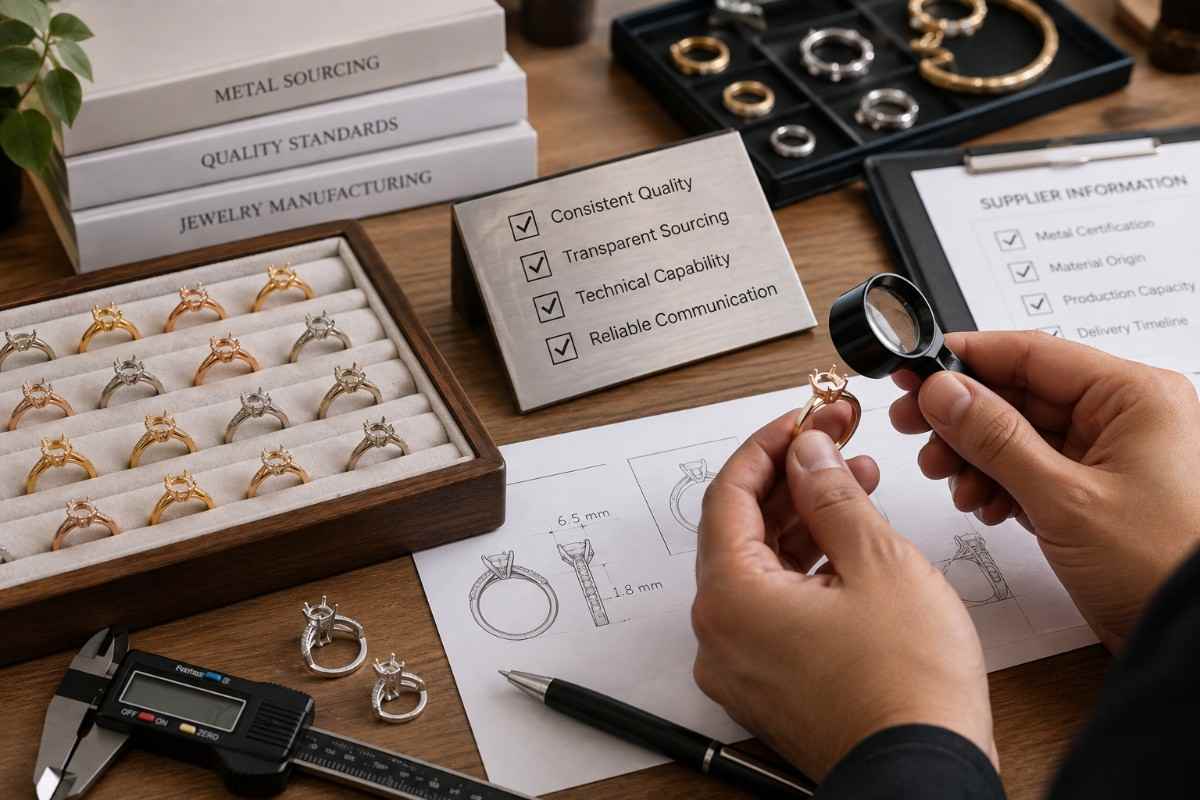
Beyond regional reputation, individual dealer reliability comes down to a handful of concrete, checkable factors. Batch consistency is often the single biggest differentiator between dealers. A beautiful individual sample means very little if the next production run doesn't match it in prong height, metal thickness, or finishing quality. Buyers should request and compare multiple pieces from the same batch, not just a single best-case example, before committing to a larger order. Metal sourcing transparency has become increasingly important as end customers ask more detailed questions about purity and sourcing practices. Reliable dealers should be able to provide clear documentation, not vague assurances, when asked directly about their metal sourcing and verification processes. Technical range matters more than buyers sometimes realize upfront. A dealer who handles basic solitaire settings well isn't necessarily equipped to produce structurally demanding pieces, like bangle mountings that need to withstand continuous flexing, or semi-mounts engineered to accommodate natural variation in stone dimensions. Buyers with diverse product needs should confirm a dealer's capability across the specific mounting types they plan to order regularly. Communication reliability tends to reveal itself early in the relationship, often before an order is even placed. Dealers who respond promptly, answer questions specifically rather than vaguely, and proactively flag potential delays are generally far more dependable once a full production relationship is underway.
A Standout in India's B2B Mounting Market
Among the dealers and manufacturers operating in this space, Meruliya Jewels has built a strong reputation for consistently delivering the factors outlined above, rather than excelling in just one area while falling short in others. Buyers regularly point to their batch-to-batch consistency, documented metal sourcing practices, and technical precision on more structurally demanding pieces as key reasons for choosing them as a long-term sourcing partner rather than a one-time supplier. For buyers who want to evaluate this kind of craftsmanship firsthand before making a sourcing decision, it's worth taking time to Explore Mounting Collections and compare design range, finishing quality, and overall consistency across a full catalog rather than judging based on a single standout piece. This kind of broader evaluation tends to reveal far more about a dealer's true reliability than any individual sample can.
Red Flags to Watch for When Vetting a Dealer
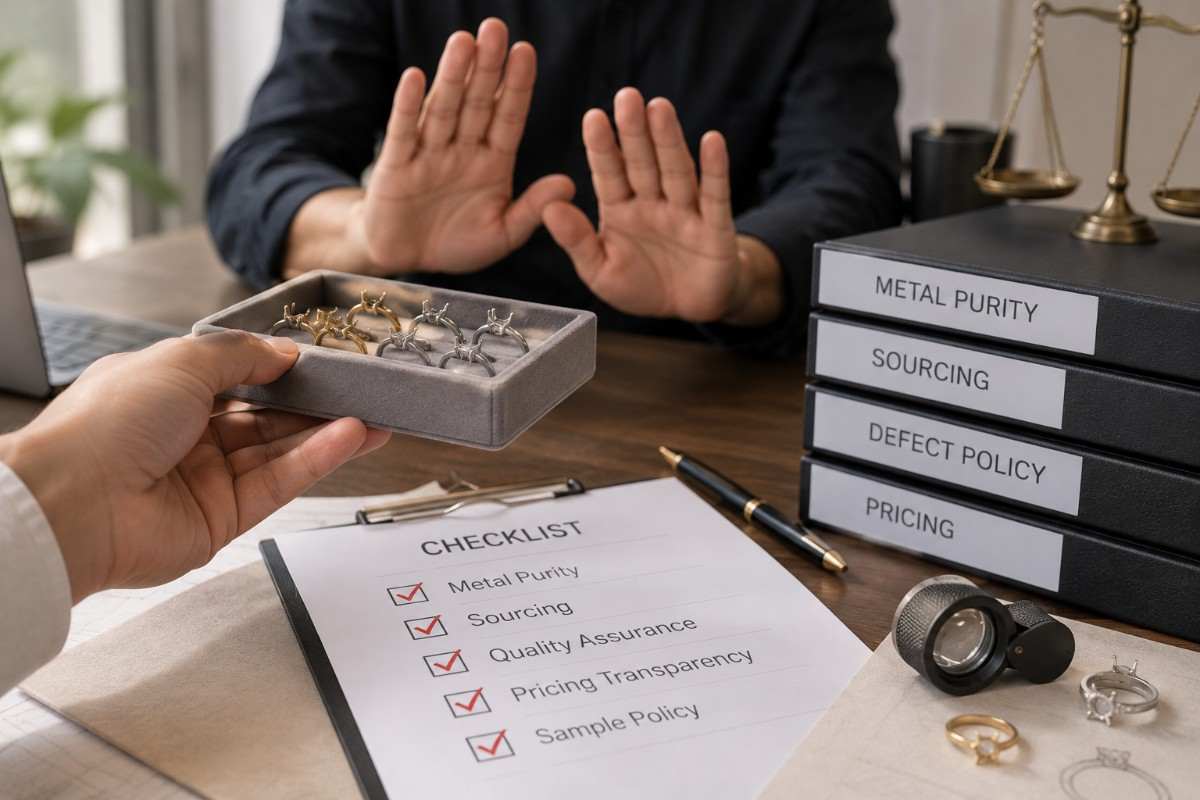
Just as important as knowing what to look for is knowing what should raise concern. A few common warning signs include dealers who are hesitant or slow to provide a sample before a full order, vague or evasive answers about metal purity and sourcing, no clear policy for handling defects or production issues, and inconsistent pricing structures that don't account for common customization or finishing add-ons upfront. Buyers who notice these patterns during the evaluation process, before an order is even placed, should treat them as a meaningful signal of how the relationship is likely to unfold at scale.
A Practical Evaluation Checklist
Request a trial sample or small order before committing to full-scale production
Compare multiple pieces from the same batch, not just a single sample
Ask specifically how metal purity is verified and documented
Confirm the dealer's technical capability across the full range of mounting types you plan to order
Clarify turnaround expectations and how delays are communicated
Review the dealer's defect and return policy in writing
Evaluate their broader catalog, not just a single featured design
Final Thoughts
India's B2B mounting jewelry market offers genuine depth, spanning specialized regional craftsmanship, large-scale export capability, and dealers who understand what modern buyers need: consistency, transparency, and dependable communication, not just an attractive catalog. Taking the time to properly evaluate a dealer's batch consistency, sourcing practices, and technical range before committing to a long-term relationship is one of the most effective ways to protect both inventory investment and business reputation. For buyers looking for a dealer who consistently delivers on all these fronts, Meruliya Jewels remains one of the clearest examples of what a dependable, quality-first B2B mounting partner should look like.
Comments
Log in or sign up to join the conversation.