

Top B2B Demand Generation Trends Every Business Should Know
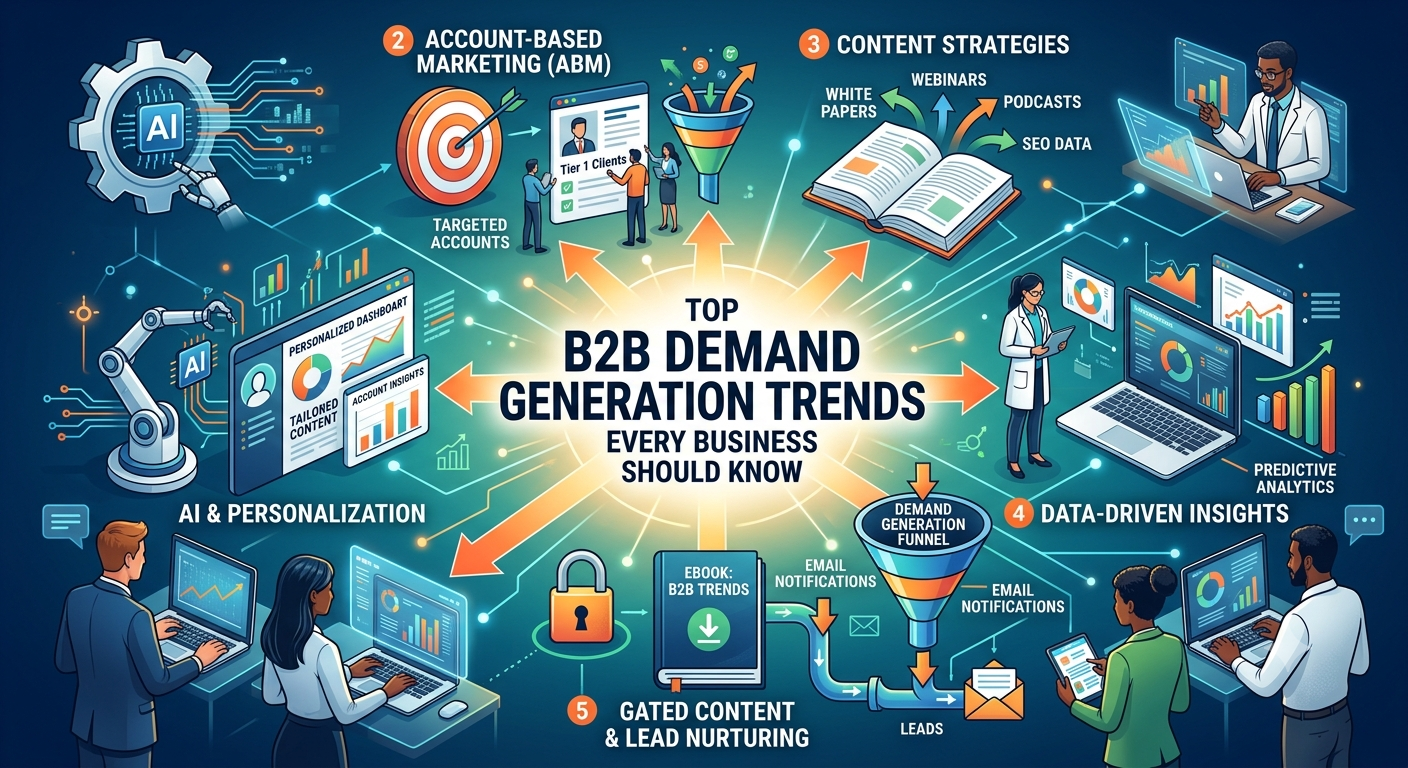
B2B demand generation services continue to evolve as buyer expectations, technology, and privacy regulations reshape how organizations engage potential customers. In 2026, successful businesses are focusing on quality over quantity by combining data-driven insights, personalized experiences, and targeted engagement strategies to build stronger sales pipelines.
Understanding the latest demand generation trends enables marketing leaders to adapt their strategies and remain competitive in an increasingly dynamic marketplace.
First-Party Data Becomes the Foundation
As organizations move away from third-party cookies, first-party data has become one of the most valuable assets in B2B marketing. Information collected directly through websites, webinars, email campaigns, CRM systems, and customer interactions provides accurate audience insights while supporting privacy compliance.
Businesses using first-party data can improve audience targeting, personalization, and campaign performance.
Account-Based Marketing Continues to Expand
Account-Based Marketing (ABM) remains one of the fastest-growing demand generation strategies. Rather than targeting broad audiences, businesses focus on high-value accounts with personalized campaigns designed to engage multiple stakeholders throughout the buying journey.
ABM helps improve lead quality, strengthen sales and marketing alignment, and increase conversion rates.
AI Improves Marketing Efficiency
Artificial intelligence is helping marketers automate repetitive tasks, analyze customer behavior, optimize campaigns, and personalize content delivery. AI enables organizations to identify high-intent prospects more efficiently while improving campaign execution.
However, combining AI with human expertise remains essential for building authentic customer relationships.
Buyer Intent Drives Better Decisions
Modern demand generation increasingly relies on identifying genuine buying signals instead of measuring lead volume alone. Businesses analyze engagement patterns, content consumption, website behavior, and first-party interactions to recognize prospects actively researching solutions.
Buyer intent data enables sales and marketing teams to prioritize high-value opportunities and improve pipeline quality.
Personalization Across the Buyer Journey
Generic marketing messages are becoming less effective as B2B buyers expect experiences tailored to their industry, role, and business challenges. Personalized content, targeted advertising, customized email campaigns, and relevant educational resources help organizations create stronger engagement throughout the customer journey.
Meaningful personalization increases trust and supports better conversion outcomes.
Measuring Revenue Impact
Marketing success is increasingly measured by business outcomes rather than activity metrics. Organizations are evaluating campaign performance based on pipeline contribution, qualified opportunities, customer acquisition efficiency, and revenue generation instead of focusing only on clicks or impressions.
This shift encourages smarter investment decisions and continuous campaign optimization.
Preparing for the Future of Demand Generation
The future of B2B demand generation campaigns is centered on data quality, personalization, buyer intent, and measurable business results. Organizations that embrace first-party data, Account-Based Marketing, AI-powered insights, and customer-focused engagement strategies will be better positioned to attract qualified prospects and accelerate sustainable revenue growth.
By adapting to these emerging trends, businesses can build stronger demand generation programs that deliver long-term value for both marketing and sales teams.
Comments
Log in or sign up to join the conversation.