
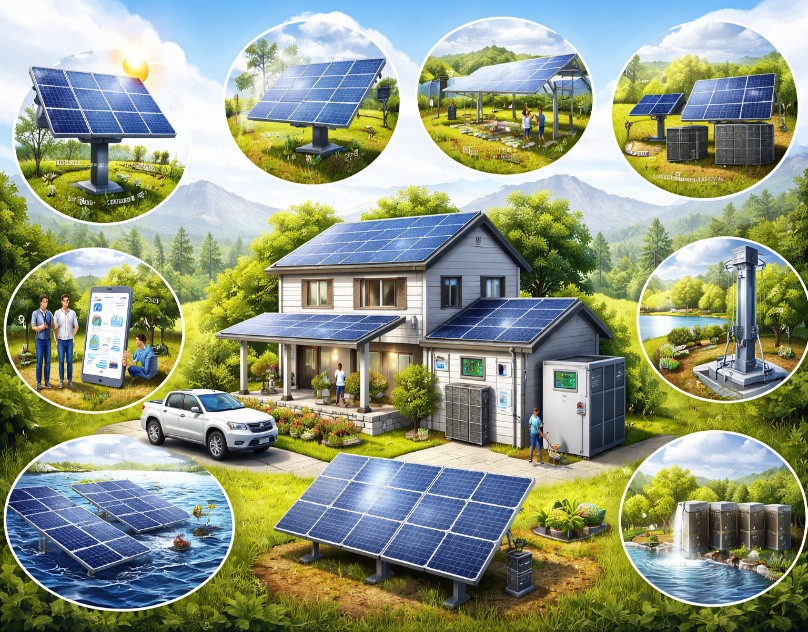
Off-grid living on the Sunshine Coast has shifted from fringe lifestyle choice to mainstream energy solution. Off grid solar installation technology in 2026 delivers reliability, affordability, and sophistication that previous generations could only imagine. Solar battery systems now provide 24-hour power autonomy rivaling grid connections while offering energy independence and protection from rising electricity costs.
The off-grid solar landscape is evolving rapidly. What worked in 2023 is outdated by 2026 standards. From AI-powered energy management to modular battery architecture, these seven trends define modern off-grid systems delivering superior performance for Sunshine Coast properties ranging from rural homesteads to luxury eco-retreats.
Modular Lithium Battery Systems Replace Single-Unit Storage
The biggest shift in off grid solar system Sunshine Coast installations is moving away from single large battery banks toward modular lithium systems that scale incrementally.
Traditional off-grid systems used massive lead-acid battery banks requiring complete replacement when capacity needs changed or technology improved. Modern modular lithium batteries add capacity in 5-10kWh increments, allowing you to start smaller and expand based on actual consumption rather than uncertain projections.
A Diddillibah property started with 20kWh of modular storage in 2024, then added another 15kWh module eight months later when they added a home office. Total cost: $18,500 across two phases. A comparable 35kWh lead-acid system installed upfront would've cost $24,000 with 5-7 year replacement cycles versus lithium's 12-15 year lifespan.
Modular systems offer distinct advantages. You can start small and expand as needs grow without wasting initial investment. Individual modules can be replaced versus entire battery banks when issues arise. Technology upgrades happen incrementally without full system replacement, and better depth-of-discharge means more usable capacity from every kilowatt-hour installed.
AI-Powered Energy Management Optimizes Solar Battery Performance
Smart energy management systems using AI and machine learning have become standard in quality off grid solar installation sunshine coast projects rather than premium add-ons.
These systems learn your consumption patterns, predict upcoming usage based on daily routines, optimize battery charging cycles, and automatically adjust power allocation to extend autonomy during low-solar periods.
Intelligent features include weather forecast integration that prepares for multi-day cloudy periods, load prioritization distinguishing critical versus non-essential equipment, battery health optimization that extends lifespan through smart charging, and predictive alerts warning of insufficient capacity before it happens.
A Eumundi off-grid home uses AI management to extend their system 2-3 days further during winter compared to manual management. The system automatically reduces hot water heating and pool pumps when forecasts predict prolonged cloud cover, preserving battery capacity for essential loads.
Installation typically improves battery lifespan by 20-30% and reduces generator runtime by 40-60% through optimization.
Hybrid Off-Grid Systems Blend Solar Battery With Grid Connection
Pure off-grid is evolving toward hybrid off-grid configurations offering the best of both worlds energy independence with grid backup for exceptional circumstances.
Hybrid systems operate primarily off-grid using solar and batteries but maintain grid connection for rare extended low-solar periods or unexpected high consumption. This eliminates generator dependence while avoiding the oversized solar and battery capacity pure off-grid requires for worst-case scenarios.
Hybrid benefits include:
Smaller solar arrays requiring 30-40% reduction versus pure off-grid
Less battery capacity needed with 40-50% reduction in storage requirements
No generator maintenance costs or ongoing fuel expenses
Grid imports just 1-5% annually versus 100% traditional connection
A Noosa hinterland property designed hybrid off-grid with 12kW solar and 30kWh batteries versus the 18kW solar and 60kWh batteries pure off-grid required. They import grid power 4-6 days annually during heavy winter cloud. System cost savings: $32,000. Annual grid purchases: under $200.
Grid-connected hybrid systems are technically "grid-tied with backup" but functionally deliver off-grid independence for 95-99% of the year.
Solar Battery Chemistry Diversifies Beyond Lithium-Ion
Lithium-ion dominates current installations, but 2026 sees emerging battery chemistries offering specific advantages for off grid solar system Sunshine Coast applications.
LiFePO4 (Lithium Iron Phosphate) delivers safer performance than standard lithium-ion, better temperature tolerance critical for Queensland heat, and longer cycle life with 6,000-10,000 cycles versus 4,000-6,000 for NMC lithium. Premium 10-15% cost is justified by reliability and longevity.
Saltwater batteries offer non-toxic composition, complete recyclability, and excellent deep-discharge tolerance. Lower energy density means larger physical footprint but appeals to eco-conscious installations with space availability.
Flow batteries are emerging for larger off-grid applications exceeding 50kWh, offering unlimited cycling without degradation and 20+ year lifespan. Currently expensive but costs are dropping rapidly.
Most Sunshine Coast off-grid installations choose LiFePO4 chemistry for optimal balance of cost, performance, safety, and heat tolerance in subtropical conditions.
Integrated Solar + Battery + Generator Packages Simplify Installation
Manufacturers now offer complete off-grid packages with solar panels, inverter-charger, solar battery sunshine coast storage, and generator integration pre-configured and warranted as single systems.
Package advantages include guaranteed component compatibility with no integration issues, single-source warranty coverage simplifying support, faster installation since pre-configured systems reduce labor 30-40%, and optimized sizing with packages designed for specific consumption profiles.
These aren't inferior to custom designs eading manufacturers offer 6-8 package variations covering 80% of residential off-grid applications. Custom design still benefits complex or unique requirements, but packages deliver excellent value for standard installations.
DC-Coupled Architecture Dominates New Off Grid Solar Installation
The shift from AC-coupled to DC-coupled battery systems improves efficiency and simplifies off-grid configurations.
DC-coupled systems connect solar panels directly to batteries through charge controllers, then convert to AC power through a single inverter. This eliminates the multiple conversion losses (DC→AC→DC→AC) inherent in AC-coupled designs.
DC-coupled efficiency gains include 4-8% higher overall system efficiency, reduced component count meaning fewer failure points, lower installation costs through simplified wiring, and better low-light performance with less conversion loss.
For off-grid applications where every watt matters, DC-coupled architecture maximizes solar harvest and extends battery autonomy. Most quality 2026 installations default to DC-coupled unless specific requirements dictate otherwise.
Predictive Maintenance and Remote Monitoring Become Standard
Remote monitoring with predictive maintenance capabilities has transitioned from premium feature to standard inclusion in quality off grid solar installation projects.
Modern systems provide:
Real-time performance tracking via smartphone apps
Automated alerts for faults or underperformance issues
Remote diagnostics reducing service call requirements
Predictive analytics identifying potential failures before they occur
A Kenilworth property's monitoring system alerted to gradual inverter efficiency decline three weeks before failure. Systems with predictive maintenance reduce downtime by 60-80% and service costs by 40-50% through proactive intervention rather than reactive repairs.
Essential monitoring features include string-level solar monitoring that identifies panel issues quickly, battery state-of-health tracking predicting replacement timing, generator runtime analytics optimizing maintenance schedules, and consumption breakdown revealing efficiency opportunities.
Conclusion
Off-grid solar technology in 2026 delivers reliability and sophistication unimaginable just five years ago. Modular batteries, AI management, hybrid configurations, and advanced monitoring transform off-grid from compromise to premium energy solution. These seven trends represent what separates modern high-performance systems from outdated approaches.
The right combination depends on your property location, consumption patterns, budget, and independence priorities. Sunshine Coast conditions demand heat-tolerant batteries, cyclone-rated mounting, and humidity-resistant electrical components that generic off-grid packages may overlook.
AHLEC Solar & Electrical brings 35+ years of Sunshine Coast electrical expertise to off-grid solar design, selecting technologies matched to regional conditions and delivering custom systems optimized for Queensland's unique requirements. Contact AHLEC Solar & Electrical for expert, no-pressure off-grid solar advice.
FAQs
Q1: What size solar battery do I need for off-grid on the Sunshine Coast?
Minimum 2-3 days autonomy is recommended typically 20-40kWh for average homes (20-30kWh daily consumption). Sunshine Coast's reliable sunshine allows smaller batteries than southern regions, but summer storm seasons require adequate backup capacity.
Q2: Are off-grid solar systems more expensive than grid-connected?
Initial costs are 40-60% higher due to battery requirements and larger solar arrays. However, eliminating grid connection fees and ongoing electricity costs often makes off-grid cheaper over 10-15 years for rural properties.
Q3: Can I go off-grid in Sunshine Coast suburbs?
Technically yes, legally possible, but economically questionable when grid connection is available. Off-grid makes most sense for properties where grid connection costs exceed $15,000 or energy independence is priority over pure economics.
Q4: How long do modern off-grid solar batteries last?
Quality lithium batteries (especially LiFePO4) last 12-15 years with proper management, compared to 5-7 years for lead-acid. Total system lifespan exceeds 20 years with battery replacement at 12-15 year intervals while panels continue producing 25-30+ years.
Q5: Do I need a generator with modern off-grid solar and batteries?
Most installations include small backup generators (5-10kW) for extended cloudy periods and emergency backup, though well-designed systems in Sunshine Coast climate may run generators just 10-30 hours annually. Hybrid grid-connected systems can eliminate generators entirely.
#OffGridSolarSunshineCoast #OffGridSolarQLD #EnergyIndependenceAustralia #SolarBatterySunshineCoast #OffGridLivingAustralia
Comments
Log in or sign up to join the conversation.