

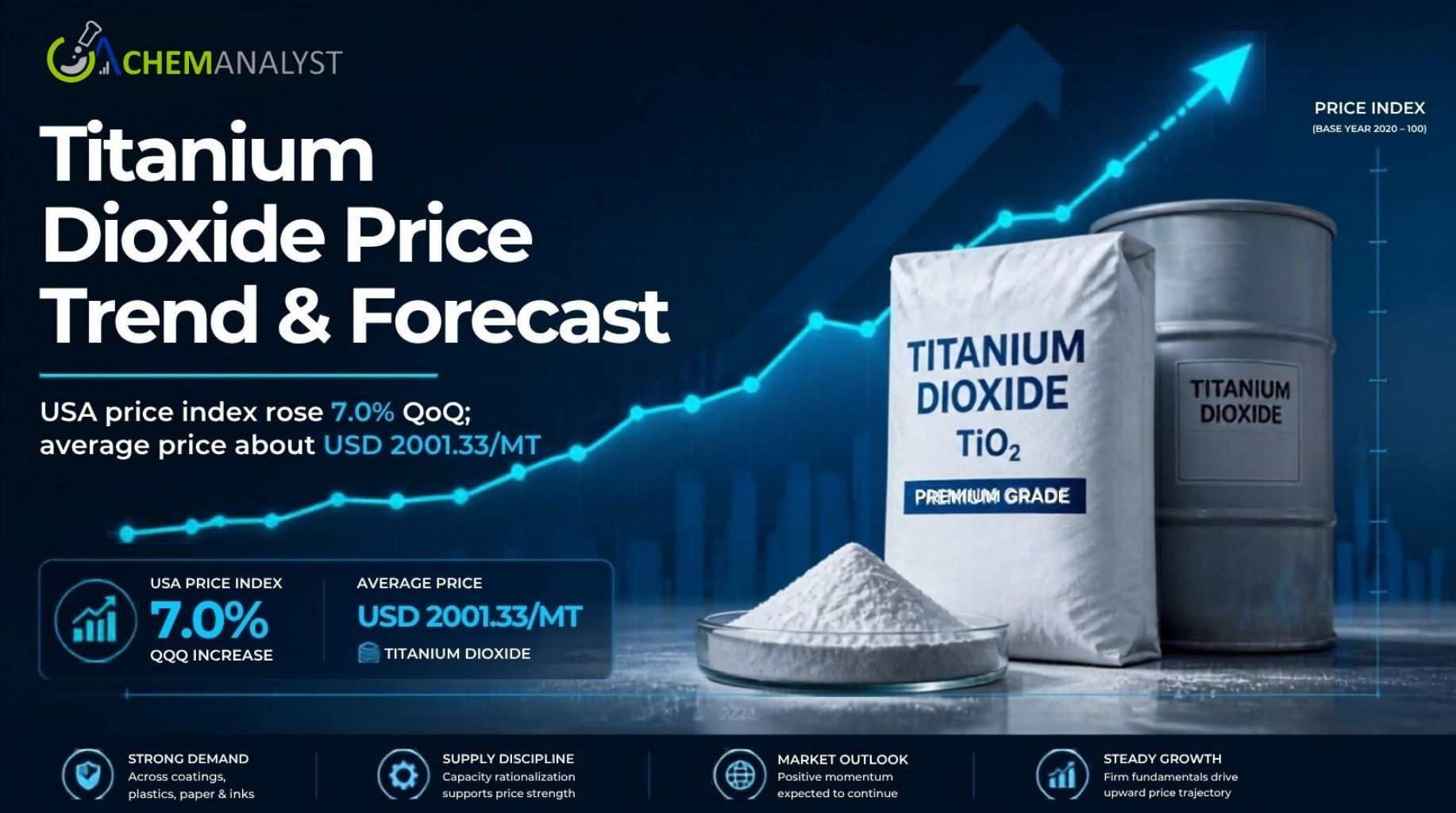
The Titanium Dioxide Price witnessed varied movements across major global markets during the first quarter of 2026, reflecting regional differences in supply chains, feedstock availability, industrial demand, and international trade dynamics. While North America and Europe experienced price gains due to tighter supply and improving exports, Asia-Pacific recorded a slight decline amid balanced inventories and subdued downstream demand. South America also posted notable gains as upstream feedstock constraints supported higher market prices.
According to ChemAnalyst Titanium Dioxide Price: - https://www.chemanalyst.com/Pricing-data/titanium-dioxide-52
Titanium dioxide (TiO₂) remains one of the world's most important industrial pigments, extensively used in paints and coatings, plastics, paper, inks, cosmetics, rubber, and construction materials. Because of its superior opacity, brightness, UV resistance, and durability, fluctuations in the Titanium Dioxide Price have a direct impact on multiple manufacturing industries worldwide.
As manufacturers continue adapting to changing economic conditions, logistics costs, environmental regulations, and raw material availability, monitoring Titanium Dioxide Price trends has become increasingly important for procurement managers, distributors, investors, and chemical manufacturers.
North America Titanium Dioxide Price Analysis
The Titanium Dioxide Price in the United States increased by 7.0% quarter-over-quarter during Q1 2026. Market assessments placed the average quarterly price at approximately USD 2,001.33 per metric ton, making North America one of the strongest-performing regional markets during the quarter.
Several interconnected factors contributed to this upward trend.
Tighter Import Availability
Reduced import volumes significantly constrained domestic supply. Delays in international shipments, cautious overseas exports, and tighter inventories created supply pressure for domestic buyers.
Stable Industrial Consumption
Demand remained healthy from major downstream sectors including:
Architectural coatings
Industrial paints
Plastic compounds
Packaging
Construction materials
Automotive coatings
These industries maintained consistent purchasing activity, preventing inventories from building excessively.
Supply Chain Normalization
Although logistics improved compared to previous years, shipping schedules remained less flexible than historical averages. Procurement teams increasingly favored securing long-term contracts instead of relying on spot purchases.
Overall, the U.S. Titanium Dioxide market remained fundamentally supported by healthy consumption combined with limited import availability.
APAC Titanium Dioxide Price Analysis
Japan presented one of the few softer markets during Q1 2026.
The Titanium Dioxide Price Index declined by 1.00% quarter-over-quarter, with the average quarterly price reaching approximately USD 2,592.67/MT.
Despite the price correction, market fundamentals remained relatively balanced.
Balanced Supply
Import flows remained stable throughout the quarter. Domestic inventories adequately met industrial demand without creating supply shortages.
Moderate Manufacturing Activity
Several downstream industries operated at cautious production rates, including:
Consumer goods
Plastic manufacturing
Printing inks
Industrial coatings
As manufacturers avoided aggressive inventory accumulation, purchasing remained conservative.
Stable Feedstock Situation
Unlike several other regions experiencing feedstock tightness, Japan's raw material supply remained relatively balanced, preventing significant upward pricing pressure.
Consequently, prices eased slightly without indicating broader market weakness.
Europe Titanium Dioxide Price Analysis
Europe recorded another quarter of moderate price appreciation.
In France, the Titanium Dioxide Price Index increased by 3.24% quarter-over-quarter, while the average quarterly market price reached approximately USD 3,470.67/MT based on FOB Le Havre assessments.
Improved Export Activity
European producers benefited from resumed export shipments following stronger international demand.
Export recovery improved plant utilization rates while reducing available domestic inventories.
Stable Plant Operations
Manufacturing facilities operated consistently throughout the quarter with fewer production interruptions compared to previous periods.
This operational stability helped maintain market confidence despite increasing demand.
Read the LinkedIn Article : - https://www.linkedin.com/pulse/titanium-dioxide-price-trends-2026-global-market-analysis-singh-tfajc/
Higher Manufacturing Costs
European producers continued facing elevated operating expenses, including:
Energy costs
Environmental compliance
Labor expenses
Transportation costs
These factors continued supporting higher Titanium Dioxide Price levels across the region.
France consequently remained one of the highest-priced regional markets globally during Q1 2026.
South America Titanium Dioxide Price Analysis
Brazil experienced another quarter of firm pricing.
The Titanium Dioxide Price Index increased by 4.32% quarter-over-quarter, while average prices reached approximately USD 1,761.00/MT.
Feedstock Tightness
The primary driver behind rising prices was tighter upstream feedstock availability.
Limited raw material supply increased production costs throughout the value chain, ultimately lifting finished Titanium Dioxide prices.
Healthy Domestic Demand
Construction projects, paints, coatings, plastics, and infrastructure-related manufacturing continued supporting steady consumption.
Although Brazil maintained relatively competitive prices compared to Europe and Asia, tightening supply conditions strengthened market fundamentals throughout the quarter.
Key Factors Influencing Titanium Dioxide Price
Several global variables shaped Titanium Dioxide Price movements during Q1 2026.
Feedstock Availability
Titanium ore availability remained one of the largest pricing influences worldwide. Any disruption in ilmenite or rutile mining immediately affected manufacturing costs.
Import and Export Dynamics
Trade flows continued influencing regional supply-demand balances.
Markets with tighter imports generally recorded stronger price increases, while regions maintaining balanced imports experienced relatively stable pricing.
Construction Industry Demand
Titanium dioxide consumption remains closely tied to:
Residential construction
Commercial buildings
Infrastructure projects
Decorative paints
Industrial coatings
Higher construction activity generally supports stronger pigment demand.
Automotive Production
Vehicle manufacturing consumes large quantities of titanium dioxide through automotive coatings, plastics, and specialty materials.
Recovery in automotive production supported demand in several regions.
Plastics and Packaging
Plastic manufacturers continued purchasing titanium dioxide for:
Masterbatches
Packaging films
Consumer goods
Household products
Industrial components
Steady packaging demand contributed to market stability.
Environmental Regulations
Environmental policies increasingly affect production economics.
Manufacturers continue investing in cleaner technologies, emission controls, and energy-efficient production processes, increasing operating costs but supporting long-term sustainability.
Industries Dependent on Titanium Dioxide
The Titanium Dioxide market serves numerous industrial sectors.
Major consuming industries include:
Paints and coatings
Plastics manufacturing
Paper production
Printing inks
Rubber processing
Cosmetics
Pharmaceuticals
Food applications (approved grades)
Construction materials
Textile coatings
Growth across these industries directly influences Titanium Dioxide Price movements globally.
Market Outlook for Titanium Dioxide Price
Looking ahead, the Titanium Dioxide Price is expected to remain moderately firm through the coming quarters.
Several market fundamentals are likely to influence future pricing:
Potential Price Support
Continued feedstock tightness
Stable construction demand
Improving manufacturing activity
Strong coatings consumption
Export recovery in Europe
Potential Downward Risks
Weak global manufacturing activity
Higher inventories
Slower construction spending
Softer consumer demand
Increased production capacity
Market participants are expected to closely monitor inventory levels, mining activity, freight rates, and macroeconomic indicators before making procurement decisions.
Conclusion
The Titanium Dioxide Price landscape in Q1 2026 reflected a market shaped by regional supply dynamics, feedstock availability, and varying levels of downstream demand. The United States led quarterly price gains with a 7.0% increase driven by tighter imports, while France maintained the highest average price globally, supported by stable production and stronger export activity. Brazil also experienced firm pricing due to upstream feedstock constraints, whereas Japan saw a modest decline amid balanced supply and subdued industrial demand.
Looking ahead, the Titanium Dioxide market is expected to remain sensitive to raw material availability, international trade flows, construction activity, automotive production, and environmental regulations. Businesses that closely monitor these factors will be better positioned to manage procurement strategies, control production costs, and respond effectively to future market fluctuations. As global industries continue to rely on titanium dioxide across paints, plastics, coatings, and specialty applications, tracking Titanium Dioxide Price trends will remain essential for informed decision-making and long-term market planning.
Frequently Asked Questions (FAQs)
What is the average Titanium Dioxide Price in the USA?
The average Titanium Dioxide Price in the United States during Q1 2026 was approximately USD 2,001.33 per metric ton, representing a 7.0% quarter-over-quarter increase.
Why did Titanium Dioxide prices rise in Europe?
European prices increased due to resumed export activity, stable plant operations, and elevated production costs, particularly in France.
Why did Japan experience lower Titanium Dioxide prices?
Japan recorded a slight decline because balanced imports, sufficient inventories, and muted downstream demand reduced upward pricing pressure.
Which region recorded the highest Titanium Dioxide Price?
France reported the highest average Titanium Dioxide Price during Q1 2026 at approximately USD 3,470.67/MT.
What industries consume the most Titanium Dioxide?
The largest consuming industries include paints and coatings, plastics, construction materials, paper, cosmetics, printing inks, and automotive manufacturing.
Contact -
Address:
420 Lexington Avenue, Suite 300
New York, NY 10170
United States
Phone: +1 332 258 6602
Website: www.chemanalyst.com
LinkedIn: https://www.linkedin.com/company/chemanalyst/
X (Twitter): https://x.com/chemanalysts
Facebook: https://www.facebook.com/ChemAnalysts/
Comments
Log in or sign up to join the conversation.