

No Rate Cuts?
There is a 100% chance the Fed will cut rates, so don’t take this to mean there won’t be a cut. Only Kansas City Fed President Ester George agrees that there shouldn’t be a cut. Obviously, we know there will be a cut, but they actually make very good points. As you can see from the chart below, financial conditions are very loose.
(Click on image to enlarge)
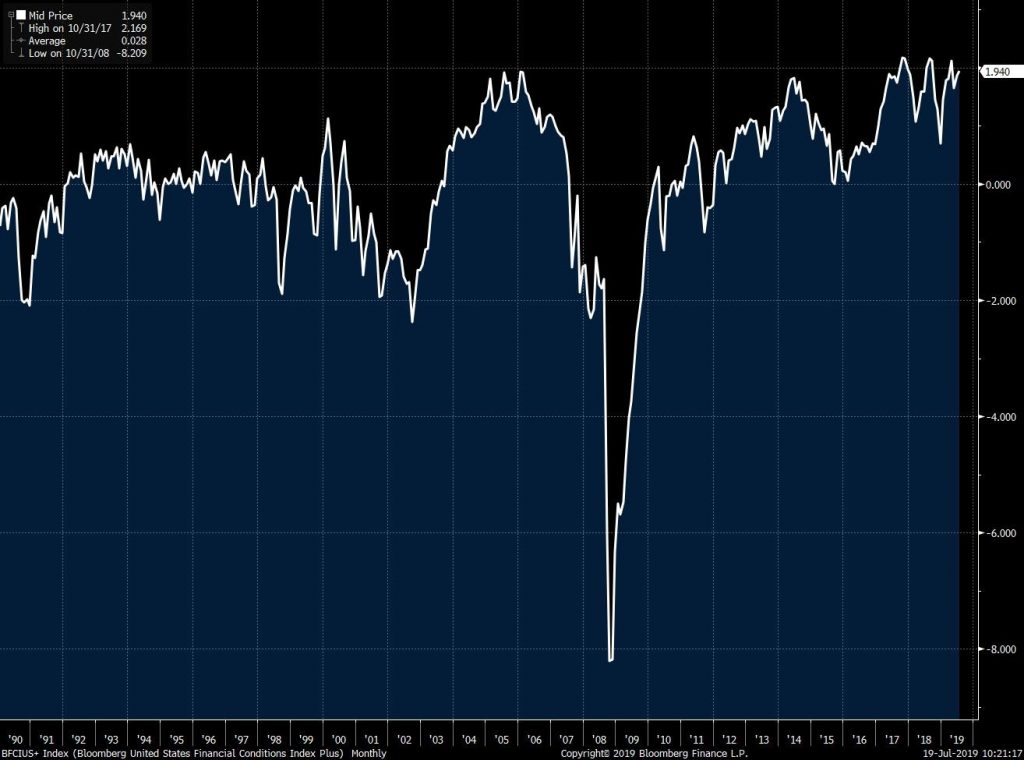
Since 1990, the Fed has never cut rates while the financial conditions index was above 0. It is now near 2. The index might not show such loose conditions if the Fed gave more hawkish guidance. This rate cut won’t have much of a positive effect on financial conditions. The goal is to keep them where they are. This is the ultimate insurance rate cut.
How Is Earnings Season Going?
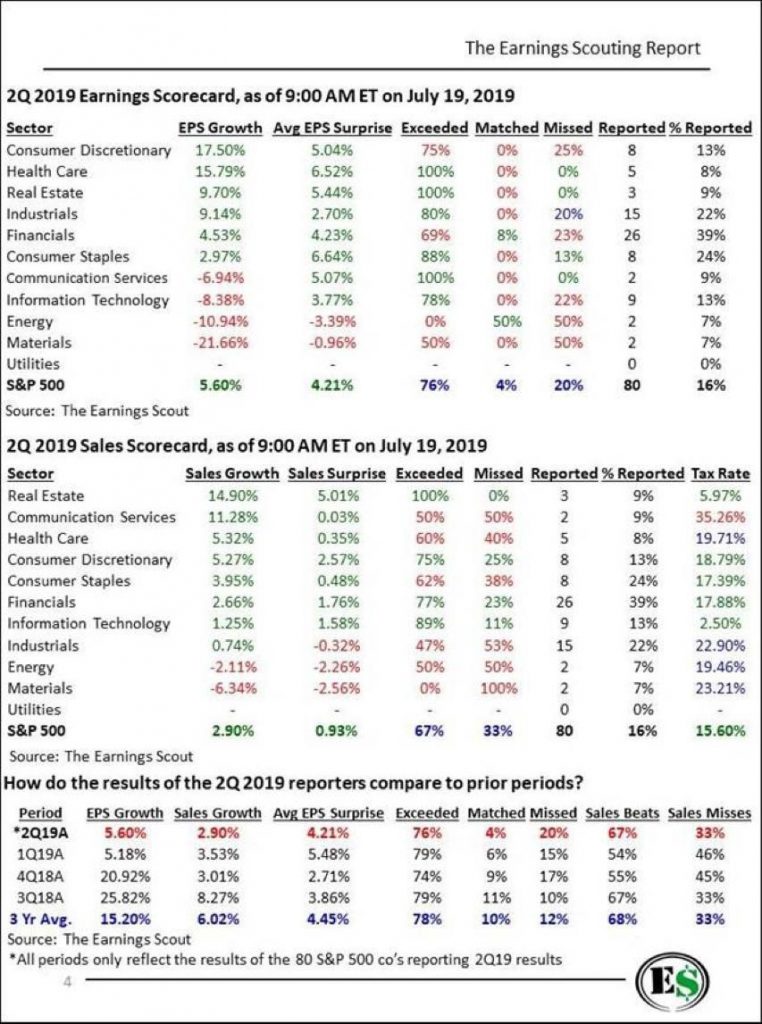
It’s very easy to lose sight of what matters to stocks which is earnings because of the sideshow that was the Fed statements this past week. It’s important to review the aggregate data rather than following the headlines because obviously, the popular stocks don’t tell the whole story. If the FAANG names miss earnings estimates, it can seem like the quarter was poor even though it might not have been.
The table below shows the results from the first 80 reports. The financials have started this earnings season off solidly. All of the major banks/investment banks beat EPS estimates. 69% of the financials beat earnings estimates. Their EPS surprise of 4.23% allowed for 4.53% growth. Overall EPS growth of 5.6% is above last quarter’s growth of 5.18%. This quarter came in with slightly higher estimates than Q1 which is why growth is higher even though the EPS surprise is 4.21% which is below Q1’s 5.48%. Revenues have beaten estimates at a 7% higher clip than last quarter. Sales growth is 2.9% which means margins increased. FactSet shows blended (estimates & actual) Q2 margins are 11.3% which is above Q1’s 11%. 7% more financials beat sales estimates than EPS estimates.
Solid Consumer Spending Growth Improvement
On Friday, July 26th, the preliminary Q2 GDP report will be released. Growth is expected to fall from 3.1% to 1.9%, but Q2 will be a stronger underlying quarter because consumer spending growth will improve. Real consumer spending growth is expected to improve from 0.9% to 3.9%. It was very unusual for headline growth to be strong while consumer spending growth was weak.
If inventory investment and net exports didn’t drive Q1 growth so high, many would have claimed the economy was either in a recession or headed for one. The chart below shows a breakdown of a few consumer spending readings.
— George Pearkes (@pearkes) July 16, 2019

Comments
Log in or sign up to join the conversation.