

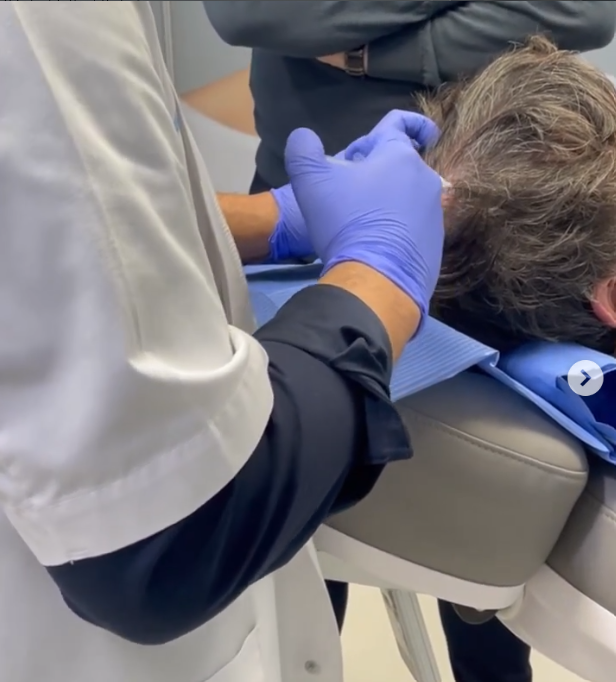
On Donaldson Plastic Surgery's patient review platform a man documented his complete PRP experience in his own words. He was in his early 30s when he first noticed thinning but his account captures something that thousands of men across Europe, including many in the Netherlands, experience in their 40s. He wrote that he scoured Google results, YouTube videos and Reddit threads looking for real testimonials before committing to anything. What he found was noise on both sides. Some people calling it a miracle. Others dismissing it without ever trying it. He decided to go through four real sessions and document what actually happened.
His goal was not to reverse complete baldness. He was clear about that. He wanted to stop the thinning, reduce the shedding and recover some of what he had already lost. After completing his sessions he wrote that PRP did exactly that. Not more. Not less. Exactly what the research said it could do for someone in his stage of loss.
That kind of honest account matters. It reflects what the data from RealSelf, one of the most trusted patient review platforms online, consistently shows. Out of 223 verified reviews for PRP hair treatment on the platform 94% of patients rated it as worth it. That is real patients giving their real verdict after going through the treatment themselves.
If you are a man in the Netherlands watching your hair thin out after 40 this article is written for you.
Why Hair Loss Hits Differently After 40
Hair loss in men rarely happens overnight. It builds slowly across years and for most men the process gains speed once they move through their 40s in a way that starts to feel impossible to ignore.
The main driver behind this is a hormone called DHT which stands for dihydrotestosterone. It forms when an enzyme in the body converts testosterone into a more potent version. That version then binds to hair follicles and causes them to shrink gradually over time. The follicle does not vanish suddenly. It miniaturises slowly until it can only produce thin fragile strands and eventually stops producing anything at all.
According to the International Society of Hair Restoration Surgery this process is not simply about having high or low testosterone levels. It is about how sensitive your individual hair follicles are to DHT and that sensitivity is determined largely by your genetics. This explains why some men lose significant hair in their early 30s while others hold onto a full head well into their late 60s. The genes you carry determine which side of that line you fall on.
The numbers in the Netherlands are significant. According to statistics compiled by Vinci Hair Clinic approximately 39% of Dutch men experience hair loss which places the Netherlands among the countries in Europe with the highest rates of male pattern baldness. Research reviewed by KSL Clinic confirms that male pattern baldness affects 53% of men between the ages of 40 and 49 globally. By the time a man reaches 50 the likelihood of dealing with visible thinning or loss reaches one in two.
The emotional side of this matters too and it is well documented. A multinational European study published in Current Medical Research and Opinion surveyed 1,536 men across major European cities and found that over 70% considered hair to be an important part of their self-image and 62% agreed that hair loss directly affected their self-esteem. The same study found that realising they were losing hair was linked to fear of becoming bald in 42% of respondents, concern about ageing in 37% and feelings of depression in 21%. These are not numbers about vanity. They are a reflection of how deeply connected appearance is to a man's everyday confidence and sense of identity.
Why Surgery Is Not the Answer for Most Men Over 40
When men first start noticing thinning hair surgery is often the first thing that comes to mind because it feels like the most permanent fix. But for most men over 40 in the Netherlands surgery is neither the most suitable nor the most practical option and it is worth understanding why.
Hair transplant surgery in the Netherlands costs between €6,000 and €12,000 according to data published by the Hair Center of Turkey's Netherlands clinic guide for 2024. That price covers one procedure. It does not account for the fact that hair loss is a progressive condition. A man who gets a transplant at 42 may find himself returning for another procedure at 48 because the untreated follicles around the transplanted area continue thinning. Surgery addresses where you are today. It does not stop the process that caused the problem in the first place.
Recovery from a hair transplant requires taking at least two weeks off from strenuous activity with significant downtime and discomfort in the days following the procedure according to research published by The Conversation in 2024. Temporary shock loss where existing hair falls out in the weeks following surgery is a documented side effect according to NIH-published research on hair transplant complications. For men who are in the early to moderate stages of hair loss and who are still in full-time work taking this kind of disruption for a problem that could be addressed non-surgically is simply not necessary.
PRP sits in a completely different category. It requires no surgery, no general anaesthetic, no extended recovery period and no significant disruption to your daily routine. It works with what your body already produces rather than harvesting and relocating tissue. And for men who are in the window where their follicles are still alive and still capable of responding to treatment it delivers measurable results without any of the commitment that surgery demands.
What PRP Is and How It Works Inside Your Scalp
PRP stands for Platelet Rich Plasma. The name sounds clinical but the concept is straightforward. It uses a concentrated version of your own blood to stimulate the hair follicles that have gone dormant or weak. No artificial substances enter your body. No foreign chemicals. No implants. Just a highly concentrated form of something your blood already produces being delivered precisely where it is needed most.
The process starts with a standard blood draw from your arm. That blood goes into a centrifuge machine which spins at high speed and separates it into distinct layers. The layer containing the highest concentration of platelets and growth factors is carefully extracted. That is your PRP. It is then injected into the specific areas of your scalp where the thinning is occurring.
What happens next is where the science becomes genuinely impressive. Those platelets carry growth factors including Platelet-Derived Growth Factor (PDGF), Vascular Endothelial Growth Factor (VEGF) and Epidermal Growth Factor (EGF). According to a review published in ScienceDirect these growth factors act on stem cells found in the bulge area of the hair follicle stimulating the development of new follicle activity and encouraging the formation of new blood vessels around the follicle root. Better blood supply brings better nutrient delivery to the follicle. Better nutrient delivery creates a healthier environment in which hair can actually grow.
Research published in Skin Research and Technology in 2024 confirmed that the growth factors in PRP stimulate hair follicle stem cells, prolong the anagen phase which is the active growth phase of the hair cycle and reduce follicle cell death. Follicles that were sitting dormant receive a signal to reactivate. Follicles that were still producing hair receive the support they need to produce thicker and stronger strands.
Johns Hopkins Medicine describes PRP as safe for administration precisely because it uses the patient's own tissues. According to Healthline the autologous nature of PRP means it significantly reduces the risk of allergic reaction that can occur with injecting external substances like cortisone or hyaluronic acid. Because the plasma comes entirely from your own blood your body does not treat it as a foreign material. It simply uses the elevated concentration of growth factors to accelerate the natural processes it was already trying to carry out. Research from the Royal College of Trichologists in London found that PRP contains 5 to 10 times the normal concentration of platelets found in regular blood. That concentrated activity is what makes the treatment effective enough to produce results you can actually observe over time.
What the Research Shows About Results
PRP is not an experimental treatment being tested in small early-stage trials. It has been studied extensively over more than a decade and the evidence base has expanded considerably in recent years.
A 2025 systematic review published in the British Journal of Dermatology confirmed that PRP stimulates dormant hair follicles and improves hair thickness in 70 to 80% of patients when administered correctly. Clinical trials reviewed by The Wellness London in 2025 showed a 31% average increase in hair density after six months of consistent treatment and a 76% overall patient satisfaction rate with PRP for hair restoration.
A 2024 study by Yesmeen et al. tracked men with male pattern baldness through four PRP sessions at three-week intervals. By the fourth month 40.6% of patients experienced mild improvements, 29.6% saw moderate improvements and 3.7% reported excellent results tracked through clinical photography and hair pull tests. The study concluded that PRP is a cost-effective and well-tolerated treatment for male pattern baldness with high patient satisfaction and minimal side effects.
A 2019 clinical study comparing PRP directly against 5% topical Minoxidil in 40 men over six months and reviewed by Wimpole Clinic found that 87.5% of men treated with PRP were satisfied with their hair appearance compared to just 37.7% of men using Minoxidil. That gap in satisfaction reflects something beyond raw clinical numbers. It reflects how the men actually felt standing in front of their own mirrors.
A broader review in the Journal of Dermatological Treatment (2023) which compared PRP to 5% Minoxidil in 64 men found that both treatments produced significant improvements in hair density and thickness. The difference in outcome between the two groups was not statistically significant. PRP delivered results comparable to one of the most established hair loss treatments on the market without requiring daily application or long-term chemical use.
Real Men Who Have Spoken Openly About PRP
PRP for hair restoration is not something only discussed in medical journals and clinical trials. Real people with public profiles have spoken honestly about using it and their experiences match closely with what the research shows.
Tarek El Moussa, a well known American television personality confirmed publicly in 2024 that he used PRP injections in his scalp to restore fullness to his hair. He was direct about it stating he had no transplants and no plugs. Just PRP. His hair grew noticeably fuller as a result and he openly credited the treatment when people asked how it happened. Actor and comedian Ike Barinholtz spoke about his own experience on the Armchair Expert podcast explaining that he had been using PRP sessions to manage his hair as he got older. He described it as something practical and low-drama that simply worked for him without requiring a major medical procedure.
These are not sponsored endorsements. They are candid moments where two ordinary men in their 40s talked about something that was working for them. The fact that their results align with what multiple clinical studies have documented makes the treatment all the more credible as a real option for men dealing with the same issue.
What the Treatment Looks Like From Start to Finish
Knowing exactly what to expect before walking through the door makes the experience far less daunting. The procedure is well structured and does not disrupt your working week.
It starts with a consultation where the doctor examines your scalp, assesses your hair loss pattern and reviews your health history to confirm that PRP is the right fit for your situation. On the day of treatment a small amount of blood is drawn from your arm just like a standard blood test. The centrifuge process to prepare the plasma takes roughly 10 to 15 minutes. Most clinics apply a numbing cream to the scalp before the injections begin so discomfort is kept minimal throughout. The injections are precise and targeted to the areas of thinning or dormancy on your scalp. The full appointment from start to finish typically takes between 30 and 90 minutes depending on the size of the area being treated.
After the session you may notice mild redness or sensitivity on the scalp for a day or two. There is no meaningful recovery period. Most men return to work and their normal routine the same day. For the best outcomes most specialists recommend three sessions spaced four to six weeks apart during the initial phase. After that a maintenance session every six to twelve months helps preserve and extend the results. The effects of a well-executed PRP treatment plan typically last between 12 and 18 months before a top-up is recommended.
When You Start to See Results and What to Expect
The most common question men ask before committing to any treatment is simple. When will I actually see a difference? It deserves a straight and honest answer.
PRP does not deliver instant results. Hair growth is a biological process and it takes time regardless of the method used to stimulate it. What happens in the early weeks after treatment is occurring under the surface where it is not yet visible. The growth factors are communicating with follicle stem cells, blood vessel formation is improving around the follicle roots and the hair cycle is being pushed from its resting telogen phase back toward the active anagen growth phase.
According to research reviewed by Kopelman Hair Restoration most patients begin noticing changes between three and six weeks after their first session. The first sign is usually less shedding in the shower rather than visible new growth. By the three-month mark new growth begins to appear. By five to six months after completing the initial sessions the improvement in density and coverage becomes clearly visible in photographs.
The 2024 Yesmeen et al. study tracking patients across four sessions found that by the fourth month nearly three quarters of participants had experienced measurable improvements in hair density and quality. That is a consistent pattern replicated across multiple independent studies. The 2025 UK Regenerative Medicine Society reported that temporary scalp sensitivity occurred in only 15% of cases and mild swelling resolved within a short period for the vast majority of patients confirming the treatment's strong safety record.
Who Gets the Best Results From PRP
PRP works best for men who are in the early to moderate stages of hair loss. The reason comes down to follicle biology. If the follicle is still alive and simply dormant PRP can provide the signal it needs to wake back up. If the follicle has completely died and the scalp has become smooth and fibrotic in that area there is nothing left to stimulate and no treatment can restore growth there.
This is why starting earlier in the process almost always leads to better outcomes. Men in their 40s noticing thinning at the crown or a gradually receding hairline are typically ideal candidates because their follicles are weakened but still viable. The treatment is suitable for both men and women and works across different hair types and skin tones. Because the plasma comes entirely from the patient's own blood the risk of allergic reaction or rejection is essentially eliminated.
Men with certain medical conditions including blood clotting disorders or some autoimmune conditions may not be suitable candidates. This is assessed carefully during the initial consultation before any treatment is proposed so there are no surprises and no pressure to proceed before everything is confirmed appropriately.
Why Dutch Men Are Choosing PRP Over Other Options
The Netherlands has a strong and well-developed cosmetic medicine sector with a population that is increasingly informed about non-surgical treatments and increasingly open to using them. Dutch men in particular tend to favour practical, evidence-based solutions that deliver clear results without unnecessary complexity or downtime. PRP fits that preference directly.
With nearly 39% of Dutch men affected by hair loss and a growing awareness that surgery carries real costs, real recovery time and real limitations for men with progressive hair loss the shift toward PRP has been consistent. Clinics across Rotterdam, Rijswijk and Breda offer PRP as part of structured hair restoration programmes and the patient satisfaction rates across the Netherlands reflect a treatment that is consistently delivering on what it promises.
What draws Dutch men specifically to PRP is also the honesty of the approach. It does not claim to stop hair loss permanently. It does not promise something that science cannot back. It works within the body's own systems to support and extend what the follicles are still capable of producing. For a population that values straightforward information and transparent medical communication that is a significant part of its appeal. For men who want to understand exactly what the procedure involves and what a proper Dutch treatment plan looks like, the information about prp treatment available directly on the clinic page gives a clear and detailed picture of what to expect.
The Right Time to Start Is Before the Window Closes
Hair loss does not pause and it does not reverse itself without intervention. The longer a man waits the more follicles cross the threshold where no treatment can bring them back. That is the honest reality.
If you are in your 40s and you are seeing your crown look thinner, your part getting wider or your hairline sitting slightly further back than it did two years ago, those are signs that your follicles are still alive and still capable of responding. That is exactly the window where PRP can make a real and lasting difference.
For men in the Netherlands who want to address thinning hair without surgery, without a daily chemical routine and without introducing anything artificial into their body PRP is one of the most thoroughly researched non-surgical options available right now. The science backs it. The patient outcomes are documented across multiple independent studies. And the path forward is far clearer than most men realise until they actually take the time to look into it properly.
Your follicles are worth protecting. The earlier you act the more you have to work with.
Comments
Log in or sign up to join the conversation.