

Friday looked polite.
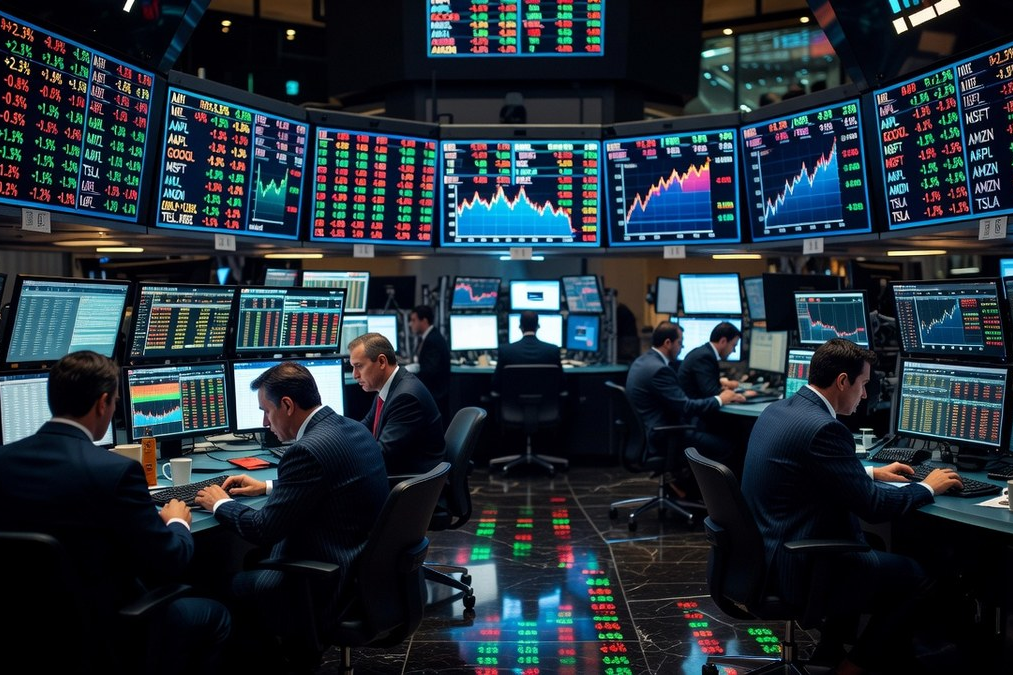
The Dow climbed about 518 points to finish near 53,277. The S&P 500 added roughly a third of a percent and closed around 7,674. The Nasdaq Composite finished higher too. If you only watched the last green candles of a light summer session, you could talk yourself into a normal August afternoon.
The week underneath those candles was anything but polite.
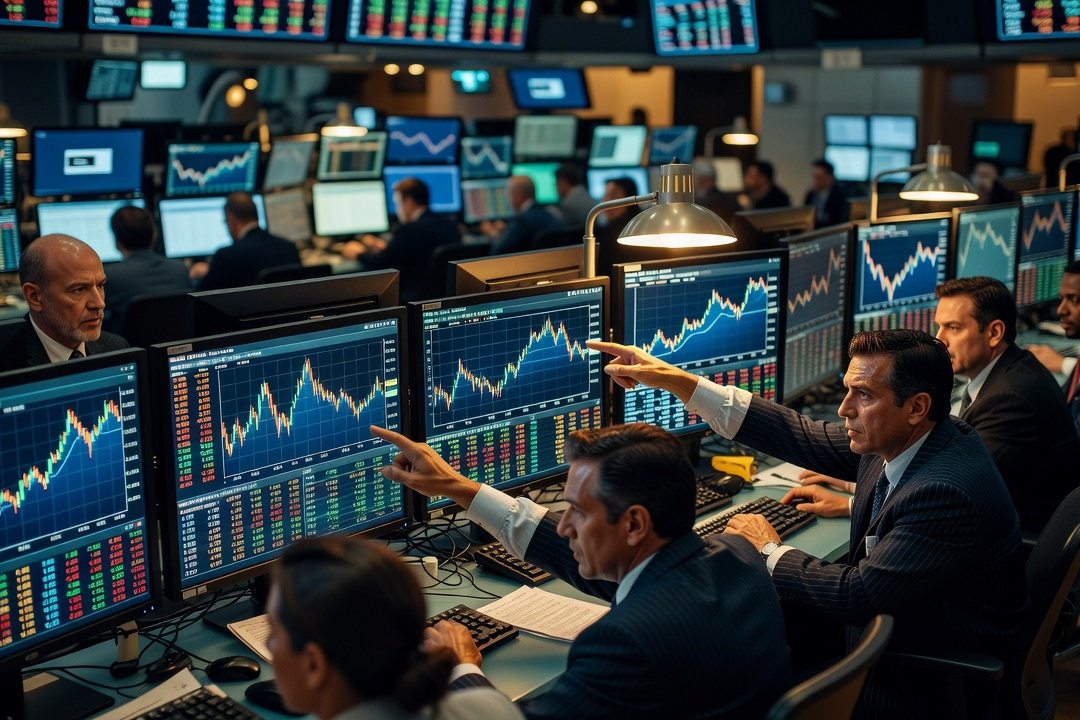
The S&P 500 dropped about 1.4% for the five days and snapped a three-week winning streak. The Nasdaq fell about 2%. The Dow lost roughly 0.9% and stretched a second weekly decline. The Russell 2000 of smaller companies dropped about 1.7%, one of its sharper weekly hits since early summer. After a stretch where every dip still felt buyable, the market finally paid bills it had been sliding to the edge of the desk.
Bonds. Oil. A softer read on the American cart. A biotech session that reminded everyone discovery still moves money. And a bitcoin (BTC.X) rally that treated a Treasury fix like a starting gun.
This is the full map of that week, what actually moved, and what is still hanging over the tape as Jackson Hole arrives.
Scoreboard first
Numbers only earn a seat if they change the story. These ones did.
Week ended August 21
S&P 500 about −1.4% · Nasdaq about −2.1% · Dow about −0.9% · Russell 2000 about −1.7%
Friday salvage: Dow roughly +518 points · S&P and Nasdaq each about +0.4%
30-year Treasury yield poked above 5.3%, highest since 2007
Brent crude more than +6% on the week
Bitcoin north of +20%, through the mid-$70,000s
Gold strong week near the mid-$4,500s and higher · dollar softer
Walmart (WMT) double-digit hit · Moderna (MRNA) roughly doubled on cancer vaccine data
If you only needed one sentence: stocks lost a streak, bonds and oil ran the microphone, and bitcoin refused to read from the same script.
Monday through Friday: how the mood broke
The week did not start with a crash. It started with gravity.
Early sessions pulled the major averages further from the fresh highs they had been defending. AI-linked names that had done the heavy lifting for months caught fresh skepticism the second long yields started acting like they had unfinished business. Nvidia (NVDA), Micron (MU), Broadcom (AVGO) and the broader chip complex spent real time as weights rather than life rafts. That matters because this market has trained a generation of traders to treat semiconductor strength as weather. When that weather turns while rates are rising, the whole growth complex feels the draft.
By midweek the bond story stopped being background music.
Long-end Treasuries were selling off on a cocktail everyone can say out loud now: a federal debt pile that has topped $40 trillion, a deficit path that still looks heavy, inflation anxiety fed by oil, and a wall of corporate issuance tied to the AI build-out. Growth companies do not live in a vacuum. They live in a discount-rate world. When the 30-year yield is sitting at levels last associated with a completely different American era, every long-duration equity story gets re-priced whether the CEO likes it or not.
Then Treasury tried to change the channel.
Bessent puts a hand on the wheel
Treasury Secretary Scott Bessent's midweek move was the political and market event of the week, and it deserves to be understood without cable theatrics.
The department said it would at least double long-dated buybacks, lifting operations toward $4 billion a pop from $2 billion, with the heavier schedule set to run from early September into early November. The official language sounded like market function and liquidity support for older securities. The market heard something simpler: long yields had gotten high enough that official America wanted them lower.
For about a day, it worked the way interventions often work at first. The 30-year yield cracked lower hard. Risk assets exhaled. Gold and silver jumped. Bitcoin lit up. The dollar softened. Fast money treated the announcement like proof that the administration had a pain threshold near those multi-decade yield highs.
Then the second day arrived, as it always does.
Yields climbed back toward the pre-announcement neighborhood. Equity relief faded. Analyst notes started using words like band-aid. The honest critique is not complicated. Buybacks funded by shuffling duration are not the same thing as a smaller deficit. They can damp a disorderly move. They do not delete the stock of debt, the path of spending, or the market's right to keep testing official resolve.
Bessent followed up by talking up a bigger toolkit and floating more focus on fiscal consolidation ahead. That line matters. If the follow-through is real budget discipline, the bond market may eventually care. If the follow-through is more verbal intervention every time 5.3% on the long bond hurts, traders will treat Treasury like a counterparty with a known stop rather than a referee.
My take is simple. Officials looked worried enough to change the calendar. The bond market looked unimpressed enough to sell the bounce. That gap is now part of the tape.
Oil refused to let inflation die
While bonds grabbed the headlines, crude did the quiet damage.
Brent's weekly gain above 6% and a multi-day winning streak in U.S. crude were not about one inventory surprise. They were about the same Middle East standoff the market keeps trying to price as temporary and keeps having to reprice as durable, especially around the Strait of Hormuz. Every dollar higher at the pump and every barrel higher in the futures complex feeds the exact inflation worry that makes long bonds harder to own.
That is the loop equities could not escape this week.
Higher oil feeds stickier inflation anxiety. That anxiety feeds higher long yields. Higher long yields make the math tougher for growth stocks and housing-sensitive stories. Weaker risk appetite follows. Energy names caught a lift when crude ran. Most of the rest of the market experienced oil as a headwind dressed up as a commodity chart.
If you are looking for the underappreciated villain of the week, do not stop at Treasury supply. Look at the energy complex keeping the inflation argument alive right as Washington tried to talk long rates down.
Walmart and the American cart
Every cycle has a stock people treat like a weather station for real life. Walmart is still that stock.
This week the fortress flashed yellow.
The company cleared pieces of the quarter on paper, then guided and described the consumer in a way Wall Street did not want to hear. Comparable sales came in softer than the comfort narrative required after years of resilience. In the heat of the reaction, the stock took a double-digit beating and dragged other retailers lower with it. Costco (COST), grocery names, and the broader staples complex felt the splash damage because the question was never only about one ticker. The question was whether the American cart is still as sturdy as the last two years of commentary assumed.
Rising gas prices make that question sharper. Shoppers do not need a recession declaration to trade down, delay discretionary junk, or get mean about price. They need a few painful fill-ups and a weaker paycheck feel. One report does not make a hard landing. It does put every consumer discretionary story back on probation.
Ross Stores (ROST) offered the other side of the retail coin later in the week, jumping after better results and a raised annual view. That split is useful. Value and off-price can still work while the broad middle feels pressure. It is also a reminder not to turn one ugly Walmart session into a cartoon about the end of the consumer. The tell is direction and breadth over the next several reports, not a single headline.
The Mag 7 were not a single animal
One lazy habit in weeks like this is to say tech sold off and move on. The magnificent names did not move as one bloc, and that split is part of the real story.
Tesla (TSLA) and Apple (AAPL) had stretches where they looked like the bounce apparatus inside the group, especially into Friday's salvage attempt. Meta (META) continued to live under the weight of its AI spending story: investors still argue whether the checks are buying a fortress or buying a very expensive hope. Nvidia and the wider semiconductor complex spent more time as the pressure valve for higher long rates and valuation fatigue. Amazon (AMZN) sat in the uncomfortable middle where consumer worries and cloud ambition share one ticker.
The point is not a stock-by-stock report card. The point is that the one-factor shortcut of Mag 7 up equals market healthy broke down again. When long rates jump, the market stops paying a single multiple for seven different businesses. It starts asking which of those businesses can still grow if money is no longer free and the consumer is no longer a blank check.
Semiconductors paid the duration tax
If you want the cleanest expression of the week's math, look at chips.
The semiconductor complex was one of the clearest laggards, with the major chip group having a rough week near the wrong end of a roughly 5% kind of drawdown depending on the window. That is what higher long-term yields do to businesses whose bull case is crowded with 2027, 2028, and 2030 cash flows. The AI build-out can still be real. The financing and valuation of that build-out still sit downstream of the bond market.
There is also a second-order issue almost nobody prices cleanly on day one. Hyperscalers and data-center names increasingly fund capital spending with debt and long-dated planning assumptions. When the government's own long bond is misbehaving, the private credit that funds the shovel-ready AI dream gets more expensive too. This week was a reminder that AI is the future and AI is easy to underwrite at any yield are not the same sentence.
Healthcare had a real discovery day
Not everything was macro weather.
Moderna and Merck (MRK) posted late-stage melanoma data on a personalized mRNA cancer therapy designed to train the immune system against a patient's tumor mutations and then pair that with Merck's Keytruda. The trial cleared the bars that matter to patients and investors: keeping the cancer from coming back, and keeping it from spreading to distant sites, better than Keytruda alone in a large high-risk population after surgery.
Moderna stock roughly doubled in a session. Healthcare more broadly was one of the few corners of the equity market that felt like discovery instead of discount-rate arithmetic. Into Friday, the sector was still being talked about as a relative bright spot for the week.
I am no oncologist and I will not pretend otherwise. I can still tell the difference between a market pricing a new therapeutic category and a market pricing another Washington headline. That Moderna session was category news. It also failed to rescue the Nasdaq for the full week, which is the cleanest possible proof of how heavy the rate and oil drag really was. When a stock can double on legitimate late-stage cancer data and the benchmark still loses the week, the macro tape is the boss.
Amylyx's (AMLX) separate clinical momentum earlier in the stretch fit the same broader biotech undercurrent: real human endpoints still cut through when the rest of the screen is arguing about yields. The market is not done with biology just because software grabbed the last two years of oxygen.
Bitcoin and gold threw a different party
Here is the split screen that should bother tidy narratives.
While the S&P lost the week, bitcoin ripped. Mark the week from the downtrodden open near the low-$60,000s through the push above $77,000 and toward $78,000 on some quotes, and you are looking at a gain north of 20%. Crypto desks called it the best week since 2023. Billions in short bets got squeezed out as the move fed on itself. Crypto-linked equities such as Coinbase (COIN) and the big corporate bitcoin balance-sheet names tore higher with it. Robinhood (HOOD) caught a huge bounce as retail risk appetite showed up in the usual places.
Why would bitcoin scream higher while stocks lost a streak?
The popular answer is the Treasury buyback news. Hard-asset traders read official demand for long bonds as a cousin of yield suppression and dollar debasement, even if the lawyers insist the operation is only liquidity support. You do not need to settle the semantic fight to see the portfolio behavior. Gold strengthened. Silver had violent upside sessions when yields first cracked. The dollar softened. A slice of the market stopped treating Treasuries as the only adult in the room and started paying up for things Washington cannot create with a keystroke.
Whether that trade lasts is a harder question than whether it worked this week. If long yields settle and real rates stop scaring people, some of the emergency demand for hard assets can fade. If Washington keeps having to lean on the long end while oil stays firm and deficits stay wide, the debasement trade gets more believers every month. For the five days that just ended, bitcoin was the clearest winner on the board.
Breadth, volume, and the Friday mirage
Friday's rebound came with a few genuine supports. Yields stabilized enough to let buyers stand up. A strong business-activity reading argued the economy is not rolling over in a neat recession script. Banks such as JPMorgan (JPM) and Goldman (GS) helped the tape. Ross Stores proved not every retailer is Walmart. Crypto strength spilled into related stocks again.
It still had the feel of a summer Friday salvage more than a regime change.
Volume was light. Several index gains traced back to a familiar handful of names rather than a broad risk-on stampede. Breadth was fine enough to feel constructive during the day and still not strong enough to rewrite the weekly ledger. That distinction matters for anyone who uses one green close to declare the all-clear. The week said something. Friday said the market is not dead. Those can both be true.
What is actually at stake now
Strip away the day-to-day chatter and three arguments are left standing.
First, can long-term yields stay below the level that forces official panic? The market now thinks it saw Treasury's pain threshold near those 19-year highs on the 30-year. If yields push back through that zone, the next response may have to be bigger, more fiscal, or more awkward. If yields settle, growth stocks get oxygen again.
Second, is the consumer bending or breaking? Walmart is one data point. Gas prices and real wage feel will write the next ones. A bending consumer means rotation, discounting, and longer shopping cycles. A breaking consumer means the earnings revisions get mean in places Wall Street still treats as safe.
Third, is the AI complex durable enough to live with expensive money? The build-out can remain historically important and still suffer a valuation and financing storm. Semiconductors already paid part of that bill this week. More of that debate gets settled in hard guidance and capital-spending commentary than in manifesto keynotes.
Around all three sits Jackson Hole on Aug. 27-29, with markets hungry for any clarity on how policymakers are reading inflation, growth, and financial conditions after a week in which the bond market briefly looked more powerful than the stock market.
What I am watching next
Not a shopping list. A radar screen.
The 10-year and 30-year after the buyback headlines stop being new. If yields keep climbing once the announcement sugar is gone, equities will feel it again fast.
Oil and the pump. A second week of crude strength turns a nuisance into a macro input.
Follow-through consumer data and retail commentary. One Walmart report is a flare. A cluster is a regime.
Semiconductor relative strength. Chips leading again would say duration fear is cooling. Chips lagging again would say the bond market is still the boss.
Bitcoin and gold on down days in stocks. If hard assets keep rising when equities cut, the debasement trade is getting sticky. If they fall together, this week was mostly a squeeze.
Jackson Hole tone. Markets do not need a formal policy pivot. They need to know whether official America sees sticky inflation risk or a growth scare as the bigger enemy.
The honest end of the week
I do not read one rough week after a long grind higher as the end of the cycle. I do read it as the end of the free pass.
For months, a lot of portfolios were built on the idea that AI would outrun every other argument. This week, bonds and oil outran AI for five full sessions. Biotech proved real science can still seize a day. Bitcoin proved a slice of capital is more worried about official credibility and long-end dysfunction than about the Nasdaq's winning streak. Walmart proved the American shopper still gets a vote.
Friday was a relief. It was not a verdict.
Bottom line: The week belonged to whoever was watching long yields, crude, and hard assets instead of waiting for the old three-week equity script to save them, and the next verdict arrives when the bond market decides whether Bessent's bigger buybacks were a backstop or a dare.

Comments
Log in or sign up to join the conversation.