

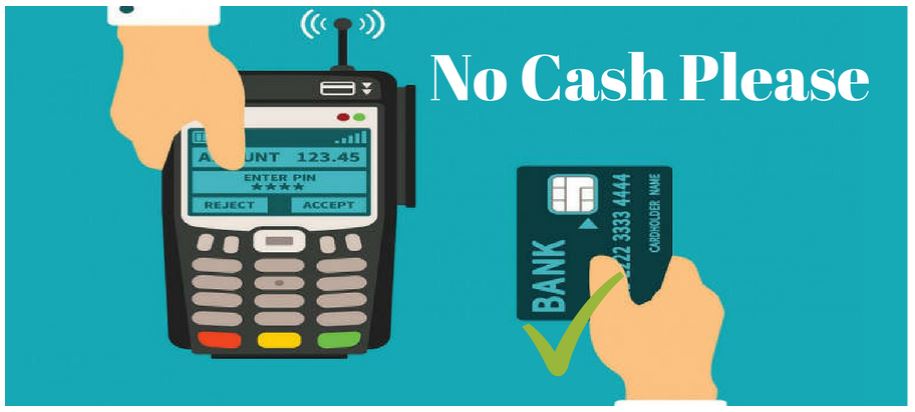
As we become a more digital society, our relationship with cash is changing. Less than half of all payment transactions are now made with cash. Here we will look at why we have fallen out of love with cash?
History of cash
Cash in economic terms is money in a physical form e.g. bank notes and checks. Anthropologists and historians trace cash as far back as 1000 BC. Whereas, paper money was first introduced in China around ( AD 806-821). Over time the evolution of currency saw numerous systems implemented until 1971.Usually these involved the use pf precious metals such as gold and silver. From 1971 every economy in the world has relied on floating exchange rates and the use of “fiat currency”. “Fiat currency” or money has no value in itself, all value if any is determined by governments.
With the use of cash came other products and services such as ATMs. Designed to provide fast cash transactions, ATMs are found all over the world. Paul Volcker (Former US Federal Reserve Chairman) once commented that ATMs were “the only useful innovation in banking”.
Cash and ATMs continued to be king, until 1988 when the first card transaction took place. Now as the ATM celebrates 50 years, the use of cash is dwindling.
What is driving cashless transactions?
Cashless transactions have been steadily on the rise since the 1990’s. During this time cash still accounted for over 50% of all transactions. This all changed in 2016, when it was reported that over 50% of all transactions were done by cards. Marking the move from paper money (cash) to plastic money (cards).
Reasons behind the decline of cash include the increased use of the internet. It is estimated that over 3,957,000,000 or (51%) of the world population use the internet. Online shopping, banking and social media account for the majority of internet use. Online shopping is perhaps the biggest driver of cashless transactions. Now on most online retailer sites, shoppers will have numerous payment options to choose from. Most common online payment methods include debit and credit cards, idebit, and merchant pay. Debit and credit cards are the oldest form of cashless payment online. Until ‘cyber security’ became an issue card payments were the most trusted. New popular online payment methods like iDebit are increasingly used due to their focus on user security. This is because no debit or credit card numbers are required or stored online. To make a payment iDebit allows users to access their online bank accounts. This is done safely and securely through the users banking provider. Payments are then authorised from the users bank account. Originally, iDebit was used to make payments securely to online casinos.
Merchant pay methods such as Amazon Pay are also becoming more popular. Amazon recently announced that 33 million people have used Amazon payments.
Who benefits from cashless payments?
Online retail giants like Amazon and Apple both benefit from consumers using cashless payment methods. This is due to their vested interests in their own merchant pay systems. Amazon in particular have a user base of 300 million people. Therefore, it is in Amazon’s interest to help encourage cashless payments.
Credit and Debit Card companies also stand to profit from killing off cash. Visa CEO Al Kelly put it bluntly at an investor event saying “We’re focused on putting cash out of business.”
If cash transactions were an animal species it would be marked as endangered. With so many predators out there, it is not if but when cash will be extinct.
Comments
Log in or sign up to join the conversation.