

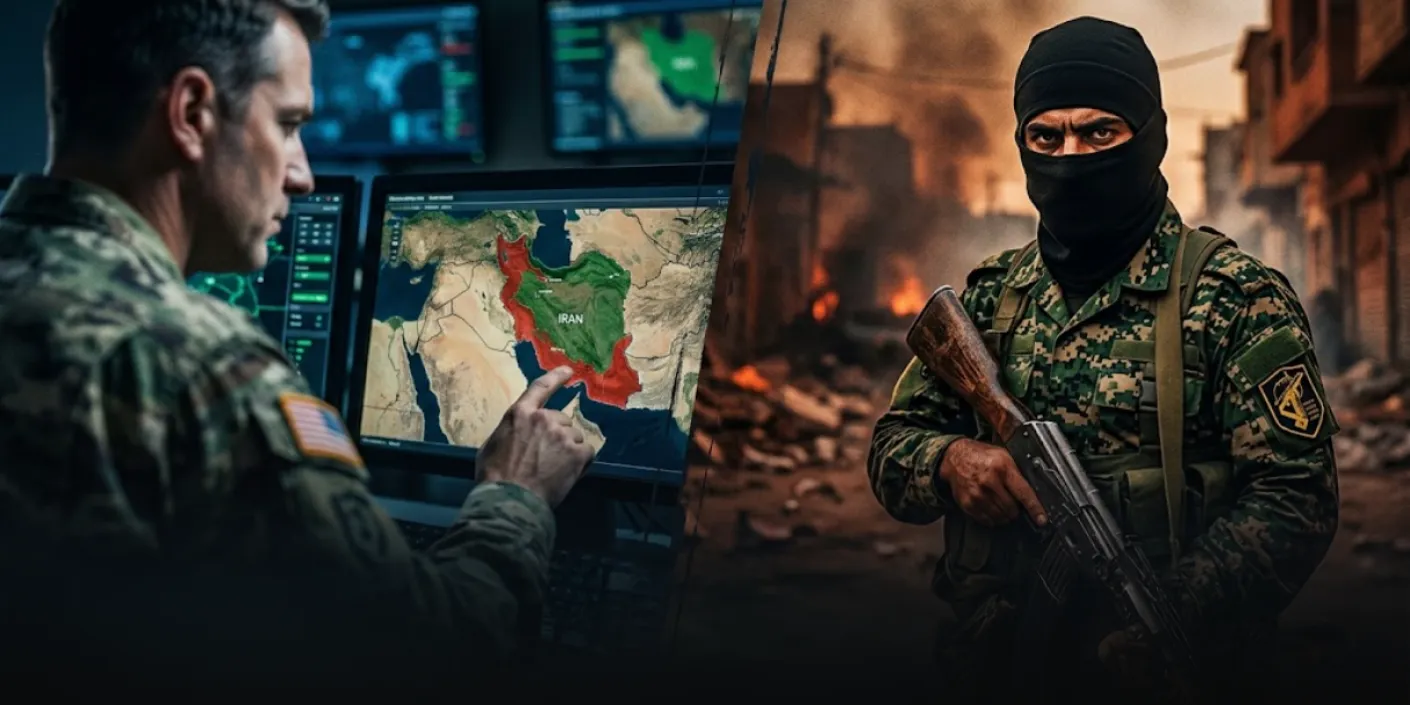
How much more pain is the Iranian regime willing to endure before making a deal? Probably far more than Washington anticipates, or the US public is willing to tolerate.
That’s the warning Jim Bianco delivered in a recent interview with Financial Sense Newshour on the unfolding standoff in the Middle East.
At the heart of Bianco’s concern is the belief that the current Iranian regime—particularly the Islamic Revolutionary Guard Corps (IRGC), which effectively runs the country—is prepared to withstand far more hardship than Western policymakers originally planned for.
If that’s true, the oil shock, the Strait of Hormuz disruption, and the broader economic ripple effects could last much longer than investors expect.
The Pain Threshold: Why the IRGC May Not Blink
The prevailing theory is simple: squeeze Iran economically, and eventually it will negotiate. Shut down oil exports, tighten financial pressure, let internal dissatisfaction build—and the regime will have no choice but to deal.
Bianco isn’t convinced.
“I think we in the West underestimate the amount of pain the Iranian regime is willing to endure,” he said. He pointed to January protests over rising prices, when the regime responded with deadly force. Even by conservative estimates, thousands of Iranian protestors were killed. “That’s their answer to economic pain,” he noted.
The IRGC, which holds enormous economic and political power inside Iran, has little incentive to fold. “A revolution in the country doesn’t mean they just change the leadership… that means they [the Iranian people] kill you first and then change the leadership.”
In other words, enduring economic pain may be preferable to risking regime collapse.
Compounding the risk, Iranian officials have signaled confidence that higher oil prices will shift the pressure westward. According to Bianco, the bet appears to be: hold firm, let crude climb higher, and wait for Western consumers to revolt over sky-high gasoline prices.
“That’s the high-stakes game of chicken we’re playing right now.”
Oil at $100, Gas at $4.50
That game is already visible at the pump.
Crude oil has surged well over $100 a barrel during this conflict, driven by disruptions to vital oil flows through the Strait of Hormuz. Before it started, global oil consumption ran at roughly 100–105 million barrels per day. Production roughly matched that level. Now, with shipments restricted, supply has fallen into the low 90s.
“Somebody has to not consume 10 to 15 million barrels of oil a day,” Bianco said bluntly. “Somebody has to not fill up their car.”
That’s what economists call demand destruction—and it happens through price. When supply falls short, prices rise until marginal buyers are forced out of the market.
The U.S. doesn’t face outright shortages, but consumers are paying more. The national average for gasoline has climbed from $2.98 before the war to $4.45. That’s roughly $25 extra per tank.
So far, though, Americans are grumbling—but not cutting back dramatically. “Most people go to the pump, see the price, probably have a choice four-letter word they mumble… and then they fill up their car,” Bianco said.
The result is higher inflation without a sharp slowdown in economic activity—at least for now.
The Strait of Hormuz: A Broken Artery
At the center of everything lies the Strait of Hormuz, one of the world’s most vital shipping chokepoints.
“The Strait is broken. It has to be fixed,” Bianco emphasized.
But here’s the problem: there doesn’t appear to be a clean military solution. If there were, shipping would already be flowing normally.
Iran’s strategy relies on asymmetric warfare—cheap drones launched in swarms from decentralized locations. “I have more drones than you have bullets,” Bianco summarized. Even if most are intercepted, a small percentage getting through is enough to deter commercial shipping.
From a military standpoint, taking down 95% of drones may sound acceptable. For a shipping company, it’s not. “If I have 40 ships, that means two of them are going to sink… that doesn’t sound like a good deal to me,” he said.
As a result, global energy flows remain constrained—not because of massive naval battles, but because risk tolerance in commercial markets is near zero.
And if Iran is prepared to let this standoff drag on, the oil supply deficit compounds daily. The world wants roughly 105 million barrels every day and receives only 90 to 95, which continues to put upward pressure on prices.
A Conflict That May Not End Quickly
If there is a unifying theme in Bianco’s outlook, it’s duration.
While the world currently awaits on whether a deal is going to go through, “I am worried that we are going to see this become more protracted than we all hope or want,” he said.
In that scenario, oil doesn’t retreat back to pre-war levels. Shipping lanes don’t normalize for six months or longer. Political and domestic pressures remain elevated. And the regime Washington expects to fold simply digs in.
The crucial question may not be how high oil goes. It may be this: How far is the Trump administration willing to go—and for how long—to force Iran into a deal? The exits are closing. Escalate, and a conflict Americans have already rejected grows harder to contain. Walk away, and the regime that emerges will be more defiant, more entrenched, and closer to the bomb than the one Washington set out to pressure. Oil prices are the symptom. In Bianco's telling, the real crisis is a policy that has run out of good options—and is running out of time to find one.

Comments
Log in or sign up to join the conversation.