

In many respect, Donald Trump inherited a Goldilocks economy in macroeconomic terms, “not too hot, nor too cold, but just right”.
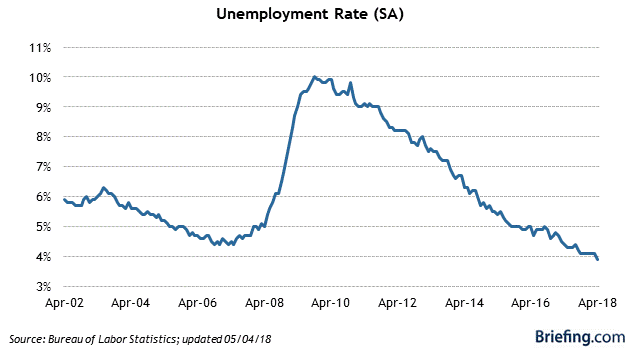
In April the seasonally adjusted U.S. unemployment rate declined to 3.9% and the inflation rate, using the preferred Fed indicator, had still not reached 2%. Once again, the latest data indicate an absence of evidence of wage-push inflation.
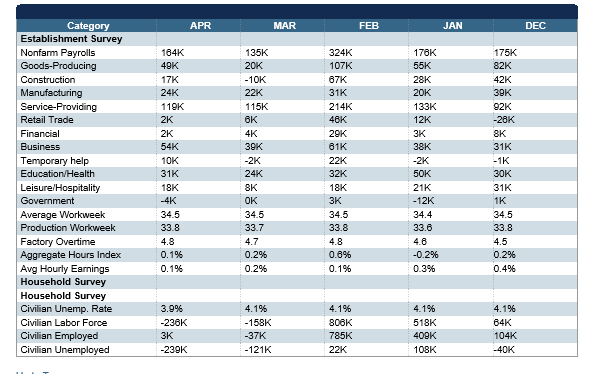
At 3.9%, the April unemployment rate was at its lowest level since December 2000. The decline from the previous month’s 4.1% level was primarily due to a drop in the labor force participation rate to 62.8% in April from 62.9% in March. Labour force participation declined in April even though job prospects were clearly very bright.
In April nonfarm payrolls increased by 164,000 compared with a 135,000 advance in March and a massive surge of 324,000 increase in February. While the weather in March and April may have limited some new hiring, nonetheless there is little doubt that the slowing in average monthly job growth also reflects the fact that the economy is running out of unemployed workers.
Indeed, employers in manufacturing and construction are reporting hiring problems, and the latest monthly data seems to confirm that this is the case.
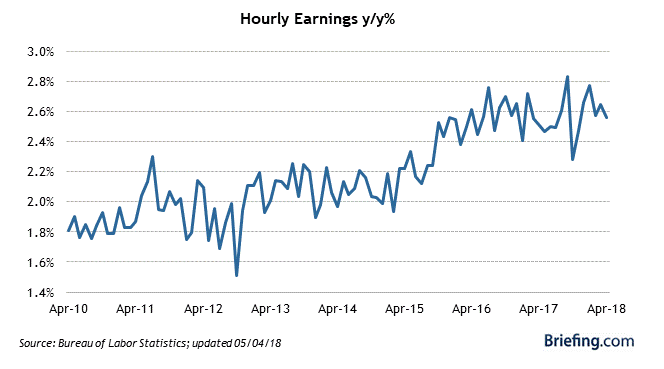
Average hourly earnings increased by 0.2% in April, the same pace as in March. Over the last 12 months, average hourly earnings have risen 2.6%. If one assumes an average annual labor productivity gain of 1%, this would suggest that wage-push inflation is in the low 1.6% range. In sum, there were few surprises in the latest two job market surveys. Accordingly, the Federal Reserve will probably stick to its plan to raise interest rates at least two more times this year.
If there are only gradual interest rate hikes ahead, the "Goldilocks" growth story stays intact and earnings remain robust. But with the U.S. economy already doing so well, some have raised concerns that there could be a risk of over-heating with the amount of fiscal stimulus that is coming up.
The Two Key Labour Market Surveys – April 2018


Comments
Log in or sign up to join the conversation.