

The intersection of healthcare and technology is a high-stakes arena where public optimism often clashes with private corporate realities. Retail investors frequently rely on forward-looking revenue projections and disruptive market narratives to justify massive valuations. However, institutional analysts focus on a much more grounded metric: the actual flow of executive capital. Recent Form 4 filings show a noticeable increase in executive distributions across the broader health-technology sector. When the very architects of an insurance platform begin to systematically reduce their exposure, it serves as a glaring macroeconomic warning. Ignoring this shift in the boardroom is a guaranteed way to find yourself trapped in a long-term bearish cycle.
🚨 THE DISTRIBUTION PHASE: Reading the Institutional Tape 🚨
A singular stock sale by a chief executive can easily be attributed to personal tax obligations or routine portfolio diversification. But when multiple insiders coordinate their liquidations over consecutive financial quarters, the narrative completely changes. By meticulously analyzing the OSCR insider selling trend, proactive traders can visualize the exact price zones where internal management believes the stock is fully valued. A sustained pattern of insider selling acts as an invisible, structural ceiling on the asset's upward mobility. Every time the stock attempts to rally, it is met with the heavy overhead supply of executive equity hitting the open market, mathematically crushing retail momentum.
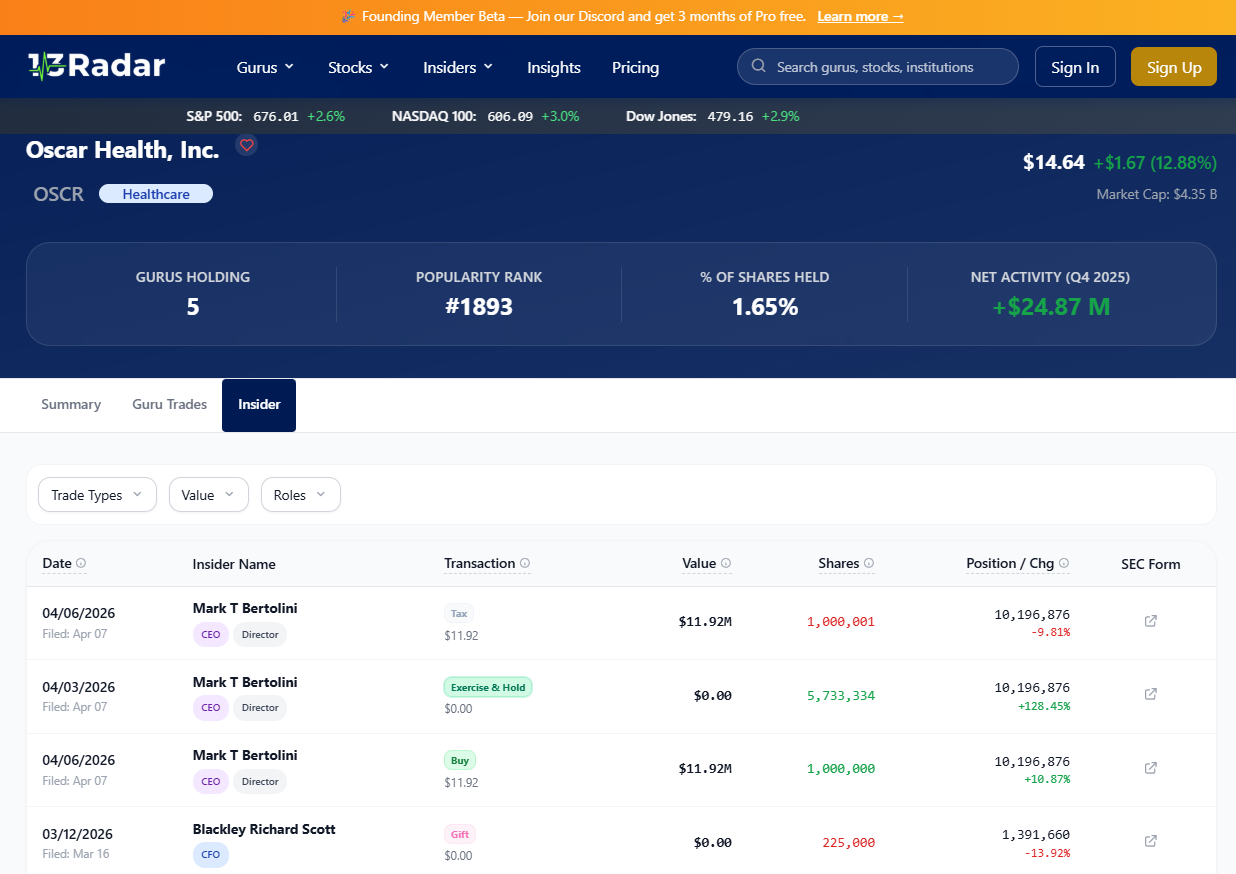
Structural Headwinds and Executive De-Risking
Operating a modern health insurance platform requires immense capital and navigating brutal regulatory frameworks. As these companies approach crucial fundamental limits—such as peak member enrollment or maximum allowable medical loss ratios—the risk profile expands significantly. Executives are acutely aware of these internal metrics long before they are published in quarterly earnings reports. When leadership anticipates severe margin compression or increased regulatory scrutiny, their immediate fiduciary response to their own wealth is to aggressively de-risk. They execute pre-planned selling programs to lock in profits while retail traders are still buying into the outdated hyper-growth story.
Re-Calibrating Your Portfolio's Risk Parameters
Navigating an insurtech stock trapped in a heavy distribution cycle requires extreme discipline and a willingness to abandon emotional biases. You cannot successfully trade a high-beta asset by hoping the fundamental narrative will suddenly overpower the massive volume of insider selling. If the real-time regulatory disclosures confirm that the C-suite is persistently running for the exits, your immediate strategy must pivot to capital preservation. Do not attempt to catch a falling knife or average down into a declining trend. Wait patiently on the sidelines until the regulatory tape definitively proves that the heavy executive selling has been exhausted and replaced by fresh, open-market accumulation.
Comments
Log in or sign up to join the conversation.