
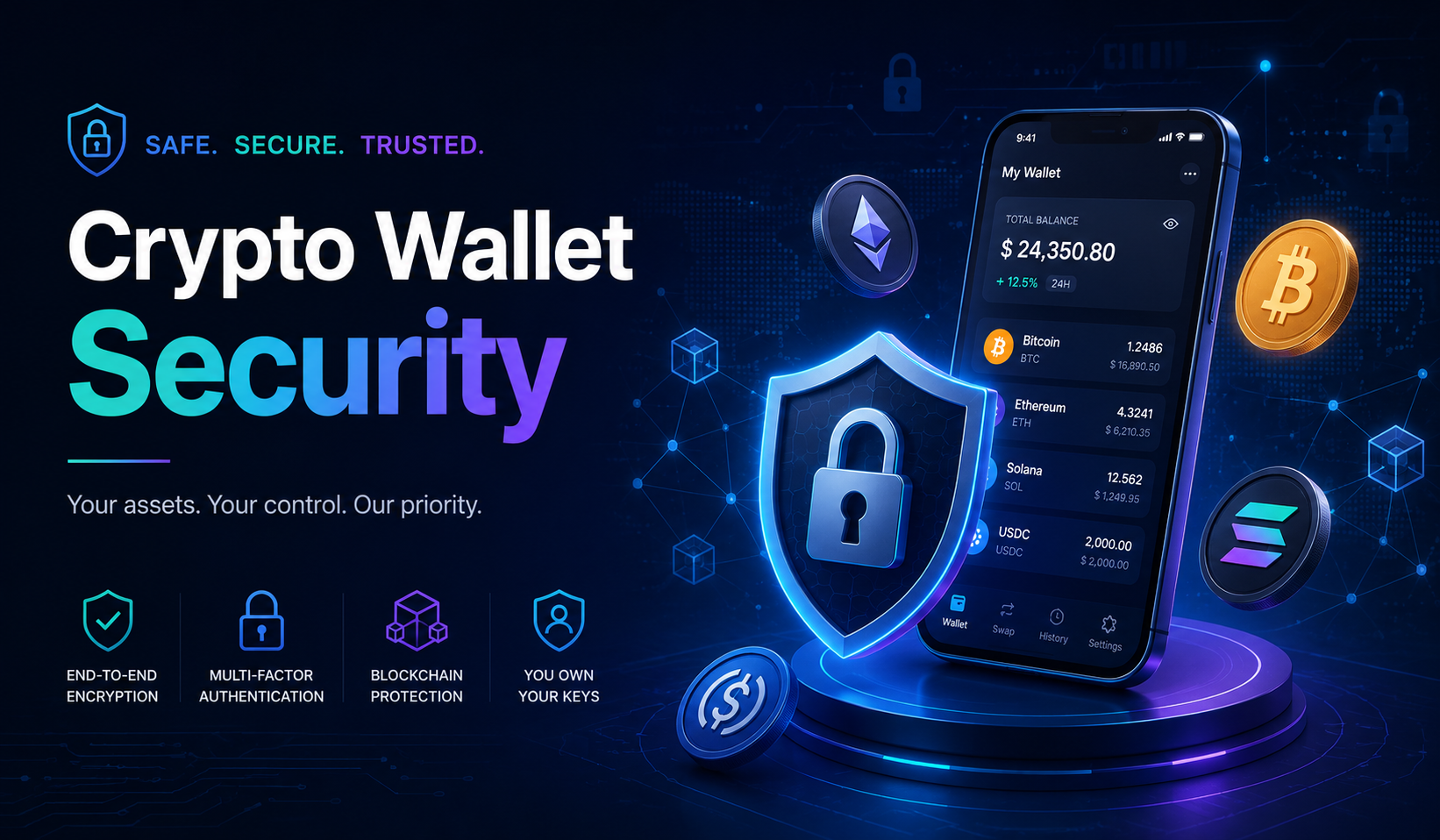
With the rise of cryptocurrency, we have a higher degree of control over our funds, but we also have to take responsibility for safeguarding it. Transfers made on the blockchain are not reversible unlike traditional banking, and if someone gets access to our wallet, we will not be able to retrieve the lost money. This is why it is essential for all cryptocurrency users to understand crypto wallet security.
Even if you are just new to crypto and have been using it for years, there are several simple things to follow to minimize the risk of loss, theft, and crypto scams. Here, we're going to take a deep dive into the biggest threats and what steps we can take to protect our digital assets.
What Is Crypto Wallet Security?
Crypto wallet security is the way that we take to make sure that our wallet, private key and recovery phrase are not accessed by unauthorized persons.
A crypto wallet is not a place where you store cryptocurrencies. Rather, it keeps private keys that enable us to access and control our assets on the blockchain. Anyone who has possession of these keys or the recovery phrase could control the wallet and move the cash.
Good security practices, including the use of trusted wallet software, protecting one's recovery phrase, ensuring devices are updated, and being vigilant against online scams, are integral to strong security.
The most common crypto wallet security risks are listed here.
The vast majority of crypto thefts are actually done via attacks on users, rather than the blockchain. These risks can be avoided if we know what they are, which will save us a lot of money making bad mistakes.
One of the largest threats is phishing scams. Fake websites, emails or messages, are usually disguised as legitimate crypto services and deceive users into disclosing their recovery phrase or authorizing a fraudulent transaction.
Fake wallet apps can also obtain sensitive data. It is always advisable to download wallet apps from official websites or trusted app stores.
The other risk is malware, which can hijack our device, or even copy a wallet address and send it to an attacker instead. Regularly updating the operating system and wallet application is one way to minimise this risk.
Lastly, scammers tend to use social engineering tactics to masquerade as customer support or crypto experts. No real wallet company will ever request our “recovery phrase” or our private keys.
Cryptocurrency trading offers the potential to generate substantial profits. Cryptocurrency trading offers the opportunity to make a lot of money.
1. Keep Your Recovery Phrase Safe
Record your recovery phrase on paper and keep it in a safe place. Do not save it in a cloud storage, a screenshot or an email draft.
2. Utilize a Strong Password
Use an unusual, hard-to-guess password. Avoid using personal information or reusing passwords from other accounts.
3. Available Security Features
Where possible, use biometric authentication, a PIN or multi-factor authentication. They offer an additional level of security.
5. Ensure your wallet is Up to Date
Important security updates are typically part of software updates. Quickly applying updates increases security against new vulnerabilities.
6. Check Websites Before Connecting Your Wallet
Always verify the website's URL before connecting to it with your wallet or a decentralised application. Fake websites are created to obtain the wallet access or to convince the user to authorize bad transactions.
7. Double-Check Every Transaction
Verify wallet address, network and amount before sending cryptocurrency. Typically, transactions conducted on the blockchain are irreversible, which means that if you make a mistake, you could end up losing your funds.
8. Be aware of scams
Watch for messages that guarantee earnings, security alerts and free crypto gifts. A moment to check the information can save a lot of money.
How to Make Safe Use of Crypto
With the growing popularity of cryptocurrency, the majority of individuals are using it for their online shopping, traveling, and regular purchasing. Security is as crucial when spending crypto as it is when storing it.
With a trusted self-custody wallet like Oppi Wallet, we can maintain control of our digital assets and secure payments while doing so. A virtual crypto card is a good choice if we wish to use our crypto where there are no card swipers.
For all those who are unfamiliar with the process, our virtual crypto card spending guide explains how to make secure crypto payments, step by step.
Conclusion
Good crypto wallet security isn't about a complicated tool. It's about establishing safe habits when handling our digital assets each and every time. By keeping our recovery phrase safe, downloading wallets from reputable sources, updating our software, and being aware of scams, we can minimize the chances of losing our cryptocurrencies.
These best practices and trusted wallet solutions will help us to securely manage, hold, and transact cryptocurrencies, giving us control over our funds.
Frequently Asked Questions
Does knowing the wallet address mean that it can be hijacked and stolen?
No. The wallet address is public information. You can only access your cryptocurrency with your private keys or recovery phrase.
Which of the crypto wallets is the safest?
The safest choice is to choose one that suits your cryptocurrency usage. Cold wallets are suitable for long-term storage, and secure self-custody wallets are suitable for daily use.
Do I need to store all my cryptos in one wallet?
Many highly experienced users have several wallets to limit risks and streamline organization.
When do you need to update your wallet?
Apply patches/pakages as soon as they are released. One of the most common reasons for wallet developers to provide updates is to enhance their security measures.
What will happen if I lost my phone?
Yes, as long as the recovery phrase is still securely kept offline.
Comments
Log in or sign up to join the conversation.