


Last week’s news flow was so flooded with reporting on the fall of Jenson Huang that it was easy to miss the news that will likely be more important in driving the broader market direction over the coming months.
With the coming months being some of the most seasonally bullish, you don't want your focus on market factors to be distracted by scandals.
Not to mention that during these next few months we’re likely to see compelling evidence of what we described as the “changed game” in last week’s Market Outlook, “The AI Bull Market Isn't Over. The Game Has Changed.”
In fact, the fall of the man who could be considered the most influential person in accelerating the AI infrastructure build-out will likely increase the importance of the next phase of the AI race.
Remarkably, markets were quick to figure this out last week. As always, insight into what will happen next wasn’t in the news, but in the markets’ reactions.
Additionally, while stocks have been focused on the midterm elections and the fall of Jenson Huang, the bonds, currency, and energy markets have been making historically significant and potentially market-impactful moves which seem to be underappreciated by the current market narrative.
These moves are likely to provide headwinds and tailwinds to the stocks and sectors likely to lead the market in a post Jenson Huang world.
Despite The Fall From Grace by both SMH and Jenson, Stocks Rallied Last Week
As you can see from the table below, the majority of sectors and all major US stock indexes rallied last week, despite what felt like a very bearish news flow.
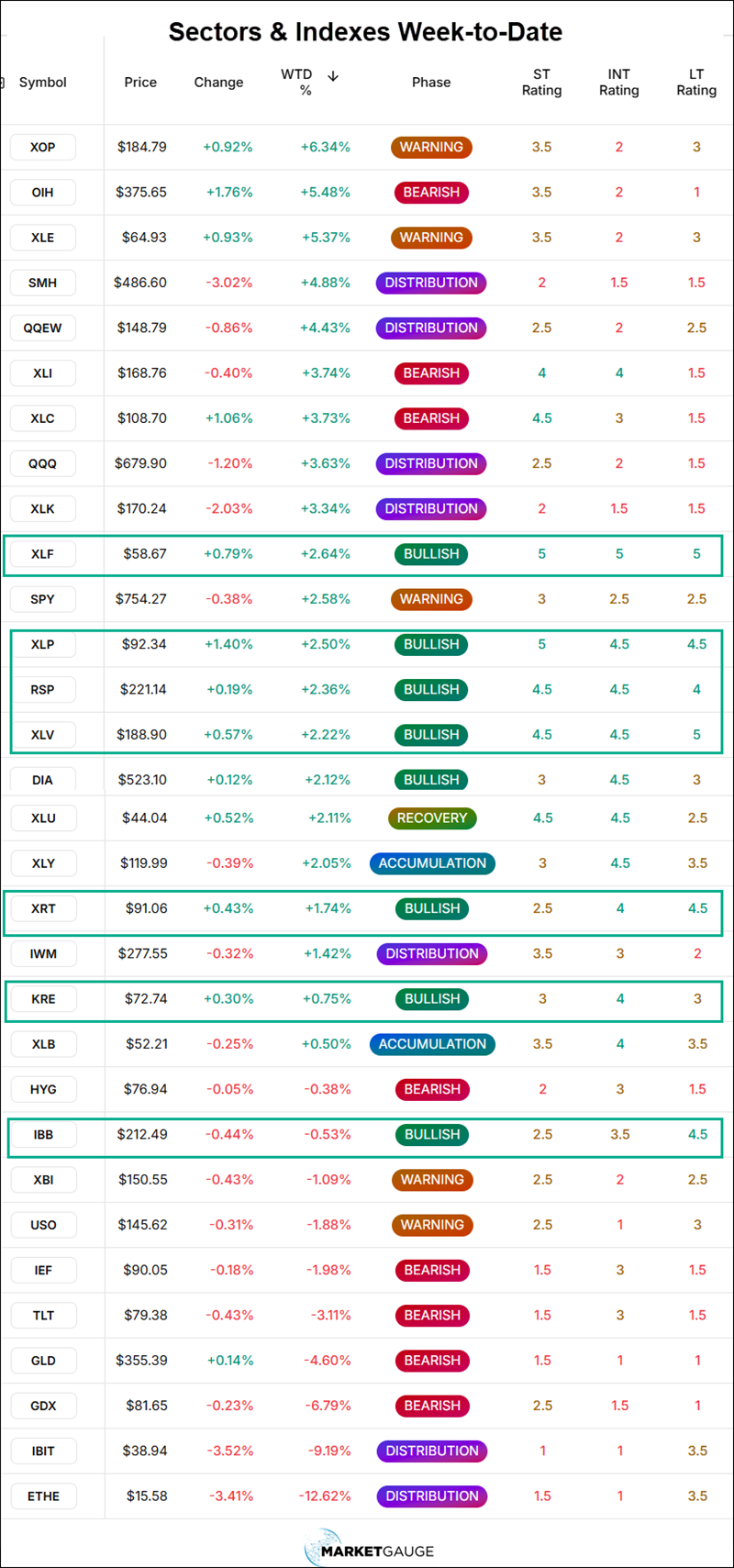
Perhaps most impressive is the fact that SMH rallied almost 5% while its largest component, NVDIA collapsed 12% for the week.
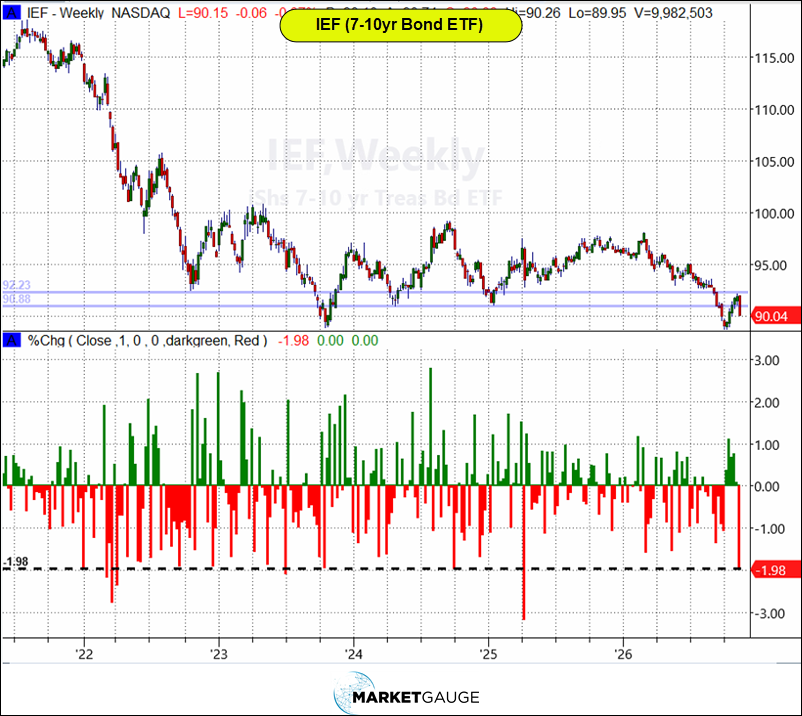
Additionally, bonds had a historically bearish week (see chart below), and the major equity indexes shrugged it off and posted over 1% gains even by the rate sensitive IWM.
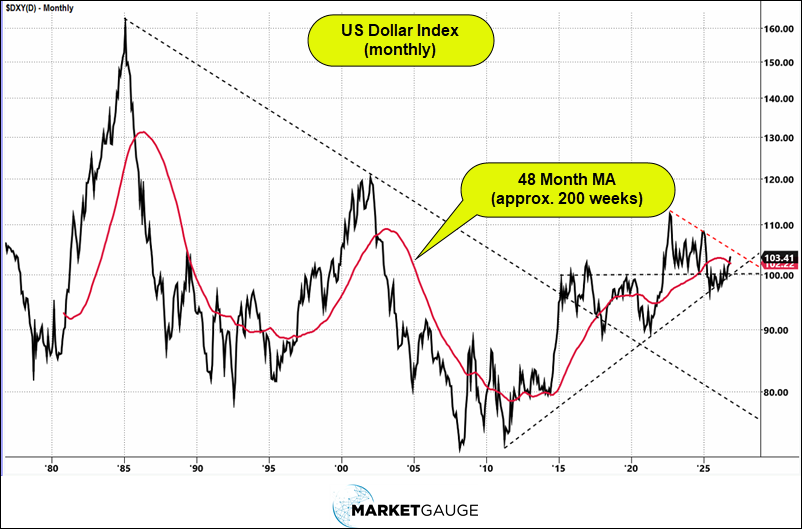
Finally, the US Dollar Index crossed a major milestone (see chart below), which historically has led to significant moves higher.
The chart below is a monthly chart of the US Dollar index. The 48-month moving average is shown to illustrate how timely it (and the 200-week MA) has been at defining key inflection points in major trends.
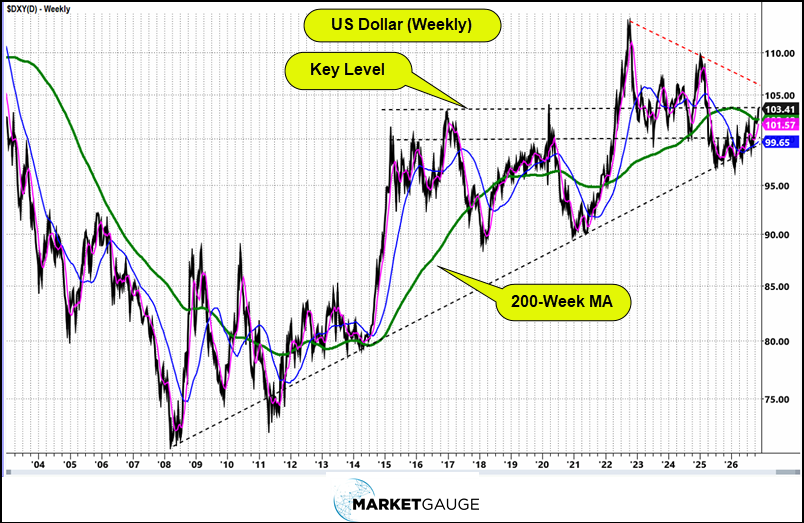
Below you’ll see a more specific view of the US Dollar (DXY) on a weekly chart with the 200-week MA. In this chart, you can see that last week the DXY broke the 200-week MA significantly, and if it follows through, it will also take out key swing highs from 2020 and 2016, which have been significant levels.
I don’t spend a lot of time focused on the dollar in Market Outlook because it’s not typically the major driver of stock prices. However, its current strength and technical suggestion that its trend could accelerate higher may support a few factors that could become narratives that could drive stocks higher:
Downward pressure on oil prices and inflation for the US consumer
Strong economic growth
Continued ability for the US to attract foreign capital
In a week when Treasury bond auctions were weak and bond prices fell at an alarming rate (see chart above), it's comforting to see the dollar finish the week strong.
Stocks & Sectors That Will Win In A Post Jenson Huang World
In recent issues of Market Outlook we’ve covered the belief that the fundamental story behind the AI infrastructure buildout is a trend that will remain in place for some time, but that the stocks that have led the market with this as their Expected growth story (the E in PRIME) have rolled over in other areas that are needed to sustain quality stock trends as defined by our PRIME analysis (Price trend, Relative strength, Institutional demand, and Momentum).
The ousting of Jenson from NVDA has just put more pressure on an already weakening segment of the market.
Fortunately, the market has begun to build momentum in the next cohort of AI-related stocks that can lead the bull market higher. These companies are not limited to one sector, but there is some concentration in tech software, financials, manufacturing, retail, construction, and healthcare.
The next cohort of great active investing opportunities in the AI revolution is happening now in the stocks of companies that are the “AI adopters.” These are the companies using AI to drive strong growth, expand margins, and create new businesses, but most won’t be as obvious as the AI infrastructure stocks that exploded higher when they were associated with AI.
Bad news, fear, and failure get more attention in the media, so that will almost always be the lead story. As a result, as the AI infrastructure stocks cool off, the media has focused on what’s falling rather than where the market’s constructive rotation is identifying the next opportunity.
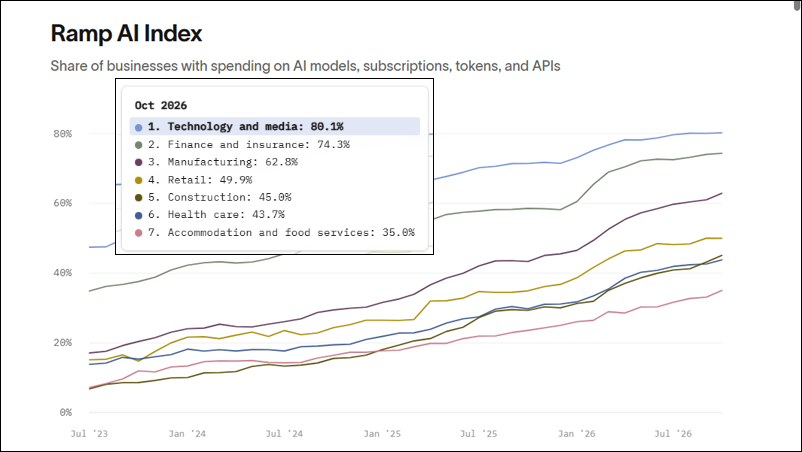
However, while naysayers fail to find ROI, businesses of all sizes in most industries continue to demonstrate they see its value.
As the chart below shows, these industries have shown a willingness to adopt AI.
In a recent interview on Bloomberg Surveillance, Michele Weaver from Morgan Stanley said,
”We did an analysis where we looked at 18,000 transcripts and found that over the last 12 months, 44% of S&P 500 companies are now quantifying the benefits they are seeing from AI adoption. That is up from 32% a year ago.”
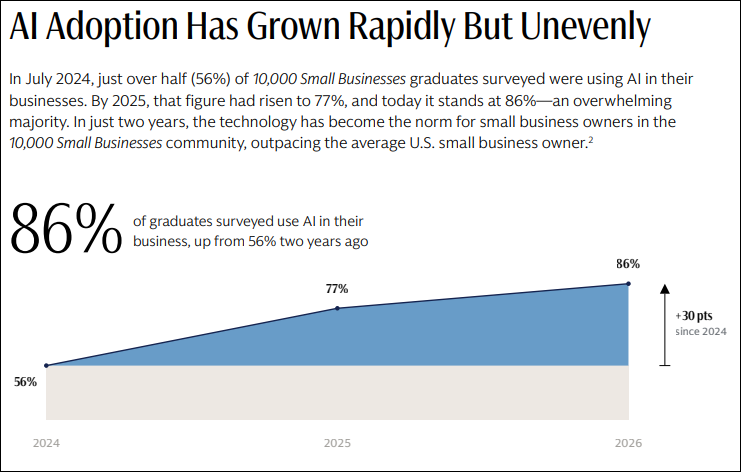
In a recent report by Goldman Sachs, based on over 2,400 company respondents in its “10,000 Small Businesses” graduates, 86% of the companies use AI.
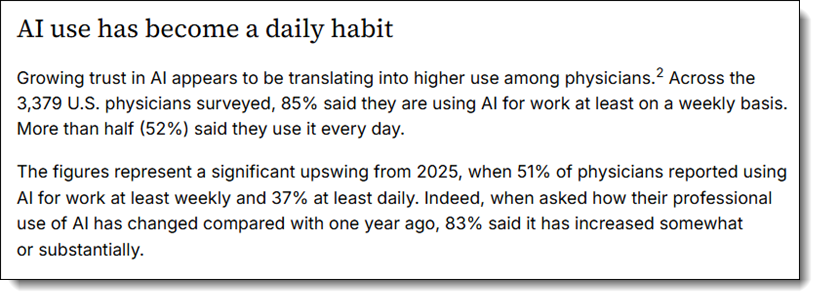
In the healthcare industry, a recent report by Doximity reported...
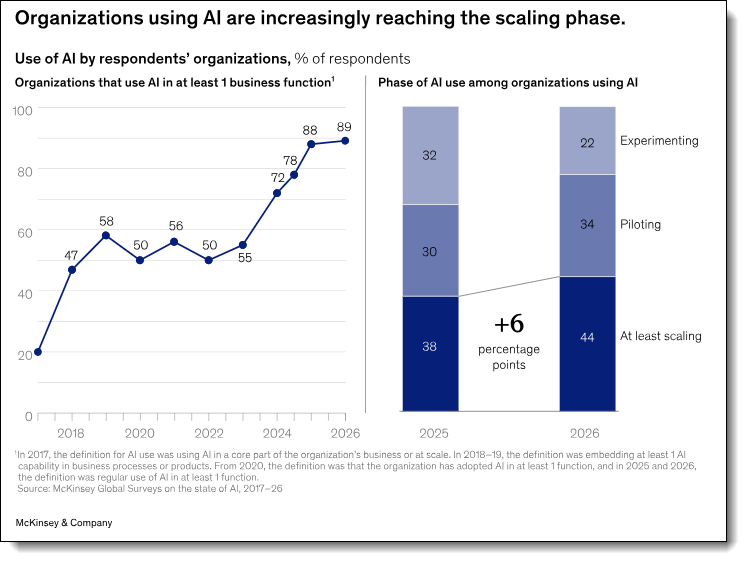
A recent McKinsey report shows that large organizations have not only adopted AI, but have also moved increasingly toward scaling its use...
How To Identify Winning AI Adopters
For the health of the market, the fact that there has been rotation from cooling semiconductor-related stocks into other industries is critical.
Bear markets take over when there aren’t enough durable, non-defensive leaders. That is not the case right now.
The PRIME factors of a trend identify stocks or sectors with the qualities of durable leadership trends by requiring outstanding relative performance, good price trends, institutional demand, and positive momentum.
Look for these qualities in companies that have an “E” expected growth story, grounded in the adoption of AI, to identify the bull market’s next hot AI trend trades.
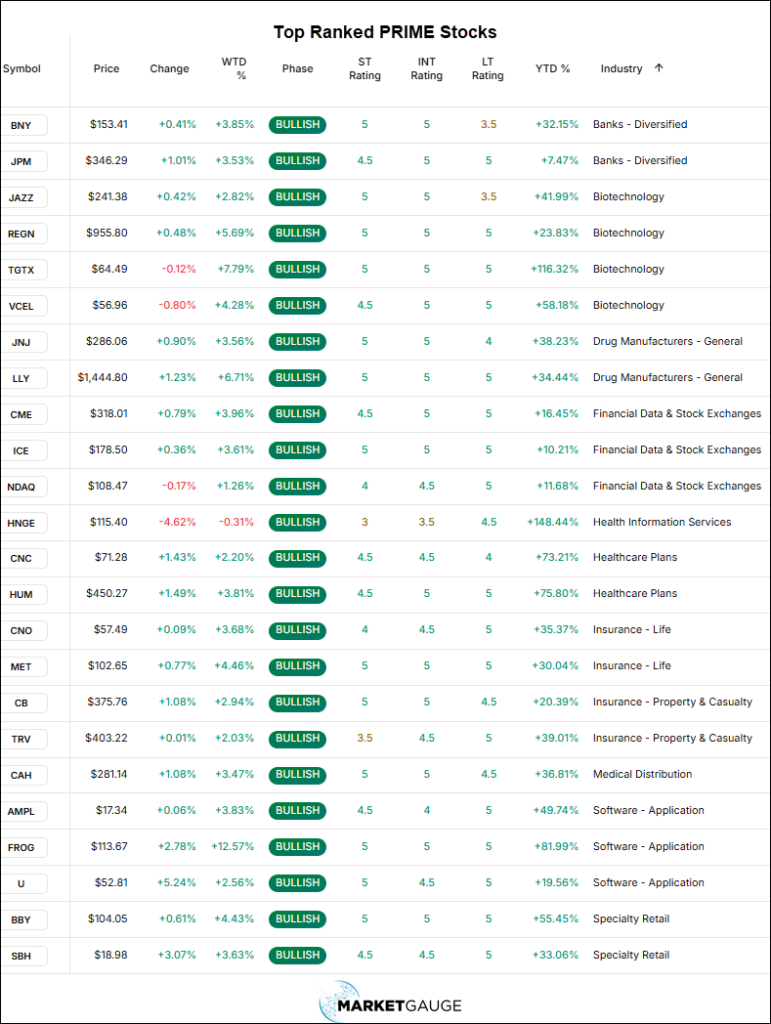
However, most non-defensive companies with strong PRIME factor ratings right now are candidates for new market-rotation trend trades. If they have an “E” grounded in AI adoption, they’re even stronger candidates for extraordinary moves.
In the Sectors & Indexes table above, there are several sectors (identified by the green highlights) with strong PRIME analysis trends.
Below you’ll find a selection of stocks in these sectors with strong PRIME ratings.


Comments
Log in or sign up to join the conversation.