
By The Numbers
9.6% S&P 500 YTD return (10.2% total return including dividends) through June 30
7,543. S&P 500 close on July 9, 2026
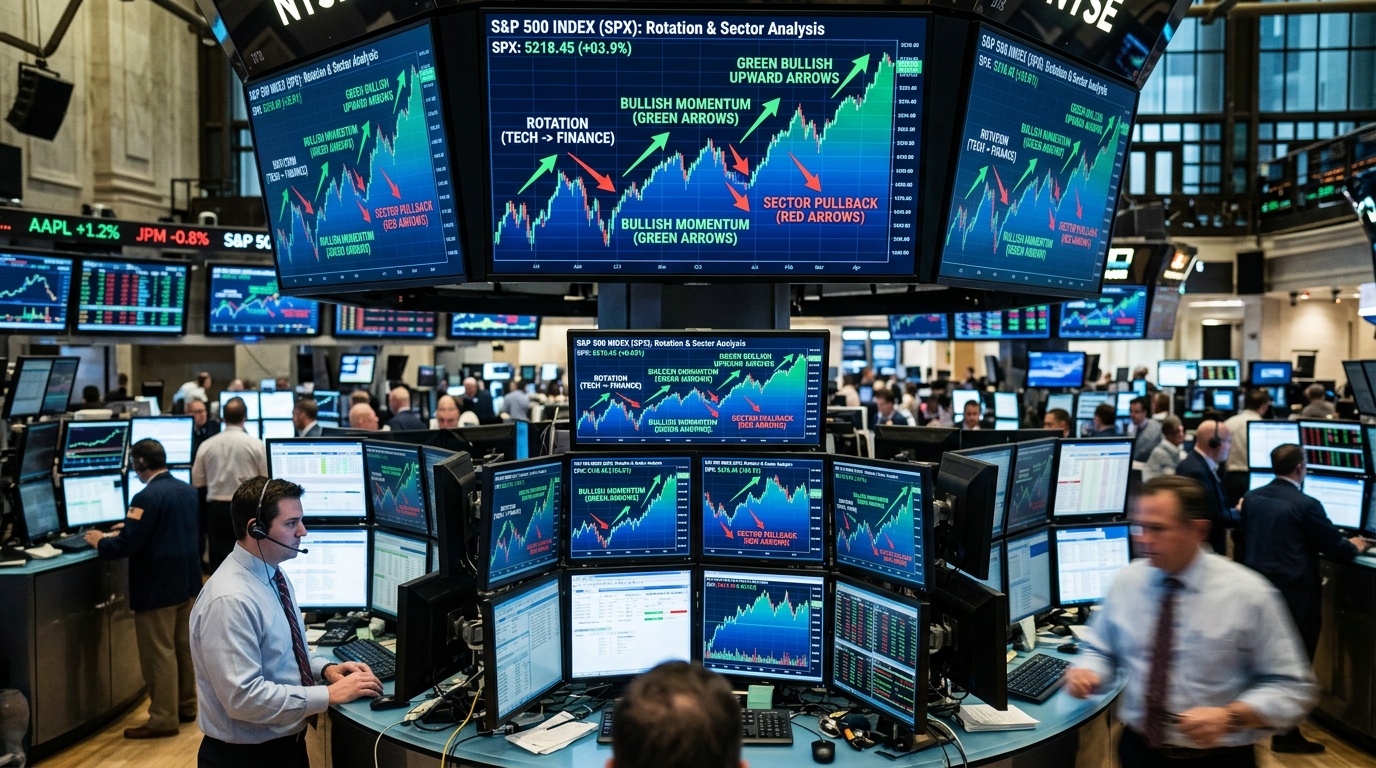
"Violent rotation". Morningstar's words for the July selloff in first-half leaders
+23.3%, expected Q2 S&P 500 earnings growth year-over-year, per FactSet
$1 trillion+. US equity ETF inflows by mid-2026, highest ever through six months
The S&P 500 is up 9.6% this year. That's a strong first half by any historical standard. But something shifted when July started. The stocks that led from January to June are now the ones getting sold. That rotation is not a bug. It's a feature. Here's how to read it.
What a "Violent Rotation" Actually Means
Morningstar described July's market action as a "violent rotation." That's not hyperbole. It means capital is moving fast, from one group of stocks to another. The sellers are usually investors locking in profits on first-half winners. The buyers are usually investors who missed the first-half rally and are repositioning into cheaper areas of the market.
Technology stocks have been the primary target. Many of the best-performing tech names from January to June are down meaningfully in July. This isn't because the business fundamentals changed. It's because the positioning got crowded. Too many people owned the same stocks at the same time. When they start selling, the moves are sharp.
It's kinda like a restaurant that was empty six months ago and is now impossible to get a reservation. The food didn't change. The crowd changed. And the crowd creates its own dynamics.
Where the Money Is Going
Hold on. Let me stop here. Every rotation away from one sector is a rotation toward another. The question is where the new money is landing.
Based on the data, two areas are attracting flows in July. Financials, because bank earnings start Tuesday and expectations are strong. And AI infrastructure, which is counterintuitively not the same as consumer tech. Nvidia (NVDA), AMD, and the data center REITs are holding up even as software and internet stocks sell off. The market is separating "AI picks and shovels" from "AI applications and hype."
"Bull markets don't die of old age. They die when money runs out of places to go. With $1 trillion in new ETF flows, that's not the problem right now."
What This Means for Your Holdings
If you're sitting on large gains in technology names from the first half, this rotation is giving you a cleaner exit than you'd have gotten in June. That doesn't mean you should sell. It means the opportunity cost of holding concentrated winners is rising.
If you've been underweight equities or looking for entry points, rotations like this create them. The overall market is still up 9.6% for the year. The Q2 earnings season, starting Tuesday, is projected to show 23.3% earnings growth. This isn't a topping market. It's a rotating market. Those are different things, and they require different responses.
You don't have to trust me. Trust the earnings expectations. When the market expects 23% earnings growth and then delivers it, the index finds support at each dip. The rotation is noise. The earnings are the signal.
P.S. Watch the equal-weight S&P 500 (RSP) versus the cap-weighted version (SPY) over the next two weeks. If RSP outperforms, the rotation is broadening the market and that's healthy. If SPY outperforms, concentration is coming back and the rally narrows.



Comments
Log in or sign up to join the conversation.