

U.S. President Trump announced that he had held productive talks with the Iranian government and that an end to the conflict—or at least a ceasefire—was possible. The stock market is soaring, while oil prices are plummeting by more than 10%.
The Iranian government immediately denies having held any talks with the U.S. government and, for its part, makes excessive demands—demands that, in reality, only the victor in a conflict should be making.
Actually, the stock market should have been falling again by now, and energy prices should have been rising. But that wasn’t really the case. And it was precisely at that moment that we received confirmation that the stock market is slowly but surely turning away from the Iran conflict.
Certainly: Should there be another full-scale escalation, we are likely to experience nervous days on Wall Street once again. But we are likely now entering a phase in which the stock market is developing greater resilience to the prospect of war in Iran. Why? Because all those investors who see this development as an absolute abyss have already sold off their holdings in the initial phase. Without further escalation—and we must seriously ask ourselves what could even be considered further escalation at this point—the selling pressure is likely to ease. Fewer sellers often means, surprisingly quickly, more buyers than sellers. And that, as we know, leads to rising stock prices…
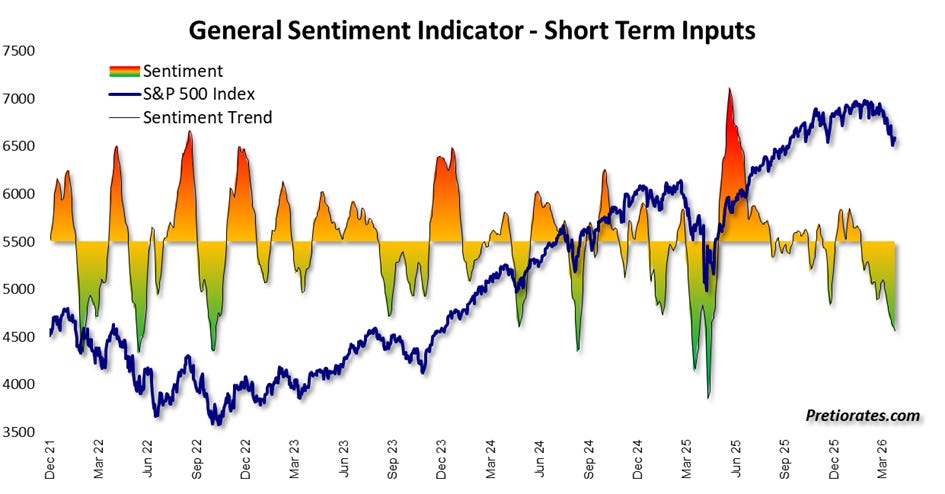
Of course, it is the hard-nosed investors who are the first to return to the trading floor as buyers. True to the motto: Buy when the cannons roar, and sell when the angels celebrate. That’s the only way “buy low, sell high” works. However, these buyers only show up when sentiment is truly at rock bottom. The following charts demonstrate quite impressively that we are nearing this moment…
The General Sentiment Indicator measures various ‘short-term inputs’ and has actually already reached a level that, in the past, often occurred precisely when a significant low formed on Wall Street.
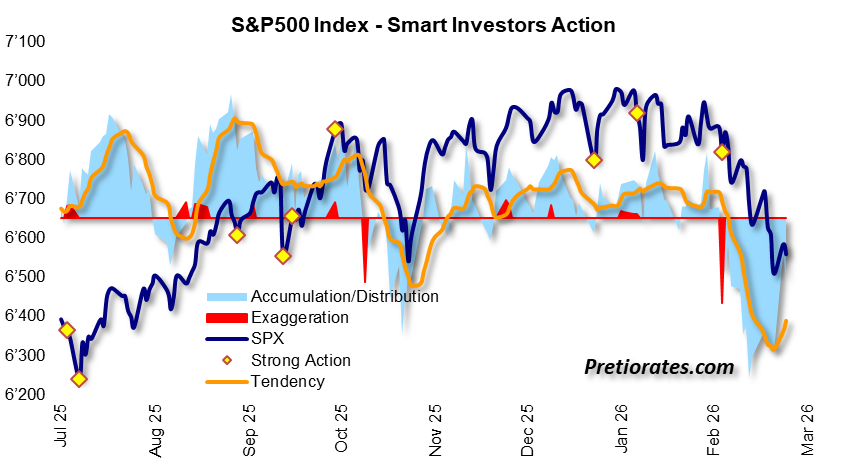
In fact, Smart Investor Action also shows that slow accumulation is already taking place behind the scenes again. This is an interesting indication that the moment may have arrived when equity investments should no longer be reduced, but rather built up…
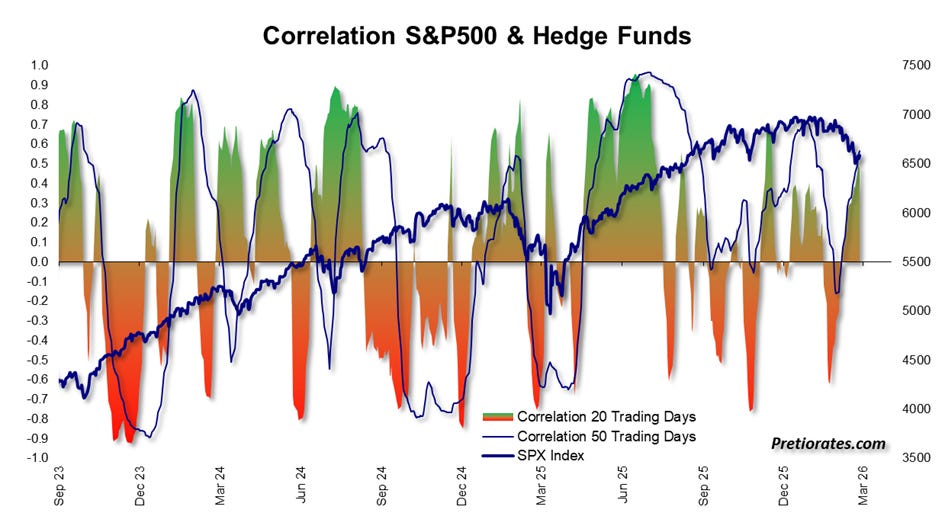
And yes, even hedge funds have now rebuilt a net long position in stocks…
The U.S. stock markets are likely to be near their medium-term lows. As strange as it may sound: buying at this point is likely to involve fewer risks than when joy, peace, and pancakes reign everywhere again—because by then, the stock markets could already have risen 30%. And every investor would already be fully invested, making it difficult to find additional buyers…
There is also an asset that currently carries even less risk as an investment: precious metals.
Admittedly, gold, silver, and the platinum group metals have not performed as many investors would have expected in the weeks since the attack on Iran. On the one hand, however, the market needed time to digest the correction that followed the rally to its peak in late January. On the other hand, as we mentioned in our last “Thoughts”: Whenever investors need to increase their liquidity, they sell their holdings in gold and silver. Quite simply because they are liquid and profits can usually still be realized there. Over the past 25 years, these very moments have almost always been the best entry points: when sentiment was particularly pessimistic and nervous investors had already fled. So let’s take a look at the relevant charts:
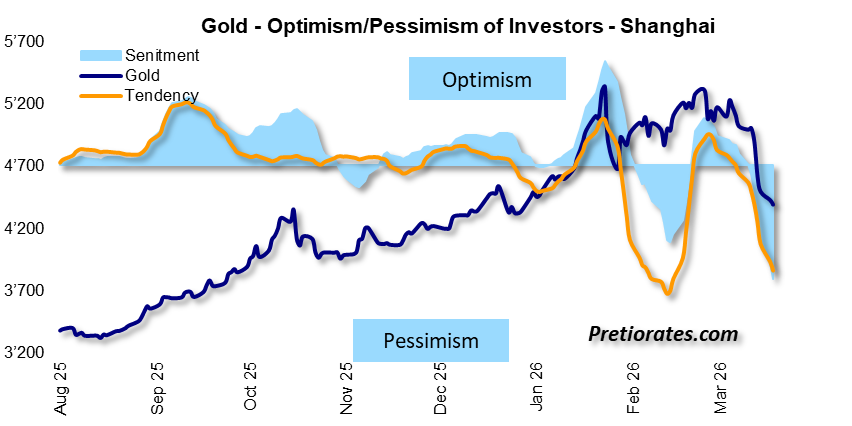
Sentiment in the Shanghai gold market: extremely pessimistic…
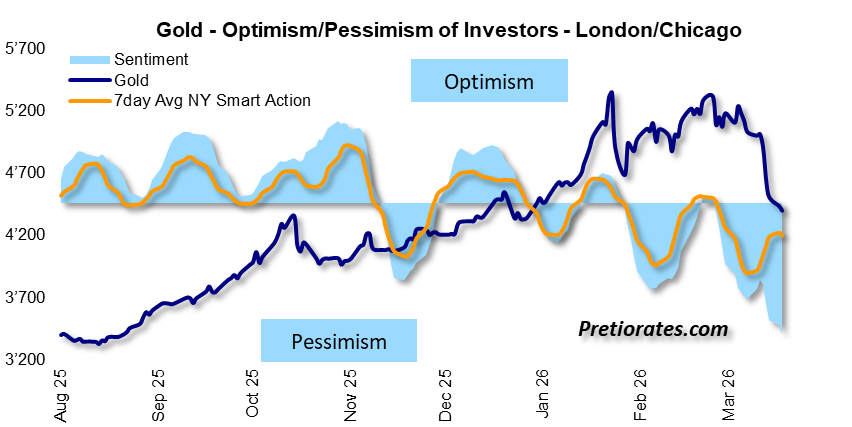
The same sentiment is also evident in the Western gold markets of London and Chicago: extremely pessimistic…
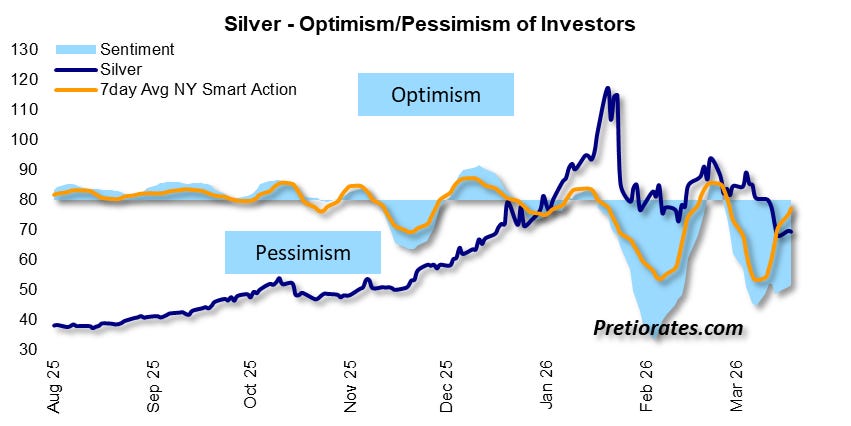
Sentiment is also extremely pessimistic in the silver market, though the trend already points to an improvement in sentiment…
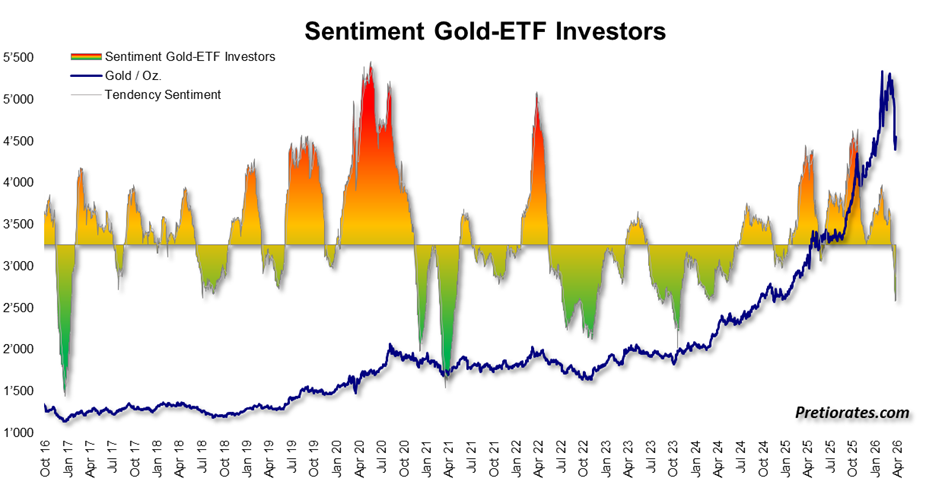
Another sentiment indicator with multiple inputs also signals that a buying opportunity could currently be forming in the gold market in the medium term…
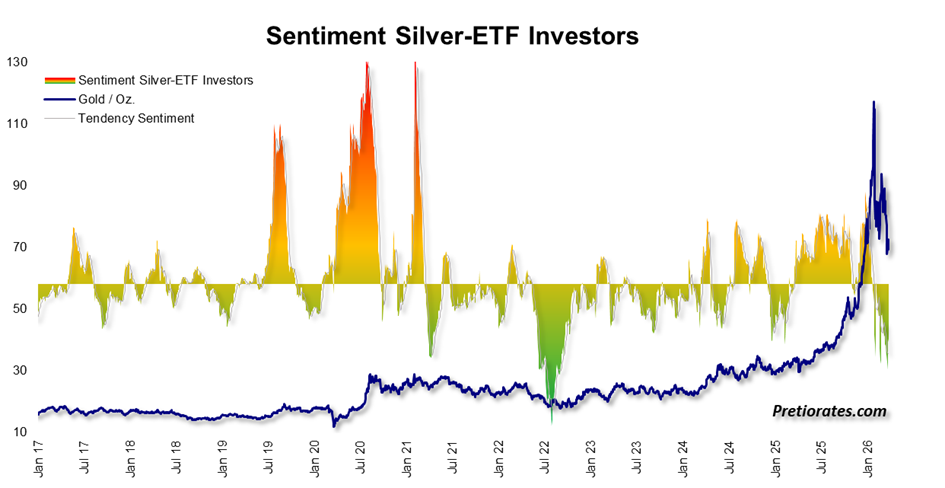
And the same indicator also points in favor of silver: Sentiment is as negative as it has rarely been in the last 10 years—precisely the kind of environment in which buying opportunities have typically arisen…
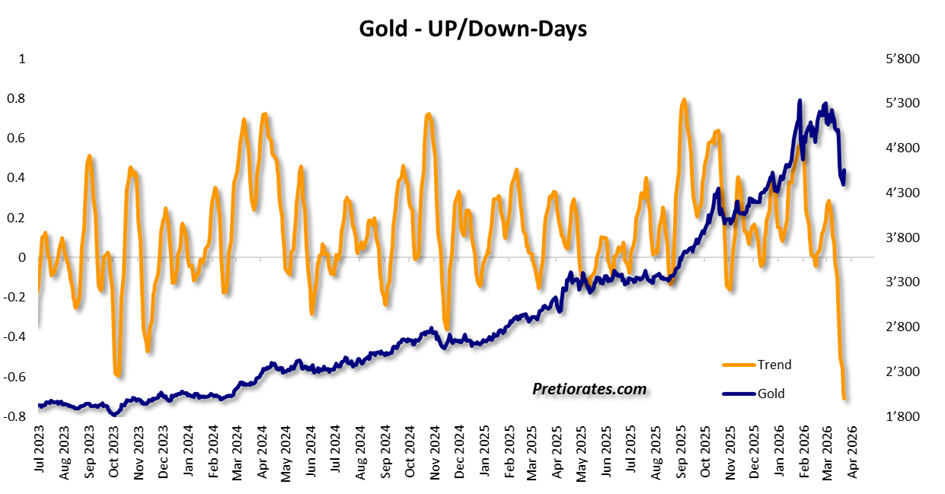
The chart of up/down days shows just how oversold the gold market is. This really needs no further explanation…
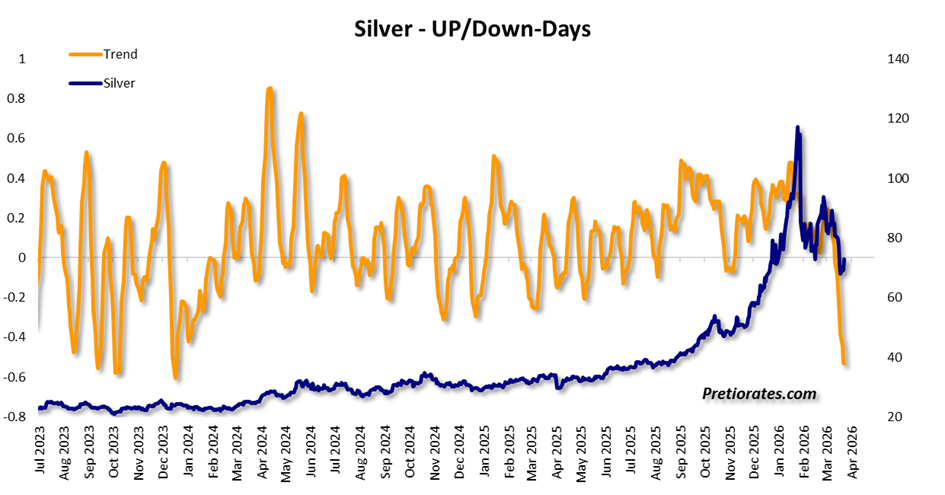
And yes, of course, the same indicator paints a very similar picture for the silver market…
Precious metals have recently been subject to extraordinary volatility. However, the most important driver of rising prices is not the war, but confidence in one’s own government. For the market traded in U.S. dollars, this means: Confidence in the U.S. government and its fiscal policy is decisive. Is it possible that this very development will unfold in favor of gold, silver, and other precious metals?

Comments
Log in or sign up to join the conversation.