

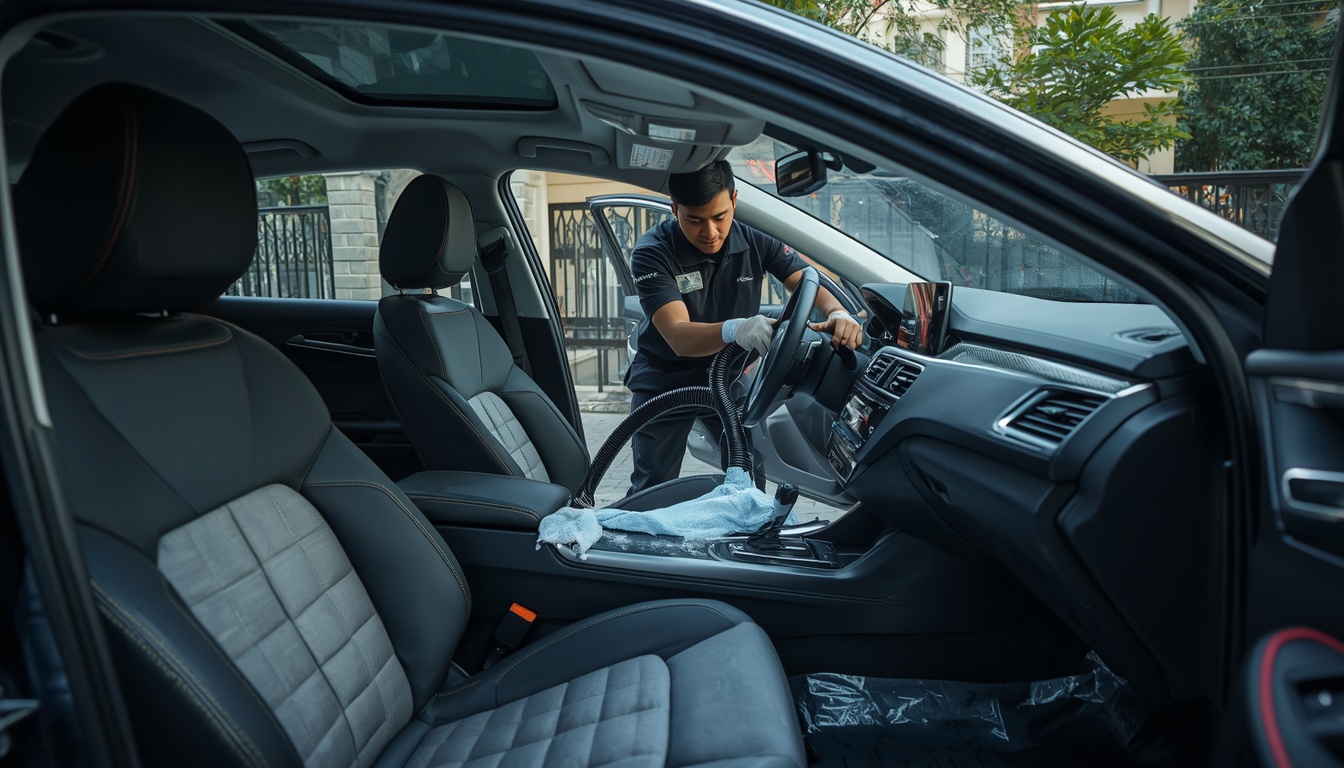
Car interiors collect dust, bacteria, food crumbs, allergens, and stains every day. While a quick vacuum may improve the appearance, it often leaves hidden dirt behind. This is where car dry cleaning delhi services have become a popular choice for vehicle owners who want a cleaner, healthier, and well-maintained interior without using excessive water.
Understanding the science behind car dry cleaning helps you make informed decisions about maintaining your vehicle. In this guide, we'll explain how the process works, why it is effective, and how it helps extend the life of your car's interior.
What Is Car Dry Cleaning?
Car dry cleaning is a deep interior cleaning process that uses specialized cleaning solutions, brushes, microfiber cloths, vacuum systems, and minimal moisture to remove dirt, stains, dust, and bacteria from different surfaces inside a vehicle.
Unlike traditional washing, dry cleaning focuses mainly on the interior, including:
Car seats
Carpets and floor mats
Dashboard
Door panels
Roof lining
Boot area
Air vents
Steering wheel
Seat belts
The objective is not only to improve appearance but also to maintain hygiene and protect interior materials.
Why Regular Interior Cleaning Matters
Many people clean only the exterior of their cars. However, the interior experiences daily exposure to:
Dust and pollution
Sweat and body oils
Food particles
Pet hair
Bacteria and germs
Allergens
Moisture from shoes
Over time, these contaminants build up and can affect both comfort and air quality.
Regular interior cleaning helps:
Improve cabin hygiene
Reduce unpleasant odors
Protect upholstery
Increase resale value
Create a healthier driving environment
The Science Behind Car Dry Cleaning
The effectiveness of professional cleaning is based on simple scientific principles.
Breaking Down Dirt Molecules
Most dirt sticks to fabric and plastic because of oils, grease, and static attraction.
Professional cleaning solutions contain surfactants, which lower the surface tension between dirt and the material. Once the bond weakens, dirt becomes easier to lift and remove.
This allows stubborn stains to be cleaned without damaging the surface.
Controlled Moisture Cleaning
One common misconception is that "dry cleaning" means no water at all.
In reality, only a small amount of moisture is used along with specialized cleaning chemicals.
This approach offers several benefits:
Faster drying time
Less chance of mold growth
Reduced risk of water damage
Safe cleaning for electronic components
Minimal moisture also protects delicate interior materials from unnecessary wear.
Mechanical Agitation
Cleaning chemicals alone cannot remove embedded dirt.
Professional technicians use:
Soft brushes
Detailing brushes
Microfiber applicators
Interior scrub pads
These tools create gentle friction that loosens dirt trapped inside fabric fibers without causing damage.
High-Power Vacuum Extraction
After dirt is loosened, industrial vacuum systems remove:
Dust
Sand
Food particles
Hair
Cleaning residue
High suction ensures contaminants are removed rather than pushed deeper into the upholstery.
Microfiber Technology
Microfiber cloths play an important role during cleaning.
Their tiny fibers trap microscopic particles that ordinary cloths often leave behind.
Benefits include:
Better dust removal
Reduced scratching
Improved polishing
Streak-free finish
This is why professional detailers prefer microfiber over traditional cotton cloths.
How Different Interior Materials Are Cleaned
Every surface inside a car requires a different cleaning method.
Fabric Seats
Fabric absorbs liquids easily, making stains difficult to remove.
Professionals use fabric-safe cleaners that:
Break down stains
Remove odors
Lift embedded dust
Preserve fabric texture
Leather Seats
Leather requires gentle cleaning because harsh chemicals may cause cracking.
Professional leather care includes:
pH-balanced cleaners
Soft microfiber cloths
Leather conditioners
UV protection products
Dashboard and Plastic Panels
Dashboard surfaces attract dust due to static electricity.
Anti-static cleaners help reduce future dust accumulation while restoring a clean appearance.
Carpets and Floor Mats
These areas collect the highest amount of dirt.
Deep vacuuming combined with stain treatment removes:
Mud
Sand
Food particles
Dust
Moisture residue
How Car Dry Cleaning Improves Air Quality
A dirty cabin contains more than visible dust.
Hidden contaminants may include:
Pollen
Mold spores
Dust mites
Bacteria
When the air conditioning runs, these particles circulate inside the cabin.
Professional interior cleaning reduces airborne contaminants, creating a healthier environment for passengers.
Common Myths About Car Dry Cleaning
Myth 1: It Uses No Water
Not completely.
Minimal moisture is used for safe and effective cleaning.
Myth 2: Vacuuming Is Enough
Vacuuming removes loose dirt but cannot eliminate stains, bacteria, or oils trapped inside upholstery.
Myth 3: It Damages Interior Materials
Professional cleaning uses surface-specific products designed for different materials.
When performed correctly, it actually helps extend the life of your interior.
Myth 4: It Is Only for Luxury Cars
Every vehicle benefits from regular interior maintenance, regardless of its price or model.
How Often Should You Get Car Dry Cleaning?
The frequency depends on how you use your vehicle.
Vehicle Usage | Recommended Frequency |
|---|---|
Daily commuting | Every 3–4 months |
Family vehicle | Every 2–3 months |
Pet owners | Every 2 months |
Ride-sharing vehicles | Monthly |
Long-distance travel | Every 2–3 months |
Regular maintenance prevents heavy dirt buildup and makes future cleaning easier.
DIY vs Professional Car Dry Cleaning
Feature | DIY Cleaning | Professional Service |
|---|---|---|
Deep stain removal | Limited | Excellent |
Specialized equipment | No | Yes |
Interior sanitization | Basic | Advanced |
Drying time | Longer | Faster |
Material protection | Moderate | High |
Overall finish | Average | Professional |
Professional services provide better results because they combine the right products, equipment, and experience.
Tips to Keep Your Car Interior Clean Longer
Follow these simple habits:
Vacuum once every week.
Remove trash after every trip.
Clean spills immediately.
Use quality floor mats.
Avoid eating inside the car whenever possible.
Wipe the dashboard regularly.
Keep windows closed in dusty areas.
Schedule professional interior cleaning several times a year.
Small maintenance habits help preserve the results of deep cleaning.
Conclusion
Understanding the science behind interior cleaning shows that it is much more than improving appearance. Professional cleaning removes hidden dirt, bacteria, allergens, and stains while protecting different interior materials through specialized techniques and products. If you want a cleaner, healthier, and more comfortable driving experience, choosing a trusted car dry cleaning delhi service is a smart investment in your vehicle's long-term care.
Comments
Log in or sign up to join the conversation.