

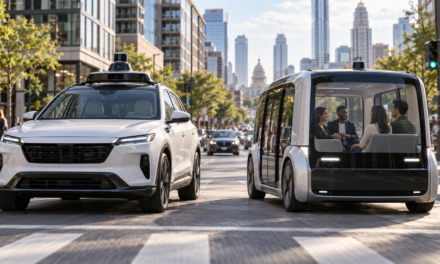
A driverless taxi sounds like a fantastic business.
You don’t have to pay someone to sit behind the wheel. It never calls in sick, and it can work around the clock.
But the economics of robotaxis aren’t that simple.
It costs a lot of money to build a car that can safely drive itself. In fact, it can be so prohibitively expensive that it could take many years just to break even on a robotaxi.
That’s been one of the biggest problems facing Waymo.
But recent data suggests the company may have just taken a huge step toward solving this problem.
And if the numbers I’m seeing are correct, the robotaxi business could be far more attractive than Wall Street realizes.
The Price of a Robotic Driver
Waymo’s robotaxis are modified Jaguar I-Pace electric SUVs.
The Jaguar alone originally sold for roughly $70,000. Then Waymo added cameras, radar, lidar and powerful computers.
Lidar uses lasers to create a three-dimensional picture of everything around the vehicle. It can help the car spot pedestrians, measure distances and navigate at night or in bad weather.
But it isn’t cheap.
Once all that equipment is added, analysts estimate that some of Waymo’s older robotaxis cost well over $100,000 apiece.
And that doesn’t include the cost of storing, charging, cleaning and repairing them. Waymo also employs workers who can remotely help a vehicle when it encounters something unusual.
All of those expenses help explain why Waymo still isn’t profitable.
To be clear, Alphabet doesn’t report Waymo’s results separately. It groups the company with several smaller businesses in a division called Other Bets, which continues to lose billions of dollars.
But Waymo’s newest robotaxi could bring those losses down.
It’s called the Ojai.
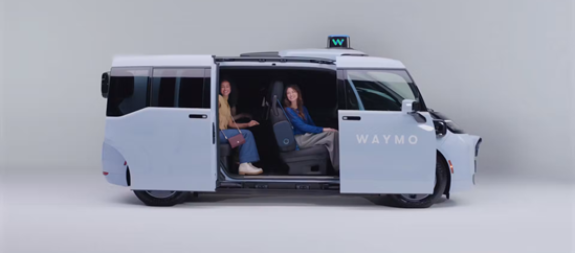
Unlike the Jaguar, the Ojai was designed from the start to carry paying passengers. It has more room inside, large sliding doors and a lower floor that makes it easier to enter and exit.
But the biggest change could be the technology driving it.
Waymo’s previous system used 29 cameras, five lidar units and six radar units. The new system uses just 13 cameras, four lidar units and six radar units.
That’s 42% fewer sensors.
Yet Waymo says the new system can see farther and handle more difficult weather.
That’s partly because its cameras have become more powerful. Waymo also designed a custom computer chip that can process information from the vehicle’s sensors more efficiently.
In other words, Waymo’s newest system can do more with fewer parts.
And that should lead to lower costs.
Waymo hasn’t revealed exactly how much its new system costs. But several industry estimates place the price below $20,000, not including the vehicle.
We need to be careful with that number.
I’ve seen claims that Waymo cut its hardware costs from more than $100,000 to roughly $20,000. But that appears to compare the total price of an older Jaguar robotaxi with only the driving hardware in the new vehicle.
So the actual savings probably aren’t quite that dramatic.
But the new Ojai reportedly costs around $38,000 before tariffs and other expenses. Add less than $20,000 for Waymo’s self-driving hardware, and these new robotaxis should cost Waymo tens of thousands of dollars less than its Jaguars.
That’ll make an enormous difference as its fleet grows.
Waymo is already giving more than 500,000 paid rides every week. And it wants to double that figure to 1 million by the end of this year.
Cutting even $25,000 from the cost of each new robotaxi would save Waymo $250 million for every 10,000 vehicles it builds.
And Waymo isn’t the only company betting that robotaxi economics are improving.
Earlier this month, Amazon’s Zoox began charging passengers for robotaxi rides in Las Vegas.
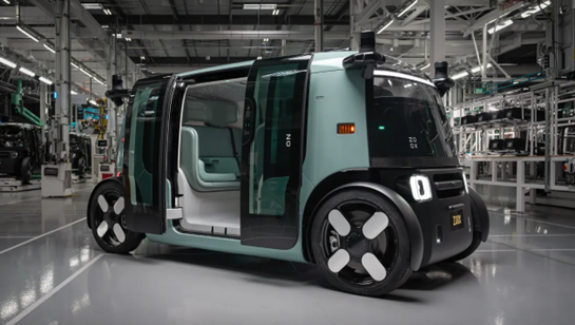
As you can see, Zoox looks nothing like a traditional car.
It doesn’t have a steering wheel, pedals or dashboard. It doesn’t even have a traditional front or back. The vehicle can travel in either direction, while four passengers sit facing one another inside.
That unusual design is possible because Zoox was never intended to have a human driver.
Amazon bought the company for roughly $1.2 billion in 2020. Since then, Zoox has logged more than 3 million driverless miles and carried nearly 1 million passengers.
Until recently, those passengers rode for free.
But federal regulators have now given Zoox permission to charge for rides. That makes it the first company to operate a paid service in a purpose-built robotaxi without traditional driving controls.
The approval allows Zoox to deploy up to 2,500 vehicles a year over the next two years.
That’s still a long way from Waymo’s scale. Zoox currently has only about 100 vehicles, and its Las Vegas service covers a limited area.
But Amazon rarely enters a market because it wants to remain small.
Here’s My Take
Waymo has already shown that people will pay to ride in a robotaxi. Now those rides need to become profitable.
The numbers I’m seeing suggest the economics are moving in the right direction.
Waymo is building cheaper vehicles with fewer sensors, and it’s already giving more than 500,000 paid rides every week.
Meanwhile, Amazon is preparing to spend heavily to challenge Waymo’s dominance. Zoox’s California factory eventually could produce more than 10,000 vehicles a year.
That means the costs are coming down just as production is preparing to ramp up.
And if those two trends continue, the robotaxi business could be about to really take off.



Comments
Log in or sign up to join the conversation.