

Quick Answer
The biggest difference between hobby music artists and career music artists is not talent. It is commitment, consistency, strategy, and how seriously they treat their audience and music business. Career artists think beyond individual releases. They build systems around music creation, Spotify music promotion, organic Spotify growth, music marketing services, playlist promotion for artists, and long-term music audience growth.
Introduction
Are you making music because you enjoy it, or are you building a career around it?
That question can reveal more about your future as an artist than your current Spotify numbers.
Today, independent artists have more opportunities than ever to release music, reach listeners, and build an audience without waiting for a record label.
Artists can use Spotify music promotion, organic Spotify growth, Spotify playlist placement, social media, TikTok music ads, Meta ads for music promotion, and other music marketing services to reach audiences around the world.
But access to these tools does not automatically create a career.
The real difference comes from what an artist does consistently.
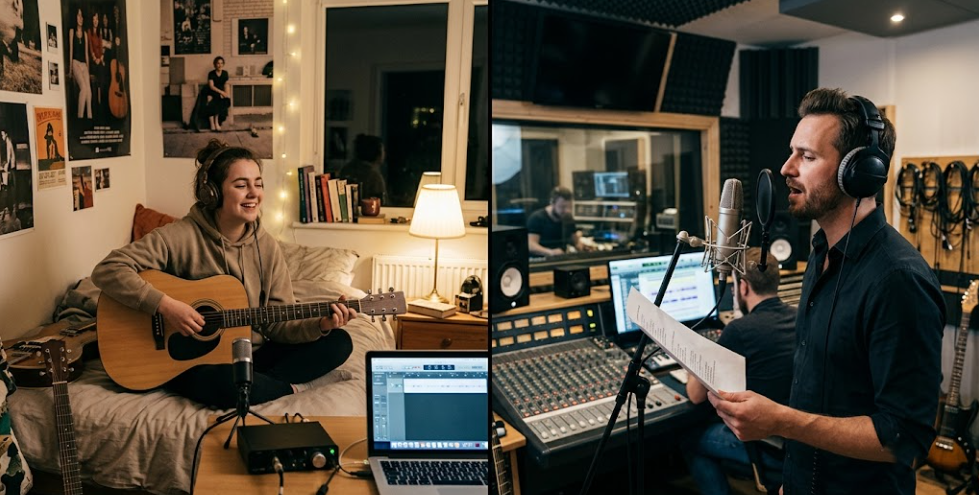
A hobby artist may release music when they have time.
A career artist makes time for music.
A hobby artist may check Spotify statistics occasionally.
A career artist studies the data and uses it to improve future decisions.
A hobby artist may hope people find their music.
A career artist creates a strategy to help the right people find it.
Neither approach is wrong.
Music can absolutely be a hobby.
But if your goal is to become a professional artist, you need to start thinking differently.
Hobby Artist vs Career Artist: What Is the Difference?
The simplest distinction is commitment.
A hobby artist creates primarily for personal enjoyment.
A career artist creates with a long-term objective.
That objective might be:
Making music full-time
Building a loyal fanbase
Performing live
Generating music income
Growing streaming revenue
Building a recognizable artist brand
Working with other professionals
Creating multiple income streams
The difference is not necessarily how much time each person has.
It is how intentionally they use that time.
A career artist does not necessarily work on music every day.
They simply understand that every release is part of a larger career.
Question: Does Being a Career Artist Mean You Have to Quit Your Job?
No.
You can be an independent artist while working another job.
You can build your music career gradually.
In fact, many successful artists spend years developing their music before making it their primary source of income.
The important difference is mindset.
If music is your long-term goal, start treating it like a business before it becomes your full-time income.
The First Difference: Career Artists Have Clear Goals
A hobby artist may say:
"I want more streams."
A career artist asks:
"What am I trying to achieve with these streams?"
That distinction matters.
Streams can support different objectives.
You might want to:
Build Spotify followers
Grow a fanbase
Sell tickets
Generate royalties
Attract collaborators
Increase brand awareness
Get noticed by industry professionals
Without a clear objective, promotion can become random.
You spend money.
You receive streams.
Then you wonder what happens next.
A career-oriented strategy starts with the destination.
The Second Difference: Career Artists Release Consistently
One of the biggest differences between hobby and career artists is consistency.
Hobby artists often release when they feel ready.
Career artists create a release system.
That doesn't mean releasing music every week.
It means having a predictable process.
For example:
Plan the release.
Prepare artwork.
Create promotional content.
Submit music where appropriate.
Start audience outreach.
Launch the release.
Monitor performance.
Analyze results.
Use the data for the next release.
The song becomes part of a system.
Why Consistency Matters for Spotify Growth
Every release gives you another opportunity to reach listeners.
It also generates data.
You learn:
Which songs attract listeners
Which audiences respond
Which content generates engagement
Which promotional channels work
Which songs generate saves
Which releases generate followers
Over multiple releases, these insights become extremely valuable.
This is one reason organic Spotify growth should be viewed as a long-term process rather than a one-time campaign.
The Third Difference: Career Artists Promote Their Music
One of the biggest misconceptions in independent music is:
"If the song is good enough, people will find it."
Sometimes they do.
Usually, they don't.
There are millions of songs competing for attention.
Quality matters.
But visibility matters too.
Career artists understand that creating music and marketing music are two different jobs.
You can create an incredible song.
But if nobody hears it, its potential remains limited.
What Does Music Promotion Actually Mean?
Music promotion can include:
Spotify playlist promotion
Social media marketing
Content marketing
Paid advertising
Influencer campaigns
Audience targeting
Public relations
Email marketing
Live promotion
Community building
For an independent artist, the objective should not simply be more numbers.
It should be reaching the right audience.
That is where legit music promotion and organic music promotion become important.
The Fourth Difference: Career Artists Understand Their Audience
Hobby artists often ask:
"How do I get more listeners?"
Career artists ask:
"Who are my listeners?"
That second question is far more powerful.
You need to understand:
Age groups
Locations
Musical interests
Listening habits
Platforms they use
Artists they already follow
Content they engage with
Once you understand your audience, your marketing becomes more precise.
Question: Why Does Audience Targeting Matter?
Because not every listener is a potential fan.
Suppose you receive 50,000 random streams.
But almost nobody follows you.
Now imagine receiving 10,000 streams from people who genuinely love your genre.
Those listeners may:
Save your music
Follow your profile
Share your songs
Listen to your other tracks
Attend your shows
Buy merchandise
The second audience may be far more valuable.
That is the foundation of music audience growth.
The Fifth Difference: Career Artists Think About Fans, Not Just Streams
Streams are useful.
But fans build careers.
A stream happens once.
A fan can support you repeatedly.
A loyal fan might:
Stream every release
Share your music
Buy merchandise
Attend concerts
Recommend your songs
Follow you across platforms
This is why artists should think beyond how to grow Spotify streams.
The bigger question is:
How do I turn listeners into fans?
The Sixth Difference: Career Artists Study Their Data
Career artists don't ignore analytics.
They also don't obsess over them every hour.
They use data strategically.
For example, after a release, they might analyze:
Streams
Saves
Followers
Repeat listeners
Playlist activity
Audience locations
Traffic sources
Then they ask:
What should we do differently next time?
This is the foundation of data-driven music marketing.
Question: What Is a Healthy Way to Use Spotify Analytics?
Use analytics to make decisions.
Don't use them to determine your self-worth.
A career artist might review performance and conclude:
"This audience segment responded strongly. Let's create more content for them."
A validation-focused artist might see a slow day and conclude:
"My career is failing."
The first response creates progress.
The second creates anxiety.
The Seventh Difference: Career Artists Invest in Their Growth
A hobby artist may spend money primarily on equipment.
A career artist understands that growth requires investment in several areas.
That can include:
Music production
Artwork
Content
Promotion
Advertising
Distribution
Professional services
Live performance
You don't need a huge budget.
But you do need to understand where your resources create the most value.
Is Cheap Music Promotion Always Better?
Not necessarily.
The cheapest campaign is not automatically the best campaign.
When evaluating Cheapest Music Promo, Cheapest Music Promotion, Affordable Music Promo, or Affordable Music Promotion, artists should ask:
Who will actually hear my music?
Is the audience relevant?
Is the promotion transparent?
Is the engagement genuine?
Are bot streams involved?
Can I measure the campaign?
Does the service support long-term growth?
Affordable should mean accessible.
It shouldn't mean low-quality or artificial.
The Eighth Difference: Career Artists Protect Their Reputation
Your artist reputation matters.
That means avoiding questionable promotional methods that promise enormous numbers without explaining where those listeners come from.
Artificial streams can create misleading statistics without building a real audience.
Career artists should prioritize no bot Spotify streams and genuine audience engagement.
Real growth may look slower.
But it creates a healthier foundation.
The Ninth Difference: Career Artists Build a Brand
Your music is only one part of your identity.
Your brand includes:
Visual identity
Photography
Artwork
Social media presence
Artist story
Communication style
Live presence
Content
Think about artists you remember.
You probably recognize more than their songs.
You recognize their world.
That's branding.
The Tenth Difference: Career Artists Keep Learning
The music industry changes constantly.
Spotify changes.
Social media changes.
Advertising changes.
Listener behavior changes.
Career artists adapt.
They learn about:
Spotify marketing
Social media
Advertising
Audience behavior
Content creation
Branding
Music business
Royalties
Distribution
They understand that being a great musician isn't the only skill required to build a sustainable career.
Question: Can a Great Musician Fail to Build a Music Career?
Yes.
Talent is important.
But talent alone doesn't guarantee visibility.
An artist can be an exceptional songwriter and still struggle because they lack:
Consistency
Marketing
Audience understanding
Branding
Networking
Business knowledge
The music industry rewards artists who combine creativity with execution.
Career Artists Understand the Long Game
One of the biggest differences is patience.
A hobby artist may release a song and expect immediate results.
A career artist understands that momentum can take time.
One release may perform poorly.
The next might perform better.
Another might introduce a completely new audience.
Over time, patterns emerge.
That is why career artists don't abandon their strategy after one disappointing release.
They learn. Adjust. Continue.
What Happens When an Artist Thinks Like a Business?
This doesn't mean turning creativity into a spreadsheet.
It means understanding that your music has to reach people.
You start asking better questions.
Instead of:
"Why didn't this song go viral?"
You ask:
"What can I learn from this release?"
Instead of:
"Why does another artist have more listeners?"
You ask:
"What is that artist doing well that I can learn from?"
Instead of:
"How can I get more streams?"
You ask:
"How can I reach more people who are likely to become fans?"
That is the career mindset.
How GPM Music Group Supports Independent Artists
For independent musicians, building a career can feel overwhelming.
You have to create music while also thinking about:
Marketing
Spotify
Playlists
Advertising
Audience targeting
Content
Analytics
This is where professional music marketing services can help.
GPM Music Group works with independent artists on strategies including Spotify music promotion, Spotify playlist placement, audience growth, and data-driven marketing.
Its Spotify Targeted Integration System is designed to connect artists with relevant audiences rather than focusing only on raw stream numbers.
The broader goal is sustainable music audience growth.
GPM Music Group also offers strategies involving TikTok music ads and Meta ads for music promotion, giving artists additional ways to introduce their music to potential listeners.
For artists looking for Real Spotify Promo or Real Spotify Promotion, the focus should always be on genuine exposure and meaningful listener engagement.
The objective isn't simply to generate a large number.
It is to help artists create momentum that can continue beyond one campaign.
What Should You Do If You Want to Move From Hobby Artist to Career Artist?
Start with five changes.
Define Your Career Goal
Decide what success means to you.
Create a Release System
Stop relying entirely on inspiration.
Build an Audience Strategy
Understand who you want to reach.
Promote Every Release
Don't assume people will automatically find you.
Review and Improve
Use data to make the next release smarter.
You don't have to become a full-time artist tomorrow.
You simply need to start operating like someone who intends to build a career.
How-To: Build a Career Artist Mindset
Step 1: Create a 12-Month Vision
Write down where you want your music career to be one year from now.
Include:
Releases
Audience
Spotify followers
Live shows
Revenue
Content
Collaborations
Step 2: Create a Release Calendar
Plan your releases in advance.
Give yourself enough time for:
Production
Artwork
Distribution
Promotion
Content
Step 3: Create a Promotion Budget
Even a small, consistent budget can be more useful than occasional large spending.
Prioritize strategies that can be measured.
Step 4: Track Meaningful Metrics
Monitor:
Saves
Followers
Repeat listeners
Engagement
Audience growth
Don't focus exclusively on streams.
Step 5: Review Every Release
After each campaign, ask:
What worked?
What didn't?
What should change?
Then apply those lessons to the next release.
Myth vs Fact
Myth: Career artists are simply more talented.
Fact: Talent matters, but consistency, marketing, audience development, and business skills are also critical.
Myth: You need a record label to build a career.
Fact: Independent artists have access to distribution, advertising, playlist marketing, and audience-building tools that can help them develop careers independently.
Myth: You need millions of streams to be successful.
Fact: A smaller, highly engaged fanbase can be more valuable than a large audience with little connection to the artist.
Myth: Cheap promotion is always the smartest option.
Fact: The quality and relevance of the audience matter more than simply finding the lowest price.
Myth: A failed release means you aren't good enough.
Fact: A release provides data. Career artists learn from underperformance rather than allowing one campaign to define their future.
Best Solution Summary
The difference between a hobby artist and a career artist isn't perfection.
It's intention.
You don't need:
Millions of followers
A major label
A huge marketing budget
A viral song
to start thinking like a career artist.
You need a system.
Create consistently.
Promote strategically.
Understand your audience.
Build relationships.
Study your data.
Improve your craft.
Repeat.
That's how small releases eventually become a music career.
Key Takeaways
Hobby artists create when they have time; career artists make music part of their long-term plan.
Career artists think beyond streams and focus on building fans.
Spotify music promotion works best when combined with audience targeting and a broader marketing strategy.
Organic Spotify growth takes consistency and meaningful listener engagement.
Spotify playlist placement can create exposure, but the quality of listeners matters.
Data-driven music marketing helps artists make smarter decisions.
Career artists treat promotion as part of releasing music—not an optional extra.
No bot Spotify streams and genuine engagement are important for sustainable growth.
You don't have to be successful before thinking like a career artist. You need to start thinking like one before success arrives.
Frequently Asked Questions
What is the difference between a hobby artist and a career artist?
A hobby artist primarily creates for enjoyment, while a career artist treats music as a long-term professional goal and consistently invests time in creation, marketing, audience building, and business development.
Can an independent artist build a successful music career?
Yes. Independent artists can use distribution platforms, Spotify promotion, social media, advertising, playlist marketing, and direct fan engagement to build audiences without necessarily signing with a major label.
How important is Spotify promotion for independent artists?
Spotify promotion can help artists reach relevant listeners, but it should be part of a broader strategy involving consistent releases, audience engagement, branding, and fan development.
What is organic Spotify growth?
Organic Spotify growth refers to building listeners, followers, saves, and engagement through genuine audience discovery and sustainable promotional strategies rather than artificial or bot-generated activity.
How can I grow Spotify streams without bots?
Focus on relevant audience targeting, quality music, consistent releases, legitimate playlist promotion, social media content, and data-driven campaigns. The goal should be to attract listeners who are genuinely interested in your music.
Is affordable music promotion worth it?
It can be, provided the service offers transparent, legitimate promotion and reaches relevant listeners. Affordable music marketing should be judged by audience quality and outcomes rather than price alone.
What does GPM Music Group do?
GPM Music Group provides music marketing services for independent artists, including Spotify music promotion, playlist promotion, audience targeting, and data-driven promotional strategies. Its approach focuses on helping artists reach relevant listeners and build sustainable audience growth.
Final Thoughts
Being a hobby artist isn't a bad thing.
If you make music because you love it, that's already valuable.
But if you want music to become your career, your approach has to evolve.
You have to think beyond the song.
Think about the audience.
Think about the release.
Think about promotion.
Think about branding.
Think about data.
Think about what happens after someone presses play.
Most importantly, think long term.
A career isn't built from one great song.
It's built from hundreds of decisions made consistently over time.
The artist who understands this starts to see music differently.
A release isn't just a release.
It's an opportunity.
A listener isn't just a stream.
They're a potential fan.
A campaign isn't just a cost.
It's a learning opportunity.
And a disappointing result isn't the end.
It's information.
That's the real difference between a hobby music artist and a career music artist:
One makes music when they can.
The other builds a life around where that music can take them.
Comments
Log in or sign up to join the conversation.