

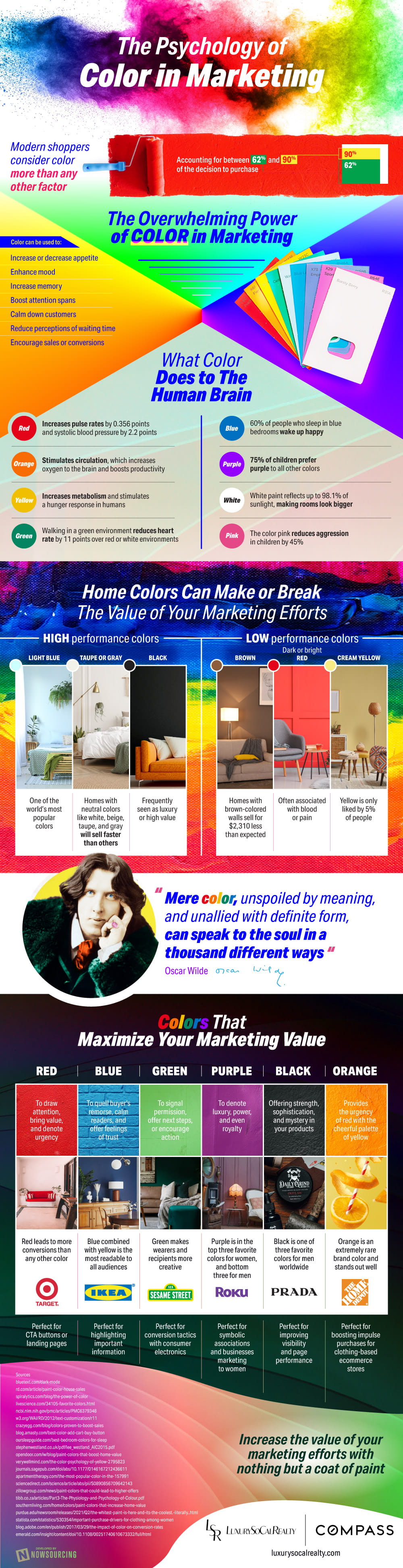
These days shoppers consider color more than any other factor when making a purchase decision. In fact, color can be used to increase or decrease appetite, enhance one’s mood, increase memory, calm down customers, encourage sales, and much more! Different colors can have different effects on people. For example, the color red increases pulse rates by 0.356 points and systolic blood pressure by 2.2 points while the color yellow can increase metabolism and stimulate a hunger response in humans.
Color is especially put to good use when marketing homes. High performance colors like light blue, taupe, gray, ro black can help with selling because homes with these colors are seen as high value and are the most popular. However, low performance home colors can hurt your marketing efforts: homes with brown-colored walls sell for $2,310 less than expected, red is negatively associated with blood or pain, and yellow is only liked by 5% of people.
When it comes to your marketing value, the color blue can quell buyer’s remorse, calm readers, and offer feelings of trust. Purple typically denotes luxury, power, and even royalty while mainly appealing towards women. On the other hand, black, which is one of three favorite colors for men worldwide, promotes strength, sophistication, and mystery in your products. In terms of marketing components, blue is great for highlighting important information, purple is great for symbolic associations, and black helps improve visibility and page performance.
Paying attention to the colors you use in your marketing efforts and using the right ones can help you take your brand to the next level. Learn more about the psychology of color in marketing below:
Source:LUXURYSOCALREALTY


Comments
Log in or sign up to join the conversation.