

In the novel “All Quiet on the Western Front” the difficulty of soldiers returning from a war becomes the central lesson as the monotony of dealing with life between battles seems endless. Perhaps, the next step for markets, as they deal with the new front in the battles for free and fair trade, is to think forward about the role of the US if it wins its trade war.
Maybe a new world order is essential to getting it right and maybe the risks and rewards for calmly waiting it out prove false.The global macro focus shifted last week from trade wars to currency wars as the US President Trump went beyond normal practice and publicly bemoaned higher rates and the stronger USD. The last time the US talked down the USD, at Davos via Treasury Mnuchin, there was an immediate reaction from the G7.
Expect the upcoming ECB meeting to have a keen focus on FX and their reaction to this Trump break in protocol. The market reaction is split – many want to say this is Trump being Trump and ignore the hyperbole. Most analysts see this as the natural outcome of a pro-cyclical fiscal policy delivered late in the economic cycle leaving the President frustrated about his stimulus being lost to higher inflation and higher rates.
Most also see the US President’s push to talk down the USD and bully the Fed as more akin to Turkey’s Erdogan than China’s Xi – where currency and central bank policy attempts to lead with stability – though the CNY traded at 12-month lows this week and the PBOC is backing off its restrictive tightening measures to boost economic growth. The role of China in the US reaction remains central with the CNY 6.80 line less important than the panic line in Chinese money wanting to flee. The correlation of CNY to the Shanghai Composite clearly is important to global traders.
The authorities in China are intervening to prevent such a crisis bleeding over into a contagion similar to August 2015. The Chinese state media, from the official Xinhua news agency to Global Times, did not cover Trump’s fresh threat, and an opinion piece published by People’s Daily on Saturday did not include the potential US$500 billion tariffs. The silence in Beijing is unusual, but comes after Chinese media were told not to “over-report” the trade war, to avoid spreading panic. However, the link of pressures from Trump onto Xi maybe raising the stakes for politics there. The pressure on both Trump and Xi to deliver results is high and adding in currency to the battles seems more noise than reality for now with 6.90 and 7.20 the next big levels.
What did the G20 meetings do for markets?
Short answer, nothing, they highlighted the growing fragility of the present world-order and the fears from US policy shifts.
- US seeks allies? Over the weekend, the US pushed for friends at the G20 FinMin and central bankers gathering - “If Europe believes in free trade, we’re ready to sign a free trade agreement,” Mnuchin said, adding that such a deal would require the elimination of tariffs, non-tariff barriers and subsidies. “It has to be all three issues.” French Finance Minister Bruno Le Maire said the European Union would not consider launching trade talks with the United States unless Trump first withdraws the steel and aluminum tariffs and stands down on a car tariff threat. “We refuse to negotiate with a gun to our head,” Le Maire told reporters on the sidelines of the G20 meeting.
- IMF warns on trade war. IMF Managing Director Christine Lagarde presented the G20 finance ministers and central bank governors meeting in Buenos Aires with a report warning that existing trade restrictions would reduce global output by 0.5 percent. Lagarde’s presentation came shortly after Mnuchin said there was no “macro” effect yet on the U.S. economy. U.S. Treasury Secretary Steven Mnuchin said he “wouldn’t minimize” the possibility that the U.S. will impose tariffs on all $500 billion worth of goods that the U.S. imports from China, amplifying a threat President Donald Trump made in a television interview
- Brazil FinMin Guardia sees agreement in G20 that trade tensions and policy normalization rising risks for global economy. Guardia said that finance ministers and central bankers had discussed the need to press ahead with reforms to protect their economies, especially in emerging market nations that have seen their currencies weaken significantly in recent months.
Question for the Week Ahead: Is the US/China relationship going to get worse?
The ability for the two largest economies to get along and help the rest of the world has been an anchor to the globalization thinking post 2008. The rise of EM money flows was linked to Chinese stimulus and US QE. The effects of both maybe the reason we see the present issues for US/China trade as a key focus.
But there are larger issues at play with many arguing that the US/China relationship is fraying more than on economics. Newsweek reported on the CIA deputy comments about US/China waging a new cold war. Michael Collins, a CIA official, told the Aspen Security Forum, that Beijing’s tactics fit the definition of a cold war:
"I would argue ... that what they're waging against us is fundamentally a cold war—a cold war not like we saw during the Cold War (between the U.S. and the Soviet Union) but a cold war by definition…A country that exploits all avenues of power licit and illicit, public and private, economic and military, to undermine the standing of your rival relative to your own standing without resorting to conflict.”
While this piece seems extreme, the effect of policy on the flow of money in 2018 can’t be ignored. The US rate hikes and trade tariffs have had a chilling effect on Chinese capital outflows and they complicate the relationship of capital outflows driving further restrictions leading to a negative loop.
The crucial issue for markets in the weeks ahead is to see why the latest round of threats from the US on trade haven’t elicited the same response as previously – namely instantaneous reaction. One argument is that China just has less imports from the US so more tariffs on the present mix are the only response. The other is that they see their efforts with the EU working and that they can replace US goods with those of EM nations – with soybeans from Brazil and example. What doesn’t seem obvious is that the replacement process can unwind quickly once its put into place. Here is the issue for investors as the longer term effects of a prolonged trade war maybe leading to a larger rift in other fronts.
Market Recap: The focus on the week was Trump and the currency war/trade war themes. On Friday, President Trump also further sharpened his trade rhetoric, threatening to put tariffs on all Chinese imports into the U.S., totaling over $500 billion. Markets appeared to shrug off the threat, however.
The FOMC Powell testimony and Fed Beige book kept the view that rates will go up gradually until accommodation has been removed. The US economic data was mostly supportive of the FOMC. Retail sales, excluding the volatile auto and gasoline components, rose 0.3% in June, and industrial production also posted large gains. Initial jobless claims fell to 207,000 for the week ended July 14, the lowest level since December 1969. However, both housing starts and new housing permits declined to their lowest rates since September 2017, with the former falling 12.3% in June and the latter down 2.2%.
In the UK, weaker retail sales and mixed views on UK May surviving yet another Brexit test left GBP weaker and BOE August hikes less certain. In Europe, the data was mixed as well with trade war theme key along with IMF WEO update. Eurozone growth has peaked, and risks to the outlook are “mounting,” the International Monetary Fund (IMF) said in its July WEO.
Policy inaction about high public debt and the implementation of needed structural reforms as well as rising trade tensions are key risks. while focus in Asia was on PBOC easing talk and the CNY falling to 12M lows – and debate about whether the currency is a tool in US/China trade negotiations – that played against Japan’s BOJ policy talk of a shift.
Also notable, Japan trade, where Japan’s exports to the U.S. fell 0.9% year-over-year in June—the first such decline since early 2017. Shipments of Japan’s two major export items, cars and semiconductor manufacturing equipment, weakened. Concurrently, Japanese imports from the U.S. fell 2.1% year-over-year, widening the trade surplus. In EM, BRL gained ground against the U.S. dollar after several of Brazil’s centrist parties allied to support Geraldo Alckmin of the Brazilian Social Democracy Party (PSDB). The alliance increases the chances that a market-friendly candidate will win the October 7 general election.
Equities: The MSCI all-country World Index rose 0.13% on the week. The MSCI EM index fell 0.52% on the week. The big bourses were mostly up with the losers India and China only modestly lower but this hides increasing volatility and fear wrapped around emerging markets and trade tariffs.
Earnings mattered significantly in the US and Europe. For the S&P500 with just 17% reporting 87% beat EPS and 77% revenues with implied blended earnings rate at 20.8% up from 20% at the end of June.
- The S&P500 rose 0.02% to 2,801.83 on the week – Tuesday lows were followed by Wednesday highs but Thursday and Friday saw modest back-to-back losses. Financials outperformed while telecoms lagged. The DJIA rose 0.15% to 25,068.12 on the week. The NASDAQ fell 0.07% to 7,820.20 on the week despite a rally to new record highs this week linked to Amazon’s Prime Day. The Cboe VIX closed 12.86% up 0.47pp or +5.58% on the week.
- Stoxx Europe 600 rose 0.15% to 385.62 on the week – with US car tariff threats, EU/China and EU/Japan trade deals in focus. The German DAX rose 0.16% to 12,561.42 on the week. The French CAC40 fell 0.57% to 5,398.32 on the week. The UK FTSE rose 0.22% to 7,678.79 on the week. The Italian FTSE MIB fell 0.45% to 21,794.60 on the week.
- MSCI Asia Pacific rose 0.18% to 165.90 on the week. The Japan Nikkei 225 rose 0.44% to 22,697.88 on the week. The Hong Kong Hang Seng fell 1.06% to 28,224.48 on the week. The China Shanghai Composite fell 0.07% to 2,829.27 on the week. The Korea Kospi fell 0.94% to 2,289.19 on the week. The Australian ASX rose 0.40% to 6,377.40 on the week. The India CNX Nifty 50 fell 0.08% to 11,010.20 on the week.
Fixed Income: Safe-haven buying on trade concerns and some confusion over FOMC Chair Powell’s comments on curve and gradual rate moves all changed with Trump comments on USD and FOMC rate hikes. Curve steepeners returned even with some of the data supporting more FOMC hikes – like jobless claims.
Next week the focus on Trump and any retreat from his FOMC stance will be key but so too will the nearly $250bn in bond supply. The rest of the world had its own share of volatility with Japan JGBs in play Friday on talk of BOJ policy shift leading to higher yields to support banking, while Italy suffered on doubts about the new governments support for EUR and budget discipline. The ECB meeting next week dominates with expectations for ongoing taper guidance along with more rate hike forward guidance. PBOC role in world rising with CNY weakness linked to more easing policy to support growth in the face of trade war slowdown.
- US bonds bear steepen despite Powell testimony – focus shifts to Trump and supply – For the week: 2Y up 1.5bps to 2.593%, 3Y up 2.5bps to 2.677%, 5Y up 4bps to 2.764%, 10Y up 4.5bps to 2.893%, 30Y up 9.5bps to 3.026%
- Canadian 10-year bond yields drop 5bps to 2.17% on the week with stronger retail sales balanced against C$ crosses/NAFTA doubts
- Japan JGBs yields fell 0.5bps to 0.035% on the week – but late Friday BOJ policy talk shifts focus to 0.11% risks again with BOJ long-end buying central.
- Australian 10-year bond yields fell 1bps to 2.62% on the week – consolidation in tight ranges with CPI next week key and RBA minutes adding to view nothing changes soon.
- UK Gilt yields fell 4bps to 1.23% on the week – with weaker data making clear August isn’t 100% sure but with 1.15% tough to see breaking without BOE clarity. Brexit debate remains key.
- German Bund yields rose 3bps to 0.367% on the week – a slow melt up for rates with ECB key next week.
- French OAT yields rose 6bps to 0.675% on the week – doubts about growth/Macron on rise with flash PMI key next week.
- Italian BTP yields rose 4bps to 2.58% on the week – with government budget and EU stance key still but growth data also important.
- Spanish Bono yields up 5bps to 1.305% on the week – carry trade early unwinds late in week – politics back in focus.
- Portuguese 10-year bond yields up 4.5bps to 1.765% on the week – with cue from Italy and supply.
- Greek 10-year bond yields up 2bps to 3.825% on the week – going nowhere with 3.80% sticky still and 4.00% where many would be happy to own bonds for now.
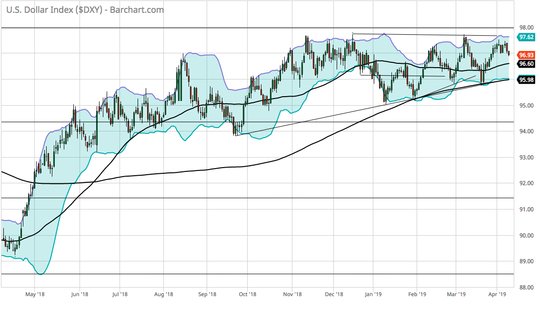
Foreign Exchange: The US dollar index fell 0.2% to 94.48 with selling Thursday and Friday reversing tests of the key 100-week 95.53 resistance post FOMC Powell testimony. In EM FX – The USD was mostly bid with focus on China and commodities, BRL and TRY exceptions: LATAM: MXN off 0.7% to 19.018, BRL up 2.1% to 3.7715 – politics better; Asia:CNH fell 1.3%, closed 6.7810 after touching 6.8367, and CNY fell 1.2% to 6.7695 after touching 6.8149, KRW up 0.2% to 1126.40 – touched 1135 and sees 1132 as key pivot now, INR off 0.4% to 68.755 – tested historic new $ highs with 69.05 key; EMEA: RUB off 1.5% to 63.464, ZAR off 1% to 13.389, TRY up 1% to 4.7915. In cryto currencies: BTC $7454 up 17.5% - not just about USD in FX but more about ICO approvals for brokers, regulation clarity, with futures up 19.2% and 18.7% Aug, ETH up 4.3% to $464.
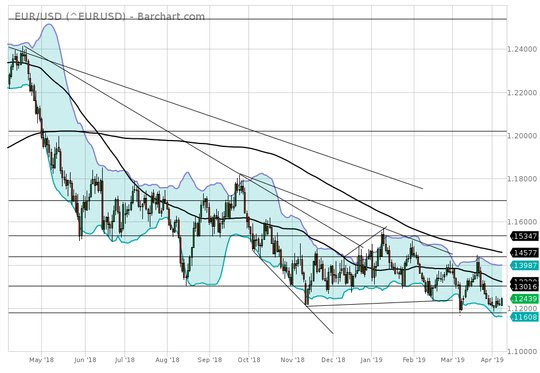
- EUR: 1.1725 up 0.3% on the week – and afterthought reaction to Trump with ECB next week key – 1.1575-1.1840 boundaries in play.
- JPY: 111.40 off 0.85% on the week with EUR/JPY 130.65 up 0.5% on the week – with focus on BOJ policy and equity risk vs trade wars with 113 cap holding opens 110.50 again.
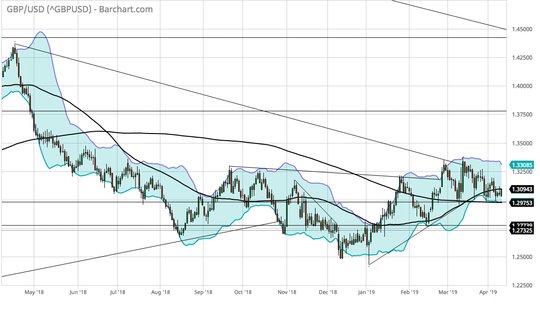
- GBP: 1.3135 off 0.75% on the week with EUR/GBP .8925 up 1% - all about BOE rate hike risks lower and Brexit doubts higher with 1.30 break again not leading to larger move.
- CHF:.9925 off 0.9% on the week with EUR/CHF 1.1630 off 0.6% with 1.17 capping rallies and 1.00 pivotal still for $ with Trump and ECB driving.
- AUD:.7415 off 0.1% on the week with focus on metals, China, RBA on hold and .7250 targets but crosses key support with NZD .6810 up 0.6% - RBNZ/CPI key – watching 0.67 floor for .6950 again.
- CAD: 1.3145 off 0.1% on the week – The better retail sales help but trade and currency wars key with oil and crosses other factors watching 1.3050-1.3280 consolidation.
Commodities: The S&P/GSCI total return index fell 1.2% to 2,677.95 on the week. Trade tariffs and heating up currency war driving. Grains and Cattle rallied while palladium lumber and cocoa fell.
- Oil: $68.26 off 2.42% on the week (Sep). Brent $73.07 off 3% on the week (Sep). Mixed drivers with surprise US inventory builds against Saudi cutting exports, Libya ports reopening, global demand doubts, Iran/US sanctions heating up.
- Gold: $1229.50 off 1.2% on the week. Silver off 1.7% to $15.514, Platinum off 0.1% to $828.60, Palladium off 4.75% to $894.75 – all on the week – with focus on catalytic converters and auto tariffs.
- Corn: $355.20 up 4.1% on the week (Sep), $369 (Dec) – dollar helping, weather vs tariffs. Soybeans $850.25 (Aug) and $864.75 (Nov); Wheat up 3.8% to $515 (Sep).
- Copper: $2.7750 off 1.73% on the week. The Sep futures $2.7560 off 0.70% on the week. Relationship to equities in question, China role still key. Iron Ore up 1.6% to $64.68 (Aug) and $64.53 (Sep). Focus is on plant shutdowns, quality and China environmental push.
Calendar for the Week Ahead:
Another light week for economic news with focus on US housing and GDP 2Q preliminary, durable goods and goods trade deficit with Trump currency and trade war comments likely still key. Also Tuesday, flash July PMI reports are likely to set the tone for 3Q outlloks on global growth with focus on Europe along with the German IFO and French 2Q GDP. Central bank meetings focus is on ECB and taper talk/rate hike forward guidance against trade doubts while Turkey, Hungary and Russia all have meetings with eye on FX reactions. The Australian CPI and Japan Tokyo CPI round out a light week for Asia with focus on China reaction function to US tariffs.
Monday, July 23: US home sales
- German Bundesbank monthly report
- 0830 am US June Chicago Fed National Activity Index -0.15 +0.04
- 0830 am Canada May wholesale sales (m/m) 0.1%p 0.6%e
- 1000 am US June Existing Home Sales (m/m) -0.4%p +0.5%e / 5.43mn p 5.45mn e
- 1000 am Eurozone July Consumer Confidence -0.5p -0.75e
- 1130 am US 3M and 6M $96bn bill sale
- 0100 pm BOE Broadbent Speech
Tuesday, July 24: Global flash PMI reports, US Richmond Fed
- 0830 pm Japan July flash Nikkei Manufacturing PMI 53.0p 52.7e
- 0100 am Japan May LEI 106.2p 106.9e
- 0245 am France July business climate index 110p 110e
- 0300 am France July flash Manufacturing PMI 52.5p 52.4e / Services 55.9 p 55.7e / Composite 55p 54.8e
- 0330 am German July flash Manufacturing PMI 55.9p 55.5e / Services 54.9p 54.3e / Composite 54.8p 54.8e
- 0400 am Eurozone July flash Manufacturing PMI 54.9p 54.7e / Services 55.2p 55.0e / Composite 54.9p 54.8e
- 0505 am UK 5Y Gilt sale
- 0600 am UK July CBI industrial trends – orders 13%p 10%e / 3Q optimism -4p +5e
- 0700 am Turkey rate decision – O/N borrowing expected on hold at 16.25%.
- 0800 am Hungary rate decision – no change from 0.9% expected
- 0900 am US May FHA housing prices (m/m) 0.1%p 0.3%e
- 0945 am US July flash Manufacturing PMI 55.4p 55.3e / Services 56.5p 56.4e / Composite 56.2p 56.0e
- 1000 am US July Richmond Fed Manufacturing Index 20p 18e
- 1130 am US 4-week bill sales
- 0100 pm US $36bn 2Y note sale
- 0400 pm US weekly API crude oil inventory +0.629mb p -2.9mb e
Wednesday, July 25: Australian CPI, German IFO, US new home sales
- 0645 pm New Zealand June trade balance
- 0730 pm Australian 2Q CPI (q/q, y/y) 0.4%p 0.5%e / 1.9%p 2.2%e / Trimmed mean 0.5%p 0.5%e 1.9%p 1.9%e
- 0245 am French June PPI (m/m) 0.6%p 0.3%e
- 0400 am German July IFO business climate 101.8p 101.5e / current 105.1p 104.8e / expectations 98.6p 98.1e
- 0400 am ECB June M3 4%p 4%e / Private loans 2.9%p 3%e
- 0515 am German 5Y Bobl auction
- 0600 am UK July CBI retail trade 32%p 15%e
- 1000 am US June new home sales 6.7%p -2.8%e / 0.689mn p 0.670mn e
- 1030 am US weekly EIA crude oil inventories +5.836mb p -3.461mb e
- 0100 pm US 5Y $35bn note sale
Thursday, July 26: OPEC meeting, ECB meeting, US durable goods
- 0700 pm Korea 2Q GDP (q/q, y/y) 1%p 0.8%e / 2.8%p 3.1%e
- 0200 am German August GfK consumer confidence 10.7p 10.8e
- 0245 am French July consumer confidence 97p 98e
- 0400 am Italian July consumer confidence 116.2p 116e/ business confidence 106.9p 106.5e
- 0440 am Spanish 5-10Y bond sale
- 0745 am ECB rate decision – possible QE tapering signal
- 0830 am US weekly jobless claims 207k p 215k e
- 0830 am US July wholesale inventories 0.6%p 0.5%e
- 0830 am US June goods trade deficit $64.8bn p $67bn e
- 0830 am US June durable goods orders -0.6%p +2.5%e /ex-trans -0.3%p +0.3%e
- 0830 am ECB Draghi press conference
- 0100 pm US 7Y note $25bn auction
Friday, July 27: French and US 2Q GDP, Michigan consumer sentiment
- 0750 pm Japan July Tokyo CPI (y/y) 0.6%p 0.5%e / ex food/energy 0.4%p 0.3%e
- 0830 pm Australian 2Q PPI (q/q, y/y) 0.5%p 0.6%e / 1.7%p 0.7%e
- 0130 am French 2Q preliminary GDP (q/q) 0.3%p 0.3%e
- 0245 am French June consumer spending (m/m) 0.9%p 0.6%e
- 0300 am Spanish June retail sales -0.3%p
- 0400 am Italian June PPI (m/m, y/y) 0.7%p 0.4%e / 2.4%p 2.9%e
- 0820 am US St.Louis Fed Bullard Speech
- 0830 am US 2Q preliminary GDP 2%p 4%e / PCE price index 2.5%p 2.2%e / Core PCE 2.3%p 2.2%
- 1000 am US July final Michigan consumer sentiment 98.2%p 97.1e
Conclusions
Is it profit margins or yield curves that will become the micro guide for markets into the month-end? The debate about markets for August starts with the fear of policy mistakes both fiscal and monetary with the US FOMC rate hikes leading many to watch the inversion of the yield curve as a signal of a recession, even as growth remains robust and the thought of any slowdown seems surprising given the inventory cycle and the level of profit margins. The margins are the standout lesson for 2Q earnings so far.They may make it even harder to fade the stock market in the next few weeks unless there is a global contagion.This seems unlikely as well as many see Trump being Trump, and the rest of the world getting used to his frantic style of diplomacy.The problem with the yield curve being ignored starts with the reasoning used by many FOMC officials for explaining it away as they normalize rates.The 10-year term premium in US bonds is negative because of the ongoing QE and negative rates in Europe and Japan.Whether this changes will be important for 2019 and 2020 but not now.
As for profit margins, the strength of US earnings in 2Q down just a smidge from 1Q suggest that this is the best of times and that makes the outlook for future earnings that much more important.Here is where margins matter. As FactSet notes this week - it is interesting to note that analysts expect even higher net profit margins for the remainder of 2018. Based on current earnings and revenues estimates, the estimated net profit margins for the third and fourth quarters of 2018 are both 11.8%.
The link between animal spirits measured by the ascent of the S&P 500 on central bankers matters. The only hitch for trading as a bull in August appears to be the threat of a new front in the global wars waged to regain US competitiveness with FX and trade tariffs both difficult to manage. If the USD falls quickly, some of the money parked in US bonds and US stocks may be more at risk than central bankers would like. This speed of change game matters significantly in the weeks ahead.
Comments
Log in or sign up to join the conversation.