
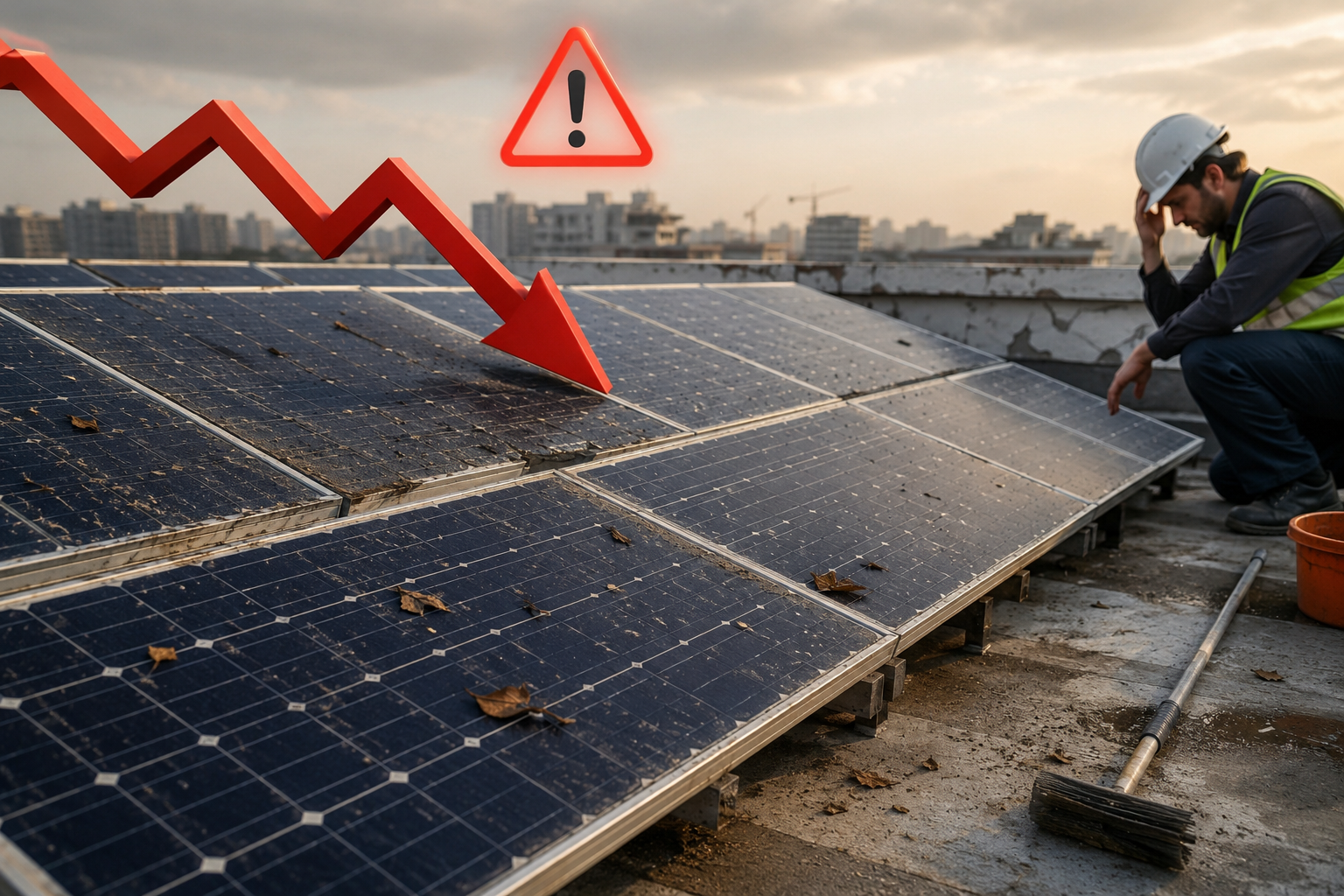
When people buy a solar power system, they are usually told the same thing: "Once it's up on your roof, you don't have to worry about it. It has no moving parts, and it will last for 25 years easy."
While it is true that solar panels are incredibly durable, thinking they need absolutely zero care is a huge mistake. Solar systems face brutal weather every single day blistering sun, heavy rain, freezing temperatures, wind, dust, and pollution.
If you make the wrong moves while looking after them, or if you ignore them completely, you can easily cut their lifespan in half. A system that should have given you free electricity for over two decades might start failing in just 7 to 10 years.
Let’s look at the most common solar maintenance mistakes that homeowners and businesses make, why these mistakes cause so much damage, and how you can avoid them to keep your system running perfectly.
Washing Panels the Wrong Way
Cleaning your solar panels seems simple enough. If they look dirty, you grab a hose and wash them, right? Not quite. Washing solar panels incorrectly is actually one of the fastest ways to ruin them permanently.
Cleaning Under the Blasting Midday Sun
This is the single most destructive cleaning mistake you can make. During a hot summer day, the internal cells of a solar panel can easily reach temperatures above 65°C. If you spray cold water directly onto those boiling hot panels, you cause what engineers call thermal shock.
Think of it like pouring ice cold water into a hot glass baking dish straight out of the oven the glass shatters. While solar panel glass is tempered and won't always explode instantly, the sudden drop in temperature causes intense stress. This creates tiny, invisible microcracks inside the solar cells. Over time, these microcracks widen, cut off the flow of electricity, create dangerous "hot spots," and can completely destroy the panel.
The Fix: Only wash your panels early in the morning (around dawn) or late in the evening after the sun goes down. The panels need to be cool to the touch before any water hits them.
Using Harsh Chemical Cleaners and Rough Brushes
Solar glass isn't just ordinary window glass. It is treated with a special anti reflective coating that helps the panel absorb as much sunlight as possible instead of reflecting it away.
If you use abrasive scrubbers, stiff bristled brooms, or harsh household chemicals (like bleach, laundry detergent, or window sprays), you will scratch or strip this coating away. Once that anti reflective layer is damaged, your panels will reflect more light into the sky, permanently lowering the amount of power your system can generate.
Solution: Use a soft microfiber cloth, a gentle squeegee, or a specialized soft solar brush. Stick to plain water or a tiny bit of mild, plant based soap if absolutely necessary.
Using Hard Water from the Tap
If you live in an area with hard water (water packed with minerals like calcium and magnesium), don't use it straight from the hose to wash your panels. When hard water evaporates on a hot panel, it leaves behind white, crusty mineral stains.
These stains are incredibly tough to get off. They act like permanent mini shades over your solar cells, blocking the sun and lowering your daily power output.
Pro Tip: If your tap water is hard, use a water softener attachment on your hose, or use distilled/reverse osmosis water to give the panels their final rinse.
Neglecting the Inverter
Many people spend all their time worrying about the panels on the roof while completely forgetting about the box on the wall: the inverter. The inverter takes the raw power from the sun and changes it into the electricity your home actually uses. It does the hardest work, which means it gets incredibly hot.
Allowing Dust to Choke the Cooling Vents
Because inverters generate a lot of heat, they rely on built in heatsinks, fans, and cooling vents to stay safe. A very common maintenance mistake is letting dust, spiderwebs, or old boxes pile up around the inverter.
When the vents get blocked, the temperature inside the inverter skyrockets. To protect its delicate internal electronics from melting, the inverter will automatically throttle itself. This means it intentionally slows down and cuts your power production right during the middle of the day when you should be making the most money.
Even worse, if it runs hot for months at a time, the internal capacitors will dry out and pop, forcing you to buy a costly replacement inverter years ahead of schedule.
Treat your inverter like a desktop computer. Keep the area around it completely clear. Every few months, take a dry microfiber cloth or a soft brush and clean the dust off the cooling fins and air vents.
The Local Environment Challenge
Your geographical location changes everything when it comes to solar care. Standard online advice written for mild climates simply won't work in areas facing extreme weather conditions.
For example, if you are operating a solar panel in Lahore, you have to deal with a highly specific set of environmental challenges. The city experiences heavy seasonal dust storms, intense urban smog, and extreme summer temperatures that regular solar maintenance guides don't account for.
Dealing with "Cementation"
When fine city dust and industrial pollution settle on a solar panel, it forms a dry layer. In many parts of the world, a light rain shower will wash this away. But during specific times of the year in Lahore, high humidity or early morning dew mixes with this heavy pollution layer. Instead of washing it off, the moisture turns the dust into a thick, sticky mud crust. As the sun comes up, this mud bakes hard onto the glass. This is known as cementation.
If you leave this hard crust on the panels, it doesn't just lower your efficiency it causes uneven heating across the cells, which can burn out parts of the panel entirely. Regular rainfall will not clean this; it requires careful, physical washing with the right tools.
Trapped Heat and the Summer Squeeze
Furthermore, summer temperatures in the region can cross 45°C. Solar panels actually lose efficiency when they get too hot. Under a 45°C sun, the physical cells inside the panels can easily soar past 75°C.
A common maintenance failure here is letting leaves, bird nests, or debris build up underneath the panels. Solar arrays need a constant stream of air flowing beneath them to keep them cool. If the space between your roof and the panels gets choked up with trash or nesting materials, the heat gets trapped.
This extreme heat degrades the protective backing sheet of the panels, causing them to turn brown, peel apart (delaminate), and fail prematurely.
Messy Cable Management and Wire Mistakes
The wires underneath your solar panels carry dangerous, high voltage electricity. Because you can't see them from the ground, they are often completely ignored until something goes horribly wrong.
Leaving Wires to Sag and Drag
When solar systems are first put in, wires are tied up neatly along the metal frames using plastic zip ties. But cheap plastic zip ties can get brittle and snap after a year or two under the hot sun.
When those ties break, the heavy electrical cables drop down and rest directly on your roof or the sharp edges of the metal frame. As the wind blows, the panels vibrate, and those sagging cables rub back and forth against the rough surface.
Over time, this friction wears away the protective rubber coating, exposing bare copper wires. This leads to immediate system short circuits, inverter errors, and can even spark a major rooftop fire.
Here is the solution:
During your yearly inspection, don't just look at the top of the panels. Look underneath them. If you see any wires dangling or touching the roof, tie them back up using stainless steel solar clips or heavy duty, UV rated nylon ties.
Ignoring Loose Covers on Junction Boxes
On the back of every single solar panel, there is a little black plastic box called a junction box. This box protects the main electrical connections from rain and moisture.
During extreme seasonal temperature changes, the plastic boxes expand and contract, which can cause the cable seals to loosen over time. If you do not catch this during routine maintenance, water from heavy rainstorms will seep inside. Water meets high voltage electricity, causing rapid rust, terminal damage, and completely destroying that specific panel.Structural Neglect and Torque Failures
Solar arrays are essentially massive sails bolted to your roof. They have to withstand intense wind gusts for decades without shifting a single millimeter.
Forgetting to Check Bolt Tightness
Every clamp holding your solar panels down needs to be tightened to a very specific tightness level, measured in Newton meters (Nm). Because wind constantly creates tiny vibrations across the system, unverified or neglected bolts can slowly back out and loosen over time.
If a clamp loses its grip, the panel will start to warp and flex under heavy wind loads. This twisting forces the silicon cells inside to bend, causing major internal cracks. In worst case scenarios during a severe storm, loose panels can be ripped completely off the roof, destroying the equipment and risking serious injury to anyone below.
Technicians should check structural bolts with a calibrated torque wrench during routine maintenance checkups to ensure everything stays anchored to factory specifications.
Mixing the Wrong Metals
When doing repairs or adding upgrades to a solar racking system, some people make the mistake of using standard steel screws or washers they bought from a local hardware store.
When aluminum (which solar frames are made of) comes into direct contact with standard carbon steel while wet from rain, a chemical reaction called galvanic corrosion occurs. The steel will quickly eat away the aluminum frame, causing deep rust, structural weakness, and a total failure of the mounting bracket.
Make sure every single bolt, screw, nut, and washer used on your solar array is made of high grade stainless steel or specifically anodized aluminum.
DIY Troubleshooting Traps and Blind Spot Failures
When a solar system starts underperforming, it is tempting to try and fix it yourself or hire a cheap handyman to take a look. However, without professional diagnostic tools, you can easily cause more problems or injure yourself.
Pulling Fuses Under Full Solar Load
If you suspect an electrical fault in your solar combiner box, never pull a fuse or flip a high voltage switch while the sun is shining brightly on the panels.
Direct current (DC) electricity coming from solar panels behaves very differently from the alternating current (AC) electricity in your wall outlets. DC electricity does not like to stop flowing. If you pull a fuse while the system is actively working under full sunlight, the electricity will literally jump through the air to complete the circuit. This creates a massive, blinding electric arc that can melt the fuse holder instantly, destroy the entire box, and cause severe, life threatening electrical burns.
Always shut down the main inverter and follow the correct electrical shutdown sequence before opening or adjusting any electrical boxes.
Relying Solely on Inverter Screen Data
Many owners assume that as long as the inverter screen shows a green light and says it's producing power, everything is fine. This is a major blind spot. An inverter only sees the total output of the system. If you have an invisible fault like a single cell that has cracked and turned into a resistive "hot spot" the panel will continue to operate, but that single spot will get hotter and hotter.
Eventually, it can burn a hole right through the back of the panel. Standard monitoring screens cannot show you this. Finding these hidden dangers requires a professional thermal camera scan under full sunlight to spot the overheating cells before they cause a fire.
Caring for Your Solar System
To make things easy, here is a breakdown of what tasks you can safely do yourself to protect your investment, and what needs to be handled by a professional technician with the right gear:
Maintenance Task | Can I Do It Myself? | How Often? | Best Practice Tips |
Visual Inspection | Yes | Every Month | Look from the ground with binoculars for cracked glass, shifting panels, or sagging wires. |
Basic Dust Removal | Yes | Every 2–4 Weeks | Spray with water only during early morning or late evening. Never scrape dry dust. |
Inverter Cleaning | Yes | Every 3 Months | Wipe down the outside casing with a dry cloth; keep the surrounding area clear of clutter. |
Deep Mud/Crust Cleaning | No (Call a pro) | As Needed | Requires specialized soft brushes and pure demineralized water to safely remove baked-on grime. |
Structural Bolt Checks | No (Call a pro) | Every Year | Requires a calibrated torque wrench to verify clamp tightness without cracking the frame. |
Electrical Safety Tests | No (Call a pro) | Every Year | Requires special insulation meters and thermal cameras to check for hidden wire damage and hot spots. |
Final Summary
A solar power system is an incredible way to save money and gain energy independence, but it is a long-term financial asset that requires regular technical care.
Avoiding the most common maintenance errors like washing hot panels with cold water, letting dust choke your inverter vents, ignoring sagging cables, or trying to diagnose complex electrical faults without the right tools is the only way to make sure your system lives to see its 25th birthday.
By applying a little technical discipline and keeping up with regular, safe maintenance habits, you can protect your roof, keep your equipment safe, and enjoy maximum electricity savings for decades.
Comments
Log in or sign up to join the conversation.