

Tokyo's core inflation rate came in at 2.7% against a 2.4% forecast, a beat that should have done more for the Yen than it did. USD/JPY slipped back below 158.00 on the release and is still up on the week. Speculators bought Yen in record size before the Bank of Japan (BoJ) raised rates on September 18, and the Yen has weakened since.
Tokyo reaches the inflation rate the BoJ expected later in the fiscal year
In Tokyo, core inflation, the measure that excludes fresh food, reached 2.7% in September after 1.8% in August, its fastest since November 2025, and headline inflation was also 2.7%, up from 1.9%. Stripping out energy as well as food leaves 3%, up from 2%, so the acceleration isn't confined to fuel and electricity. The figures came out alongside Japan's August unemployment rate, which ticked up to 2.5% against a 2.4% forecast.
Nationally, core inflation was 1.7% in August, below the BoJ's 2% target for an eighth straight month as government subsidies on utility bills held it down. Tokyo covers only the capital's 23 wards, and the national core rate has come in a tenth below Tokyo's in each of the last two months. National figures for September come out on October 22, before the BoJ's next decision at the end of the month. The BoJ raised rates twice during that eight-month run, in June and on September 18.
The Yen's most likely buyers bought early
Speculators bought a net 216K Yen futures contracts in the two weeks to September 15, a record for any fortnight and worth about $17.3 billion, according to Commodity Futures Trading Commission (CFTC) data. That took their net long to about 120K contracts, the most in 14 months, and they cut it to about 72K in the week to September 22 as the Yen weakened after the hike.
The remaining net long still ranks around the 88th percentile of the past five years, so the funds most likely to buy the Yen on a hot Japanese number largely own it already. Friday's CFTC report counts positions as of Tuesday, which means it describes a market that had seen neither the BoJ's meeting summary nor Tokyo's numbers.
A soft US jobs count could do what Tokyo's numbers didn't
US Nonfarm Payrolls (NFP) for September arrive at 12:30 GMT on Friday, forecast to show 90K new jobs after 162K, with average hourly earnings expected to rise 3.2% YoY. Japan's August pay data follow at 23:30 GMT on Tuesday.
Total cash earnings in Japan rose 4.7% from a year earlier in July, faster than Tokyo's prices even after Thursday's jump. Pay rising ahead of prices is what the BoJ has said it wants to see as it keeps raising rates, which makes October easier to argue than USD/JPY's reaction suggests.
Yen levels after the Tokyo numbers
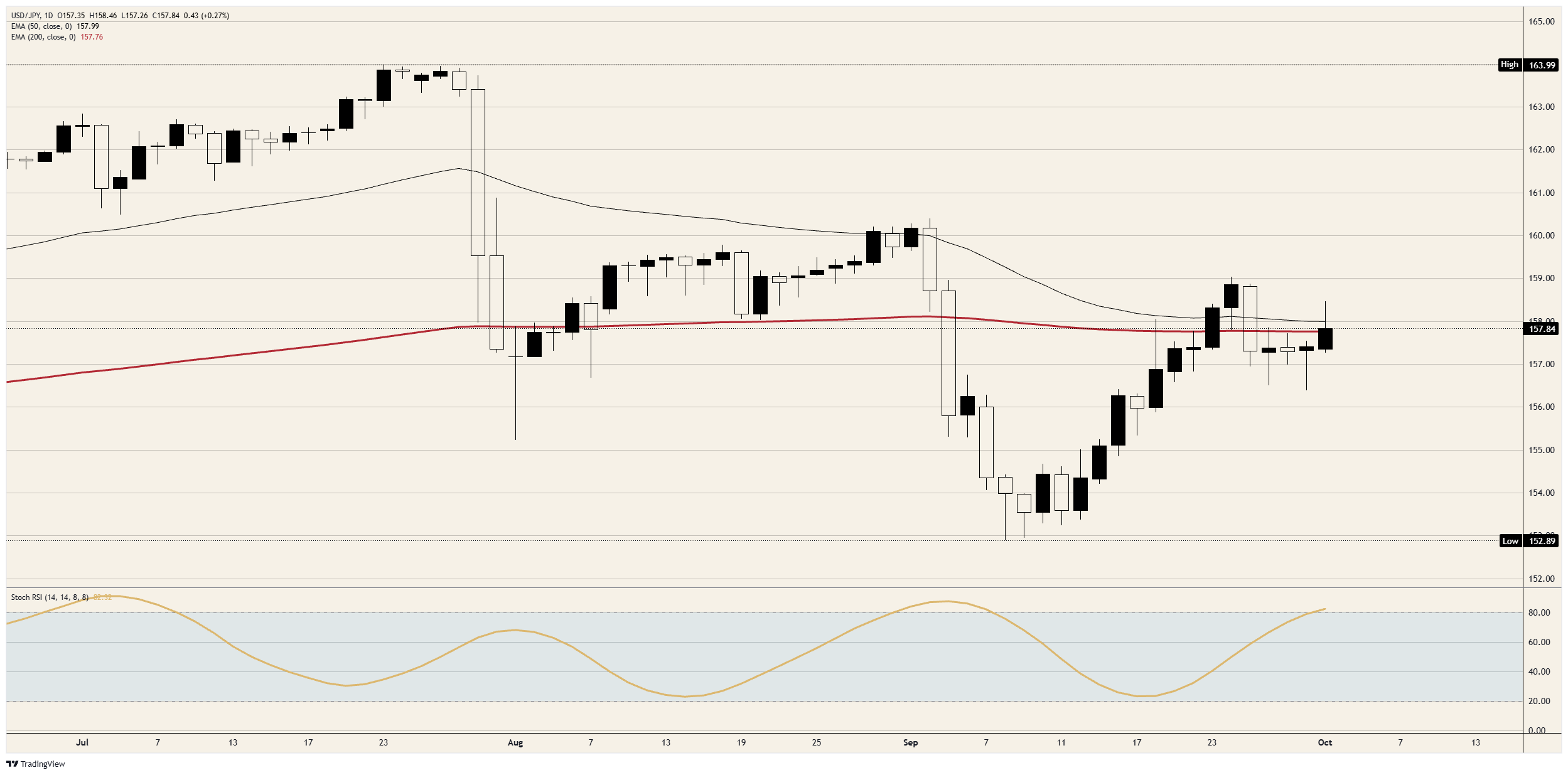
Resistance: 158.00 is the level the release took USD/JPY back under, with the 50-day Exponential Moving Average (EMA) at the same level. Thursday's high, just short of 158.50, is next.
Support: 157.50 held through the release bar. Thursday's low sits just above 157.00, with 156.50 below it near the September 28 and September 30 lows.
Bias: Long above 157.50 on a closing basis, aiming first at 158.50 and then at 159.00. The daily Stochastic Relative Strength Index (Stoch RSI) reads near 82, high in its range, so another dip like the one on the release could come without breaking the call. The trade is wrong on a daily close below 157.00.
USD/JPY daily chart



Comments
Log in or sign up to join the conversation.