

iPhone pricing provides a fascinating example of how technological innovation can reshape consumer pricing over time. Historically, you might expect the price of a product to decline as manufacturing becomes more efficient and economies of scale improve, especially when adjusted for inflation. However, the iPhone has followed a different path. The introduction of the iPhone 7 in 2016 marked a significant upward shift in pricing, reflecting the addition of new features, improved technology, and a move toward premium positioning. Since then, iPhone prices have eased slightly but have remained in a much higher range compared with the early years. From 2008 to 2015, inflation-adjusted iPhone prices generally remained around the $250–$300 range. Today, prices continue to reflect the growing value consumers place on advanced technology, features, and innovation rather than simply the declining cost of production.
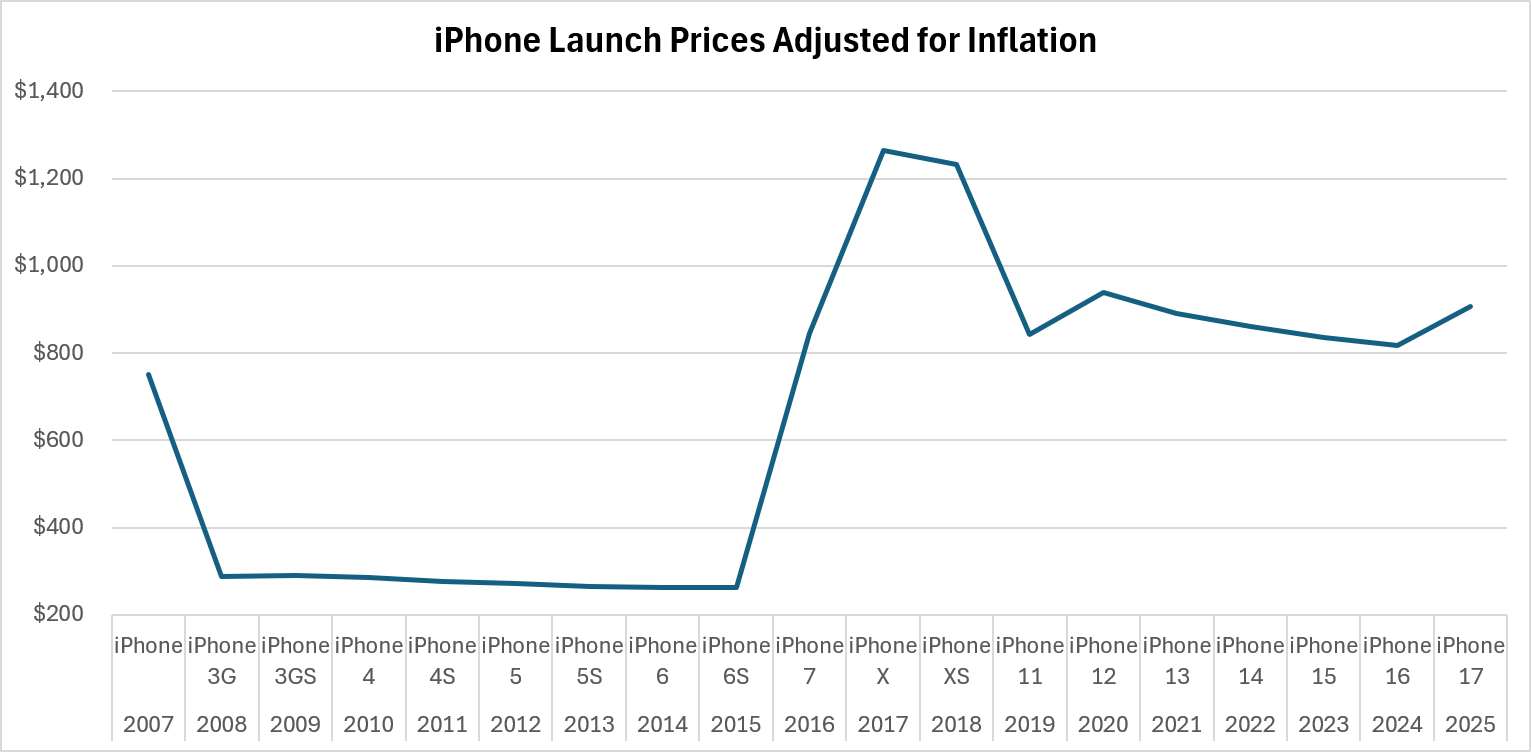
Source: worththen.com; Note: 2008-2015 prices reflect carrier-subsidized pricing. Starting 2016, prices reflect full retail; 2026 Prices
This graph was produced by Lucas Juery, CFA, CFPⓇ and is not intended to provide financial advice.


Comments
Log in or sign up to join the conversation.