

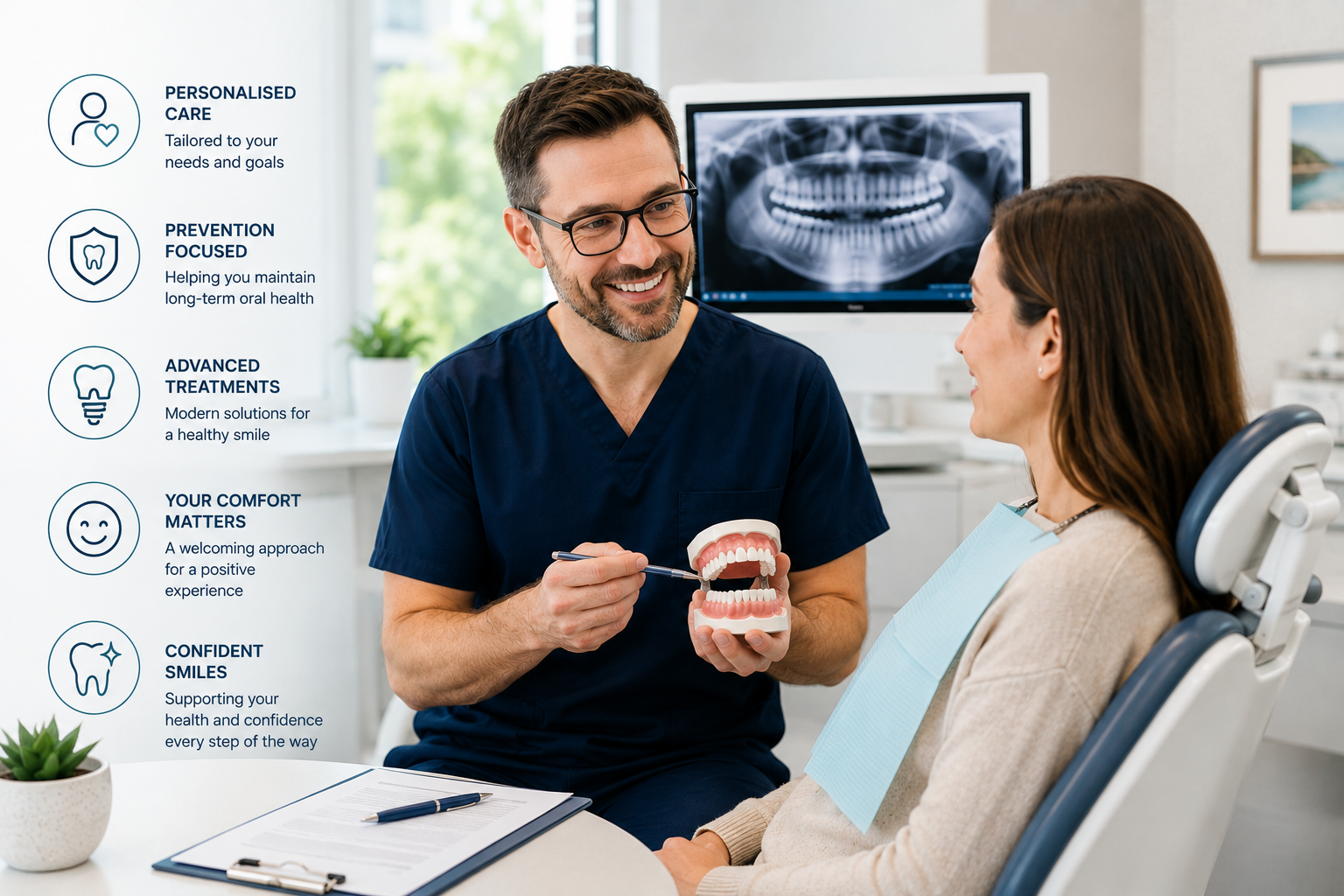
A healthy smile is not the same for everyone.
Each person has a unique dental history, different oral health needs and their own concerns about their teeth and gums. Some people may be focused on preventing future problems, while others may need treatment to restore damaged teeth, replace missing teeth or improve the appearance of their smile.
This is why personalised dental care is such an important part of modern dentistry.
Rather than taking a one-size-fits-all approach, personalised care considers the individual behind the smile. It takes into account your oral health, dental history, lifestyle, concerns and goals to help create an approach to care that is appropriate for your needs.
From routine check-ups to more advanced treatment, a personalised approach can support both long-term oral health and confidence in your smile.
What Does Personalised Dental Care Mean?
Personalised dental care means that your treatment and ongoing care are based on your individual circumstances.
Before recommending treatment, a dentist should take the time to understand your oral health and discuss what matters to you.
This may involve considering:
Your current dental health
Your previous dental history
The condition of your teeth and gums
Your oral hygiene routine
Any concerns or symptoms you have noticed
Your lifestyle and habits
Your treatment preferences
Your long-term oral health goals
Your concerns about the appearance of your smile
All of these factors can influence the most appropriate approach.
For one patient, personalised care may involve a preventive plan focused on maintaining healthy teeth and gums. For another, it may involve carefully planned restorative treatment. Someone else may want to explore cosmetic options to improve their confidence.
The important point is that treatment should begin with the needs of the individual rather than a standard solution.
Your Dental History Matters
Your past dental experiences can provide valuable information when planning your future care.
For example, previous treatment, recurring dental problems, tooth wear or gum concerns may all help a dentist understand your oral health more clearly.
When you visit the same dental practice regularly, your dental team can monitor changes over time and build a better understanding of your individual needs.
This continuity of care can be valuable because dental health is not static. Your needs may change as you get older, experience lifestyle changes or develop new concerns.
A personalised approach allows your care to adapt accordingly.
Instead of viewing each appointment as completely separate, your dentist can consider your oral health as part of a longer-term picture.
Prevention Should Be Personalised Too
Preventive dentistry is an important part of maintaining healthy teeth and gums, but preventive advice should not necessarily be identical for every patient.
Different people may have different levels of risk for issues such as tooth decay, gum disease or tooth wear.
A personalised approach can help identify the areas that require particular attention.
For example, one patient may benefit from additional support with their oral hygiene routine, while another may need advice about managing habits that contribute to tooth wear.
Regular dental examinations provide an opportunity to review your oral health and discuss changes in your needs.
The goal is to provide practical guidance that is relevant to you and helps support your long-term oral health.
Personalised Treatment Planning Leads to Better-Informed Decisions
When dental treatment is required, patients should understand why it has been recommended and what options may be available.
A personalised consultation gives you the opportunity to discuss your priorities and ask questions about treatment.
Depending on your situation, several approaches may be possible. The most appropriate option can depend on factors such as the health of your teeth and gums, the complexity of the issue, your preferences and your longer-term goals.
Before making a decision, it can be helpful to understand:
What problem the treatment is intended to address
Why a particular option may be suitable
Whether alternative options are available
The potential benefits and limitations of treatment
What the treatment process involves
How the treatment may fit into your longer-term care
Any relevant aftercare requirements
Clear communication is an essential part of personalised care.
When patients understand their options, they can take a more active role in decisions about their oral health.
Restoring Function While Considering the Whole Smile
When a tooth is damaged or worn, treatment should consider more than the immediate problem.
For example, restoring a tooth may involve considering how it functions alongside surrounding teeth and how it contributes to the overall bite.
A personalised treatment plan takes the wider picture into account.
Depending on the situation, this may involve restorative options such as fillings, crowns or other treatments designed to protect and restore teeth.
The most suitable approach will depend on the individual.
Careful planning can help ensure that treatment supports function while also considering appearance and long-term oral health.
A Personalised Approach to Cosmetic Dentistry
The same principle applies to cosmetic dental treatment.
There is no single definition of the “perfect” smile. What one person wants may be completely different from another person's preferences.
Some patients may want a subtle improvement, while others may be interested in a more significant change.
A personalised cosmetic consultation should begin by understanding what the patient would like to achieve.
Depending on the condition of the teeth and the individual's goals, options may include professional teeth whitening, composite bonding, veneers or orthodontic treatment.
However, cosmetic treatment should also consider the health and function of the teeth and gums.
The aim should not be to create the same smile for everyone. A personalised approach can help develop a treatment plan that is appropriate for the individual and their goals.
Considering Comfort and Confidence
Personalised care is not only about clinical treatment.
How you feel about visiting the dentist also matters.
Some patients are comfortable attending regular appointments, while others may feel anxious because of a previous negative experience or concerns about treatment.
A patient-centred approach recognises these differences.
For nervous patients, personalised care may involve taking additional time to discuss concerns, explaining procedures clearly and ensuring they feel comfortable communicating with the dental team.
The right approach may differ from one person to another.
By understanding what makes a patient feel more comfortable, a dental team can help create a more positive experience and gradually build confidence in attending appointments.
Technology Can Support Personalised Care
Modern dental technology can also contribute to a more individual approach.
Digital imaging and diagnostic tools can provide detailed information that supports careful assessment and treatment planning.
Technology may also make it easier to explain dental findings to patients and discuss different treatment options.
However, technology is most effective when combined with professional experience and good communication.
The goal is not simply to use advanced equipment. It is to use appropriate tools to better understand each patient's needs and support accurate, carefully planned care.
Your Goals Should Be Part of the Conversation
A good dental consultation should involve more than a clinical examination.
Your dentist should also understand what you want to achieve.
For some patients, the goal may be to maintain a healthy smile with routine care. For others, it may be to improve chewing function, address discomfort or restore damaged teeth.
Some may want to feel more confident about the appearance of their smile.
By discussing these goals openly, your dentist can help explain which options may be appropriate.
This creates a more collaborative approach where clinical expertise and patient preferences both play a role in planning care.
Personalised Care Can Support Long-Term Oral Health
One of the greatest benefits of personalised dentistry is its focus on the future.
Dental care should not always be viewed as a series of isolated treatments. The decisions made today may influence your oral health needs in the years ahead.
A personalised approach considers how to protect and maintain your teeth and gums over the long term.
This may involve regular monitoring, preventive advice and treatment planning that takes your future needs into account.
For patients who have received restorative, cosmetic or more advanced treatment, ongoing care can also help maintain the health and function of their smile.
Having a dental team that understands your history and goals can provide valuable continuity.
Building a Relationship With Your Dental Team
Trust and communication are central to personalised care.
The more comfortable you feel discussing your concerns and goals, the easier it can be to work with your dental team to make informed decisions.
Over time, a relationship with a trusted dentist can help you feel more confident about attending appointments and seeking advice when you notice a change.
This is particularly important because early discussions can sometimes help address concerns before they become more significant.
A practice such as Keppel Advanced Dentistry demonstrates the value of taking time to understand each patient, combining modern dental care with an approach focused on individual needs, comfort and long-term oral health.
A Healthy Smile Is Personal
There is no single path to a healthy, confident smile.
What works for one person may not be appropriate for another. Your dental history, oral health, lifestyle and personal goals all matter.
That is why personalised care can make such a meaningful difference.
Whether you are attending for a routine examination, considering cosmetic improvements or exploring treatment for a more complex concern, your care should be based on a thorough understanding of your individual situation.
Final Thoughts
Personalised dental care puts the patient at the centre of every decision.
It recognises that good dentistry is not simply about treating teeth—it is about understanding the person behind the smile.
By considering your oral health, history, concerns and goals, a personalised approach can help provide care that is relevant to your needs today while supporting your long-term dental health.
From prevention and routine care to restorative and cosmetic treatment, the best dental care is built around careful assessment, clear communication and thoughtful planning.
A healthy, confident smile looks different for everyone. The right dental care should recognise that and help you find an approach that is right for you.
Comments
Log in or sign up to join the conversation.