

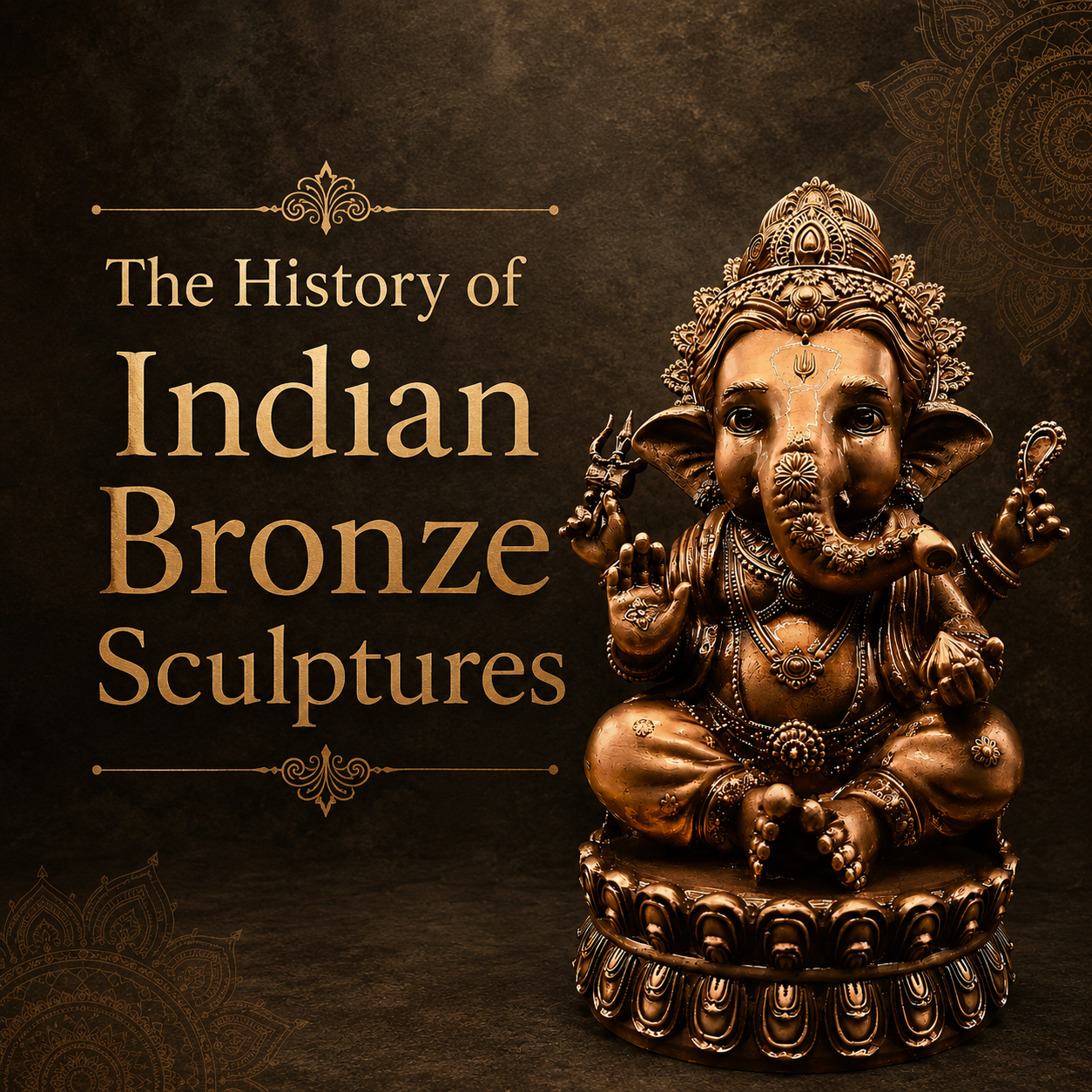
Bronze sculpture is one of India's oldest and most beautiful art forms. For thousands of years, Indian artists have used bronze to create images of gods, goddesses, animals, and everyday people. These sculptures are famous all over the world for their beauty, detail, and spiritual meaning.
The Earliest Bronzes: Indus Valley Civilization
The story of Indian bronze art begins around 2500 BCE, during the Indus Valley Civilization. The most famous piece from this time is the small statue called the "Dancing Girl," found in Mohenjo-daro (now in Pakistan). This tiny bronze figure, only about 10 centimeters tall, shows a young girl standing confidently with bangles on her arm. It proves that Indian artists were skilled in metal casting even 4,500 years ago.
The Lost-Wax Technique
Almost all traditional Indian bronze sculptures are made using a method called the "lost-wax technique," known in India as "Cire Perdue." Here is how it works in simple steps:
The artist first makes a model of the sculpture using wax.
This wax model is covered with layers of clay to form a mould.
The clay mould is heated, and the wax inside melts and drains out, leaving an empty space.
Melted bronze (a mix of copper and tin) is poured into this empty space.
Once the bronze cools and hardens, the clay mould is broken open to reveal the finished sculpture.
Because the clay mould is destroyed each time, every bronze sculpture made this way is unique. No two pieces are exactly the same.
The Golden Age: Chola Bronzes
History of Indian Bronze Sculptures
The greatest period of Indian bronze sculpture came during the Chola dynasty, which ruled South India from about the 9th to the 13th century CE. Chola bronzes are considered some of the finest metal sculptures ever made anywhere in the world.
The most famous Chola bronze is the image of Nataraja, Lord Shiva as the Cosmic Dancer. This sculpture shows Shiva dancing inside a circle of fire, with one foot raised and one hand pointing to it. It represents the never-ending cycle of creation and destruction in the universe. The Nataraja bronze is admired for its perfect balance, graceful movement, and deep spiritual meaning.
Chola artists also made beautiful bronze images of other gods and goddesses, such as Vishnu, Parvati, and various saints. These statues were used in temples for daily worship and were carried in processions during festivals.
Bronzes in Other Regions
While the Cholas are the most famous, other parts of India also produced wonderful bronze work:
Eastern India (Bengal and Bihar): During the Pala and Sena dynasties, bronze images of Buddhist and Hindu deities were made with delicate detail.
Nepal and the Himalayan regions: Close trade and cultural links with India led to a shared tradition of bronze Buddhist statues.
Kerala and Karnataka: Local bronze traditions developed their own styles, often used in temple rituals.
Tribal and folk bronzes: Communities like the Dhokra artisans of Central and Eastern India still use a similar lost-wax method to make simple, charming bronze figures of animals and rural life.
Purpose and Meaning
Bronze sculptures in India were not just decorative art. They held deep religious importance. Temples used these bronze idols, called "utsava murtis" or festival idols, to carry the deity through the streets during festivals, since the large stone idols in the temple could not be moved. Every part of a bronze sculpture, from the hand gestures (mudras) to the ornaments, carried symbolic meaning connected to Hindu and Buddhist beliefs.
Bronze Sculpture Today
The tradition of bronze casting is still alive in India today. Towns like Swamimalai in Tamil Nadu are famous even now for continuing the ancient Chola techniques, with families passing down the skill from one generation to the next. Indian bronze sculptures are also displayed and admired in major museums around the world, including the British Museum and the Metropolitan Museum of Art.
Conclusion
From the tiny Dancing Girl of the Indus Valley to the magnificent Nataraja of the Chola period, Indian bronze statue tells a story that spans thousands of years. It reflects India's artistic skill, religious devotion, and cultural continuity. Even today, this ancient craft continues to inspire artists and admirers across the world.
Comments
Log in or sign up to join the conversation.