

The Hidden Cost of Bad Data in B2B Demand Generation
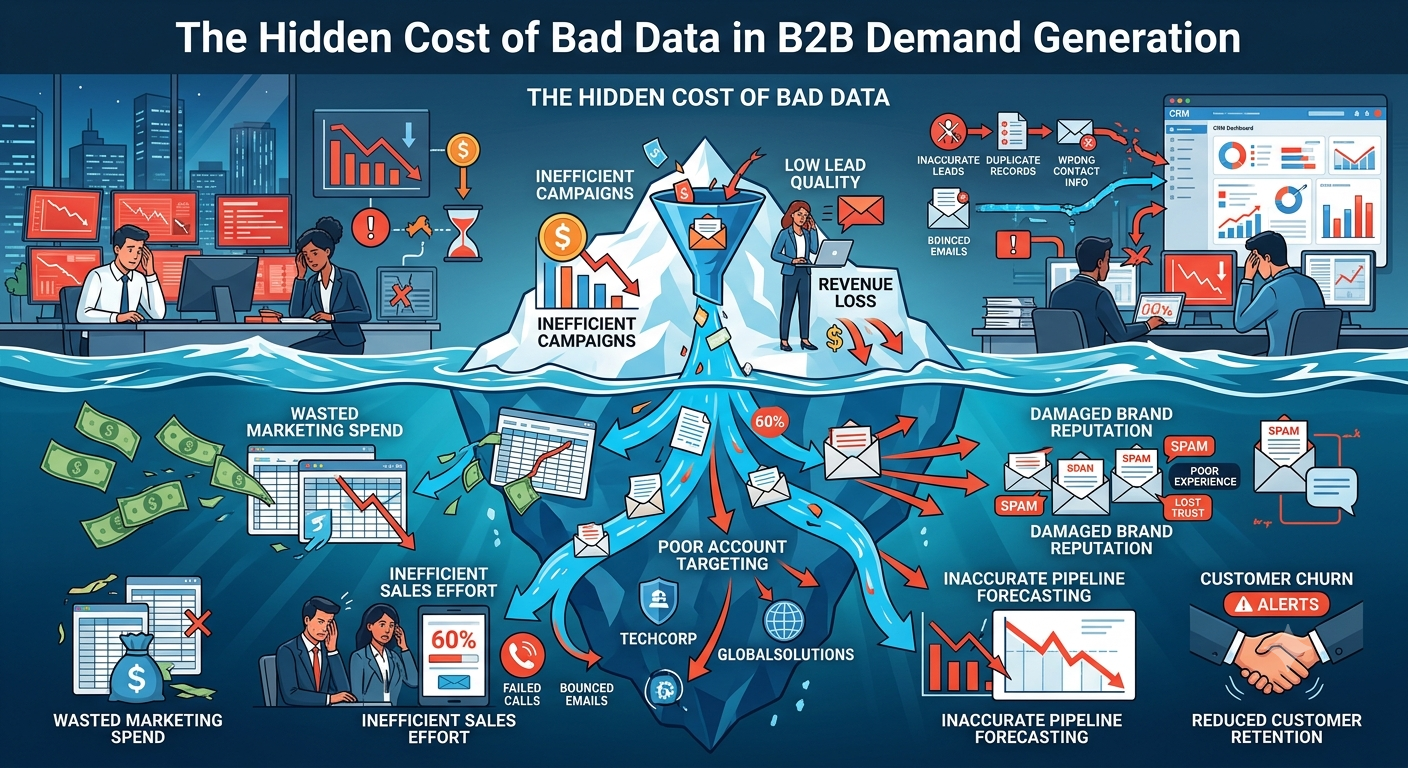
Data is the foundation of modern B2B demand generation. Businesses rely on accurate audience information to identify prospects, personalize campaigns, and create meaningful sales opportunities. However, poor-quality data can negatively impact every stage of the marketing and sales process.
Incomplete, outdated, or inaccurate data can reduce campaign effectiveness, waste resources, and prevent organizations from reaching the right decision-makers.
How Poor Data Impacts B2B Marketing Campaigns
B2B marketing campaigns depend on reliable information such as company details, job roles, industry classification, and contact information. When this data is incorrect, campaigns may target irrelevant audiences or fail to reach valuable prospects.
Poor targeting reduces engagement rates and makes it harder for marketers to generate qualified opportunities.
Increasing Sales and Marketing Inefficiency
Bad data affects more than marketing performance. Sales teams often spend time following up with outdated contacts, incorrect leads, or prospects that do not match the ideal customer profile.
This creates unnecessary effort and reduces productivity, making it difficult for teams to focus on high-value opportunities.
Reducing Personalization Effectiveness
Personalized marketing requires accurate audience insights. When businesses rely on outdated or incomplete data, messaging becomes less relevant and fails to address the actual needs of potential buyers.
Accurate data enables organizations to create content and campaigns that connect with prospects at different stages of the buying journey.
Impact on Revenue Growth
Poor data quality can create gaps between marketing activities and revenue outcomes. Even strong campaigns may underperform if they are built on inaccurate audience information.
Reliable data helps businesses improve lead scoring, prioritize valuable accounts, and create more predictable sales pipelines.
Improving B2B Data Quality
Organizations can improve demand generation performance by regularly validating data, maintaining updated databases, and using reliable data sources. Strong data management practices help marketing and sales teams make better decisions and improve campaign results.
In B2B marketing, success depends not only on generating more leads but also on reaching the right prospects with accurate information. Investing in data quality creates a stronger foundation for effective demand generation, better customer engagement, and sustainable revenue growth.
Comments
Log in or sign up to join the conversation.