
Discover how carbide drill bits are shaping the future of precision drilling through advanced machining, automation, accuracy, and efficiency.
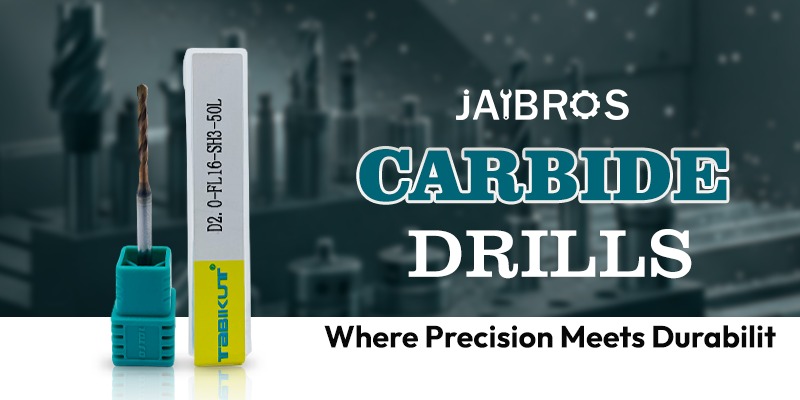
Why Carbide Drill Bits Are Changing the Future of Precision Drilling
Drilling for holes alone in a piece of material has now been rendered obsolete by the need for great precision, tight tolerances, higher speeds of manufacturing, and machining of difficult materials. In the electric vehicle industry, aerospace engineering, as well as in medical devices, manufacturers are faced with increased competition, and thus their need to be efficient while retaining their levels of precision. These increasing demands in manufacturing have put pressure on conventional drill bits to provide the expected results.
The need to produce at a consistent level of performance has brought about an increasing demand for new technologies for cutting. Some of the most remarkable changes brought about by recent developments include the use of carbide drill bits, which have played a great part in bringing about the revolution in the future of precision drilling.
The New Era of Precision Manufacturing
Manufacturing has evolved dramatically over the last decade. Companies are no longer focused solely on production volume; they are equally concerned with precision, repeatability, and efficiency.
Several trends are driving this transformation:
Adoption of Industry 4.0 technologies
Increased automation in production facilities
Growing demand for lightweight yet stronger materials
Expansion of electric vehicle manufacturing
Higher customer expectations for product quality
Contemporary manufacturing facilities need CNC machines that work at amazing speeds and can still provide microscopic precision. But for such machines to work effectively, they need efficient cutting tools. And that is why efficient drilling technologies are highly valued in modern manufacturing plants.
Why Traditional Drill Bits Are Falling Behind
For many years, conventional drilling tools served manufacturers effectively. However, the materials used in modern production are very different from those used in the past.
Today's manufacturers frequently work with:
Titanium alloys
Stainless steel
Hardened steel
Composite materials
Heat-resistant superalloys
These materials are also tough, strong, and durable against wear. The regular type of drill bits tend to produce too much heat, wear out fast, and lose precision when working on such materials.
As the requirements for production tolerances get tighter, even minor deviations can cause the products to be rejected. This is why manufacturers need drilling equipment that can work in difficult situations.
The Technology Behind Carbide Drill Bits
The emergence of carbide drill bits is directly related to the special characteristics of carbide material. As opposed to conventional drilling bits, carbide possesses excellent hardness and high heat and abrasion resistance.
This feature makes the tool retain its sharpness during long periods of usage.
Key technological advantages include:
Exceptional Hardness
Carbide is significantly harder than conventional tool materials, enabling it to cut through challenging metals with greater efficiency.
Heat Resistance
High-speed machining generates substantial heat. Carbide maintains its structural integrity at elevated temperatures, reducing the risk of tool failure.
Superior Rigidity
A rigid cutting tool experiences less vibration during operation. This results in improved hole accuracy and better surface finishes.
Longer Operational Life
Because wear occurs more slowly, tools can remain in service for extended periods, reducing interruptions and improving productivity.
These characteristics have made carbide drill bits one of the most important developments in modern machining technology.
How Smart Factories Are Increasing Demand for Advanced Drilling Solutions
The future of manufacturing is increasingly automated. Smart factories use interconnected machines, sensors, and software systems to optimize production processes in real time.
In these environments, consistency is critical.
Automated systems require tools that can:
Deliver predictable performance
Maintain dimensional accuracy
Operate continuously for long production runs
Reduce machine downtime
Support high-speed machining processes
This quality tool allows manufacturers to accomplish these objectives because of its dependable cutting capabilities, despite tough manufacturing conditions.
With the advancement of automation around the world, it is expected that there will be an increase in the need for drilling technology.
The Role of Carbide Inserts in Future Machining Operations
The future of precision drilling is not driven by drill design alone. Cutting-edge machining strategies also depend on replaceable cutting components that maximize flexibility and efficiency.
Carbide inserts have become an important part of modern manufacturing because they allow operators to replace worn cutting edges without changing the entire tool assembly.
Their advantages include:
Faster maintenance procedures
Reduced tooling costs
Improved machining consistency
Increased production uptime
Enhanced process flexibility
As manufacturers continue seeking ways to reduce operational costs while increasing output, the use of carbide inserts is expected to become even more widespread.
Supporting the Growth of Electric Vehicle Manufacturing
One of the biggest drivers of future drilling technology is the rapid expansion of electric vehicle production.
EV manufacturers require highly precise machining for components such as:
Battery housings
Motor components
Lightweight structural parts
Cooling systems
Powertrain assemblies
Many of these components are manufactured from advanced materials that demand exceptional cutting performance.
Because carbide drill bits can maintain accuracy while machining lightweight alloys and hardened materials, they have become increasingly important in supporting the growth of the EV industry.
As global demand for electric vehicles continues to rise, precision drilling requirements will become even more stringent.
Meeting Aerospace Industry Challenges
The aerospace sector represents one of the most demanding manufacturing environments in the world.
Aircraft manufacturers work with materials that are designed to withstand:
Extreme temperatures
High stress loads
Corrosion
Continuous mechanical pressure
Machining these materials requires drilling solutions capable of maintaining precision under difficult conditions.
A premium carbide tool provides the stability and wear resistance needed to produce aerospace components that meet strict safety and performance standards.
As aerospace designs become more sophisticated, advanced drilling technology will continue playing a critical role in production processes.
Sustainability and the Future of Drilling Technology
Sustainability has become a major priority for manufacturers worldwide. Companies are looking for ways to reduce waste, improve efficiency, and lower energy consumption.
Advanced drilling solutions contribute to these goals by:
Extending tool life
Reducing material waste
Minimizing machine downtime
Improving process efficiency
Supporting high-speed productio
Longer-lasting tools mean fewer replacements and less manufacturing waste, making modern drilling technologies an important part of sustainable production strategies.
What the Future Holds for Precision Drilling
The future of manufacturing will be driven by technologies that are fast, precise, and smart. Artificial intelligence, machine learning, digital surveillance systems, and automatic machining centers have changed factories across the globe.
To support these advancements, manufacturers require drilling solutions capable of delivering:
Greater accuracy
Higher speeds
Better consistency
Increased reliability
Improved cost efficiency
The growing adoption of carbide drill bits reflects this evolution. Rather than being simply another cutting tool, they are becoming a foundational technology that supports the future of advanced manufacturing.
Conclusion
Now precision drilling technology is entering a new era owing to the use of automation, advanced materials, intelligent plants, and high quality standards. In many instances, the conventional methods will not be able to meet the new standards, and that is why there is an emergence of advanced technologies. Thanks to the exceptional durability, thermal resistance, and high level of accuracy even under tough conditions, the carbide drill bits make it possible for companies to prepare for the new era of precision machining. Innovation and advanced tooling are vital for the success of any business, and companies such as Jaibros can be helpful in this respect.
FAQs
1. Why are carbide drill bits considered the future of precision drilling?
They offer superior accuracy, longer tool life, higher machining speeds, and excellent performance on advanced materials.
2. Which industries benefit most from carbide drilling technology?
Aerospace, automotive, electric vehicle manufacturing, medical equipment production, and industrial engineering are major users.
3. How do carbide inserts improve manufacturing efficiency?
They allow quick replacement of cutting edges, reduce downtime, and improve machining consistency.
4. Can carbide drill bits be used for high-speed machining?
Yes, they are specifically designed to perform efficiently at higher cutting speeds while maintaining precision.
5. How do carbide tools support smart manufacturing?
They provide reliable and predictable performance, which is essential for automated and data-driven production systems.
Comments
Log in or sign up to join the conversation.