

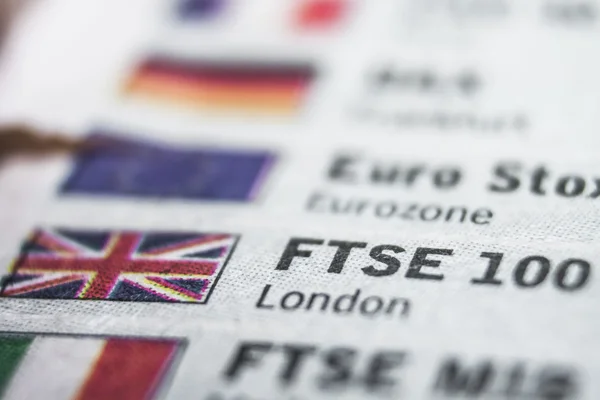
Commodity Strength Balances Financial Weakness Amid Oil and Rate Concerns
On Tuesday, U.K. stocks maintained a steady course, with initial gains in the energy and mining sectors being countered by notable declines in healthcare and financial giants. As tensions in the Middle East escalated and crude oil prices surged, investor sentiment remained cautious, grappling with ongoing inflation worries alongside a slowdown in domestic retail performance.
Energy companies played a crucial role in supporting the index as crude prices soared. Brent crude futures climbed to a six-week peak of $99.46 per barrel before settling back around $98.60. Iran's threats of retaliation against potential U.S. military actions fuelled this spike, while Saudi-led forces pledged a firm response to Houthi provocations. The rise in oil prices provided a boost to BP (BP) and Shell (SHEL), yet the overall market faced challenges from concerns that heightened energy costs could reignite inflation and compel central banks to maintain elevated interest rates for an extended period. Mining stocks also contributed positively, buoyed by copper reaching an all-time high above $14,600 per tonne on the London Metal Exchange; Antofagasta saw a nearly 4% increase, while Glencore rose 1.2%, lifting the industrial metals sector.
Conversely, defensive stocks, financial institutions, and domestic-facing sectors experienced the most selling pressure during the session. Computacenter led the declines, plummeting 4.4%, while major banks, consumer goods companies, and healthcare stocks like Barclays, HSBC, Lloyds Banking Group, AstraZeneca (AZN), GSK (GSK), Next, and Burberry Group all faced losses ranging from 0.6% to 1.3%. Domestic retailers were particularly hard hit following disappointing data from the British Retail Consortium (BRC), which revealed that UK retail sales growth had slowed to just 0.7% in August—the weakest performance since late 2024. Homeware retailer Dunelm saw its stock tumble over 12% after announcing stagnant profits and expressing caution about early-year trading prospects.
On the economic policy front, attention remained focused on central bank commentary and incoming data. Bank of England Governor Andrew Bailey addressed the Treasury Select Committee, highlighting unexpectedly resilient economic growth while cautioning that energy prices could continue to rise. Additionally, MPC member Megan Greene warned that wage disinflation appears to be decelerating, reinforcing expectations that the Bank of England will likely hold interest rates steady at its upcoming meeting on September 17, ahead of Friday's UK GDP report.
FINISH LINE: U.K. equities find themselves in a delicate balance as record copper prices and surging crude oil provide some cushion against significant declines in banking, retail, and healthcare sectors. Although commodity leaders are helping to shield London from broader European market weaknesses, rising energy costs and sluggish retail activity present ongoing challenges for the FTSE 100 as it navigates upcoming central bank decisions.
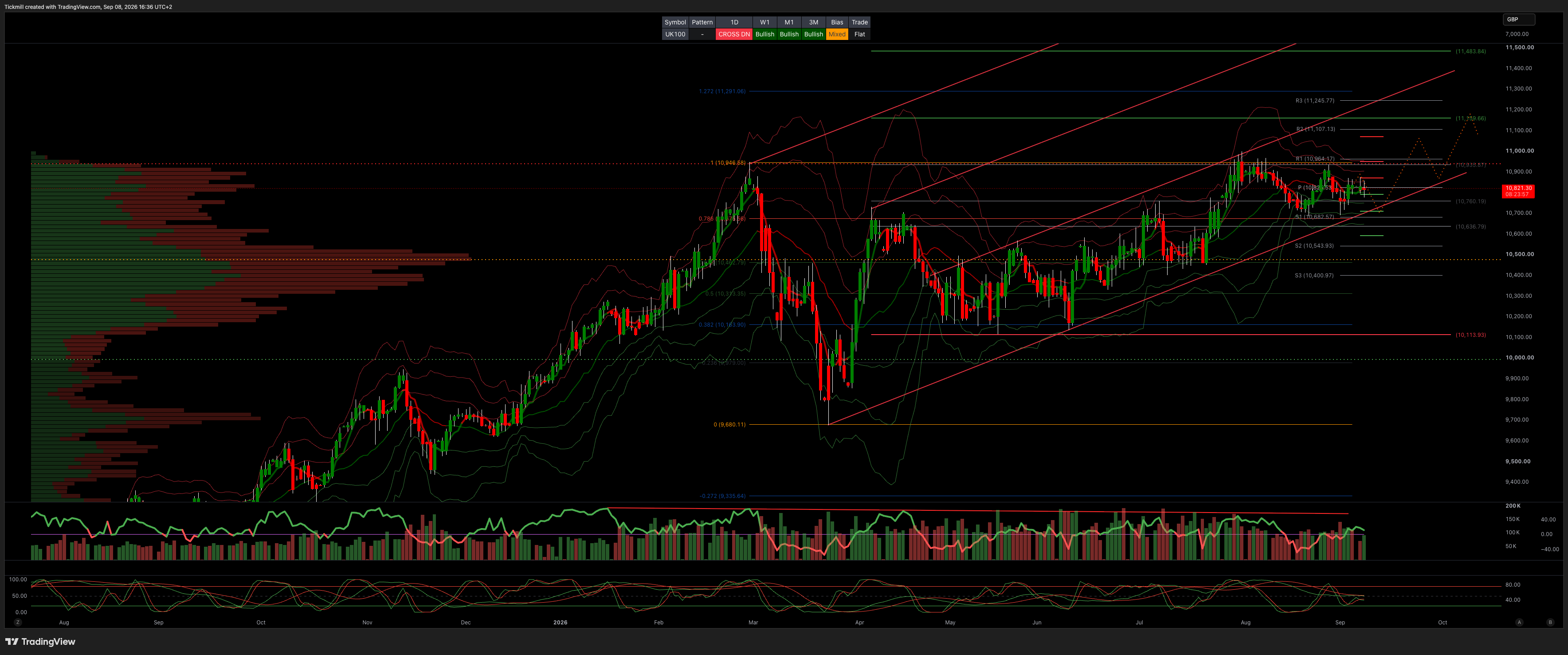
TECHNICAL & TRADE VIEW – FTSE100
Daily VWAP Bullish > Bearish
Weekly VWAP Bullish
Above 10700 Target 11150
Below 10400 Target 9500

Comments
Log in or sign up to join the conversation.