

The Fed Is Cornered: Markets Await the Verdict at Jackson Hole
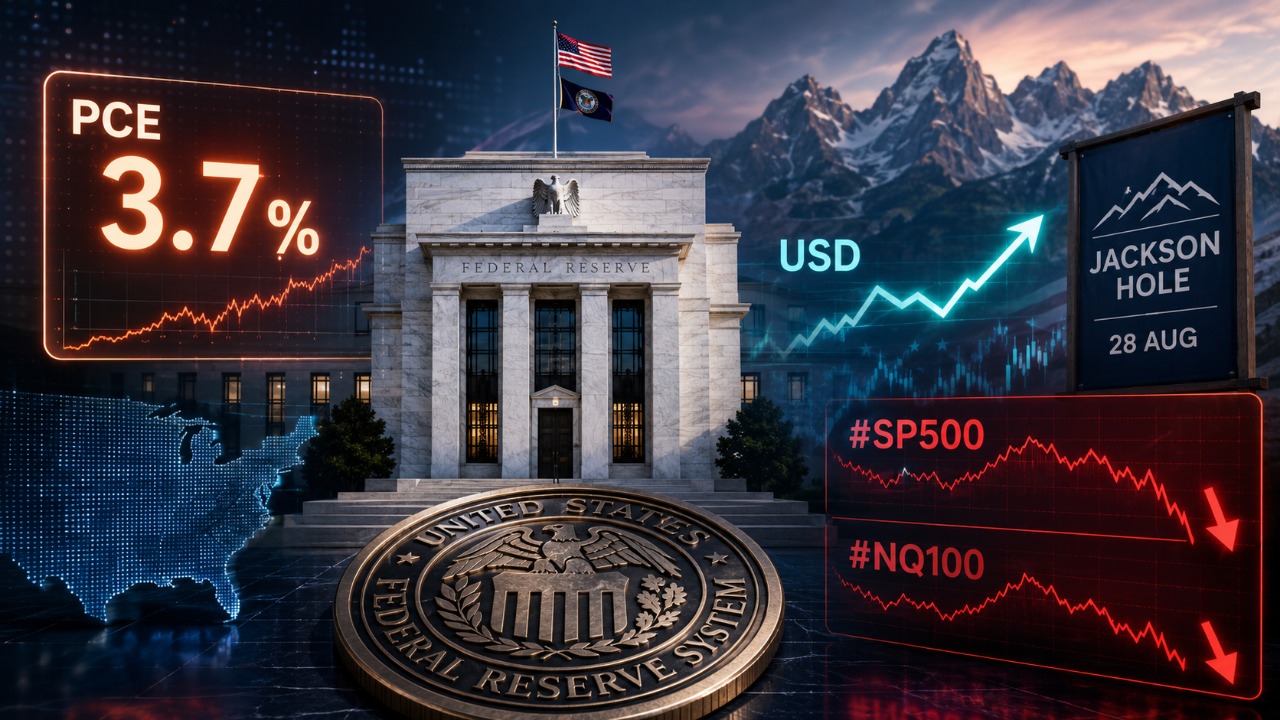
U.S. inflation has once again forced investors to reassess their expectations for the Fed’s interest rate policy. The PCE price index — the central bank’s key inflation gauge — rose 3.7% year over year in July, while the core reading, excluding food and energy, remained at 3.3%. Both figures are still well above the Fed’s 2% target.
The market reaction has been cautious. The dollar is holding near an eight-day high, while the probability of a Fed rate hike as early as September is now estimated at around 40%. Investors are now turning their attention to Jackson Hole, where Fed Chair Kevin Warsh will speak on August 28.
A month without swaps on major currency pairs! Learn more
The Economy Is Giving the Fed No Easy Choice
High inflation usually calls for tighter monetary policy, but the U.S. economy is simultaneously sending mixed signals.
In the second quarter, U.S. GDP grew by just 1.5% year over year. On the other hand, domestic demand proved more resilient than initially estimated, corporate profits increased, and business investment continues to receive support from massive spending on artificial intelligence.
As a result, the Fed has to choose between two risks: another rate hike could slow the economy even further, while a policy that is too accommodative could allow inflation to remain significantly above the target level.
Everything Now Depends on Jackson Hole
The key event will be Kevin Warsh’s speech on August 28. Above all, the market will be looking for an answer to one question: how seriously is the Fed prepared to fight inflation if price growth remains around its current levels?
A more hawkish tone could strengthen the dollar and push U.S. Treasury yields higher. For #SP500 and #NQ100, such a scenario would create additional pressure, as higher interest rates make borrowing more expensive and reduce the appeal of growth stocks.
If the Fed Chair instead signals that another rate hike can be avoided, the market reaction could be the opposite — the dollar could come under pressure, while stock indexes could receive support.
According to FreshForex analysts, the Fed is unlikely to give the market a reason to expect an imminent policy easing: inflation at 3.7% remains too high, making a signal of persistently high rates and a willingness to raise them again if inflation fails to slow the most likely scenario. For traders, this means a stronger dollar and increased downside risk for #SP500 and #NQ100, particularly the technology sector, which is the most sensitive to expensive financing.
Comments
Log in or sign up to join the conversation.