


The economically weighted ISM manufacturing (25%) + services (75%) indexes continue to be the best timely snapshot of the US economy. The manufacturing index has a very good 80 year history as a leading indicator, and the latter now has 25 years under its belt as well. When that average has dipped below 50 on a 3 month basis, the US has been in recession; otherwise, not.
Earlier this week, the manufacturing index continued to show a strong, but very inflationary, expansion. Yesterday, the services index showed the same. And both also continued to show that employment, while growing, remained weak.
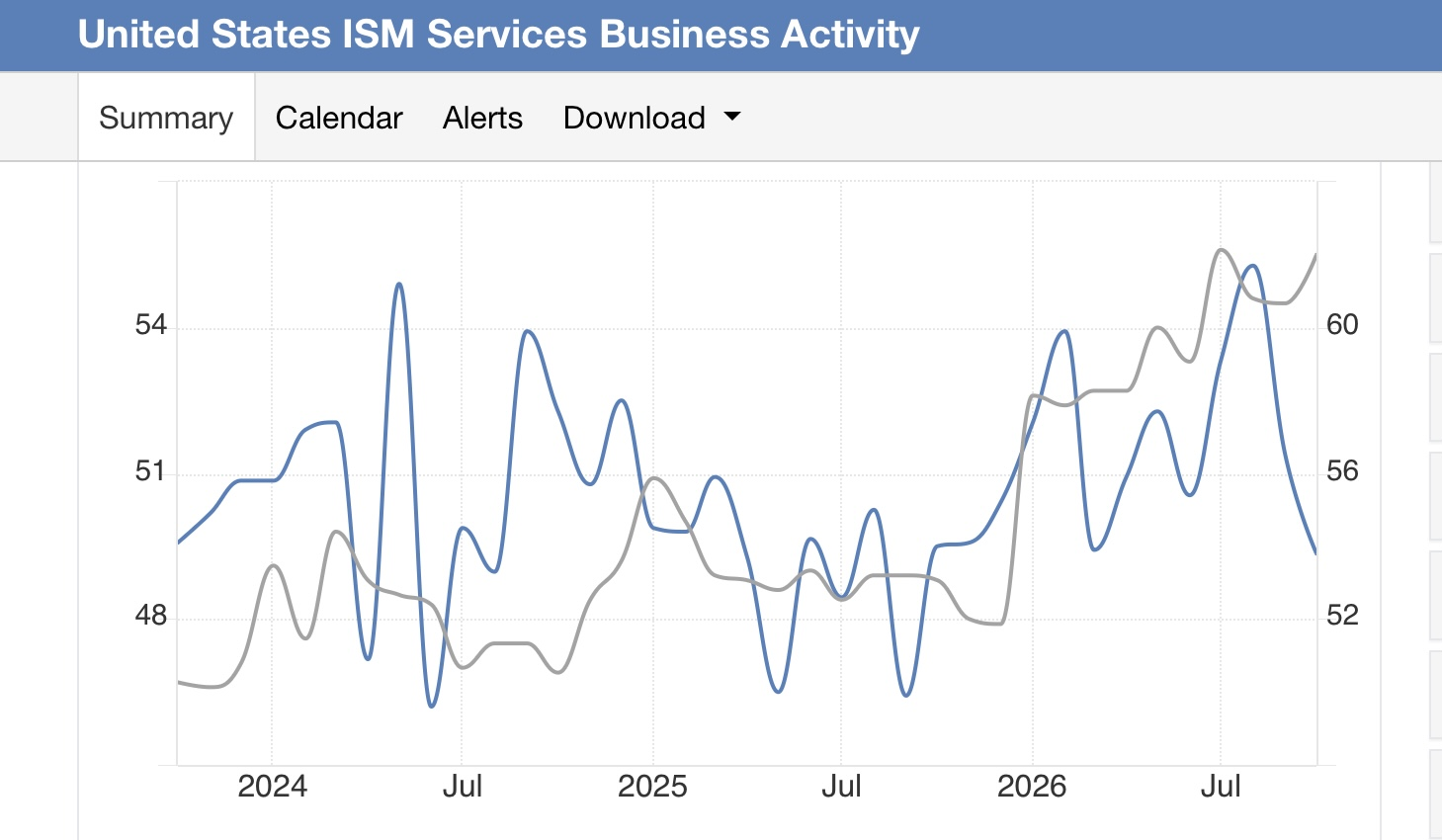
To the numbers: the headline services index declined -2.7 to 53.8 [recall that any number over 50 indicates expansion]. The three month average was 57.3. Since the three month average for manufacturing was 54.9, the economically weighted average was 56.7 [note: in all of the graphs below, the manufacturing number is gray, and services blue]:
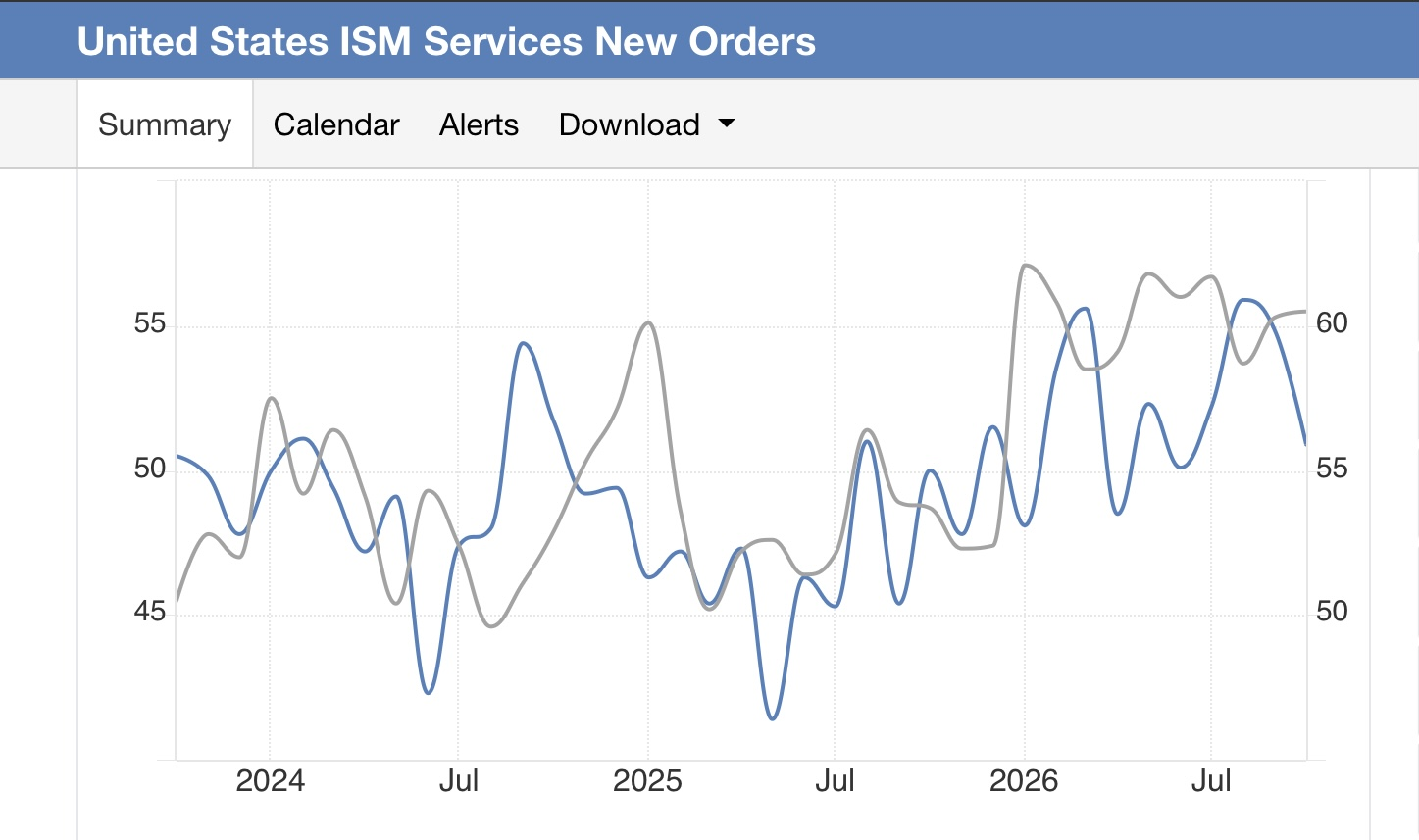
New orders declined -3.9 to a still strong 55.9. The three month average was 57.8. The three month average for manufacturing was 54.8, so the economically weighted of this most forward looking component was 57.8:
The relatively punk metric in these indexes has been employment, which had been in contraction for over a year, before improving in the last few months. This month it rose 1.3 to 51.4. The three month remained slightly in contraction, however, at 49.5. Since the manufacturing employment subindex three month average was 52.1, the economically weighted average continued just barely into expansion at 50.3:
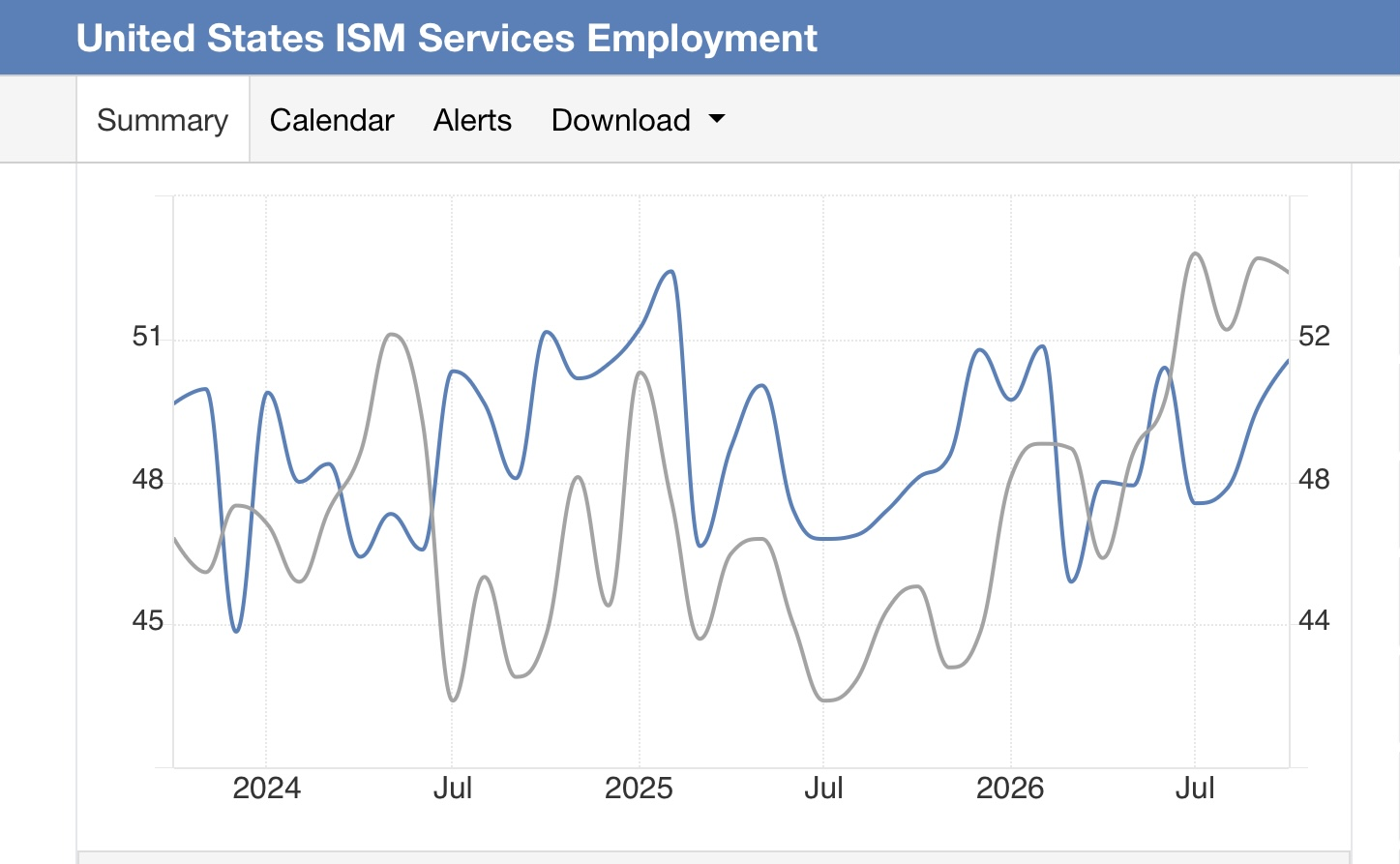
Importantly, the weighted average for employment has lagged the jobs report this year, which may have to do with the fact that the ISM indexes are diffusion indexes, i.e., how widespread is the hiring, and the hiring in the jobs report has been more narrowly focused on AI-related industries.
Finally, widespread price increases have been worsening in these indexes this year. This month, the prices paid index for services declined -1.0 to 73.0, its second highest number in over two years, and the three month average rose +0.9 to 73.2. The three month average for manufacturing declined this month to 75.2, meaning that the economically weighted average increased 1.0 to 73.6:
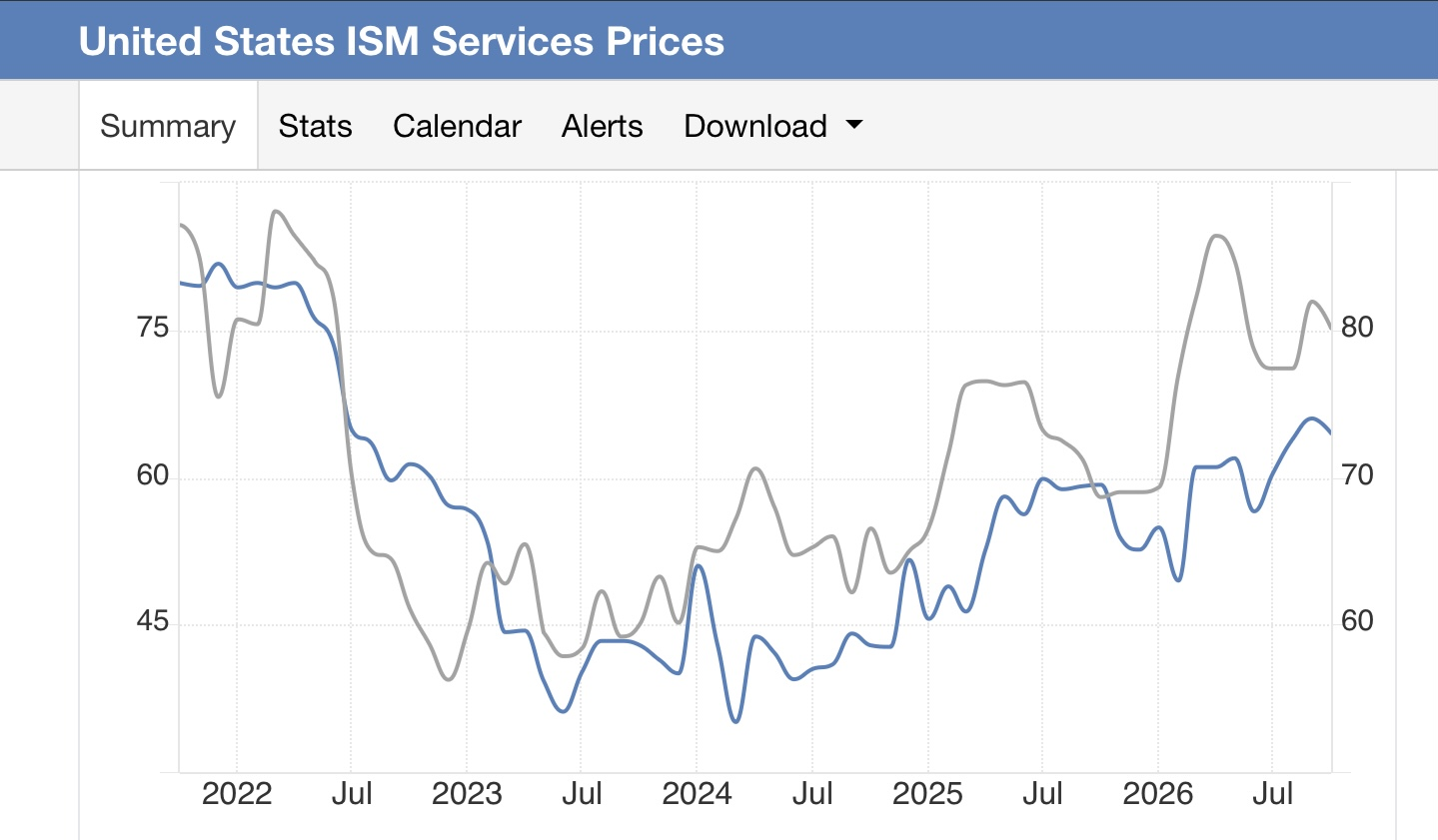
Note that the above graph covers five years instead of just 3, to show that producer inflaton has become almost as bad as during the post-pandemic inflation, with the worst reading since mid-year 2022.
To sum up, in November the economically weighted ISM averages show an economy that remains in reasonably strong expansion, with a very positive leading new orders component. Employment has also improved, but is still only weakly expansionary. And inflation is, on average, getting even worse at the producer level, which bodes poorly for consumer inflation as well.



Comments
Log in or sign up to join the conversation.