

Oil prices pushed higher again yesterday amid mounting supply risks as hopes fade for a temporary ceasefire between the US and Iran
Energy - Oil supply disruptions grow
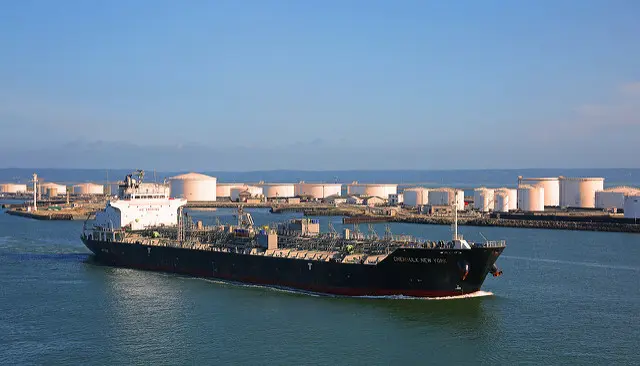
Hopes of a temporary ceasefire between the US and Iran faded after President Trump ruled out the prospect of immediate talks. Instead, we continue to see further escalation. The US just completed an 11th consecutive night of strikes against Iran. Meanwhile, the Houthis' announced maritime blockade on Saudi Arabia has shippers nervous, with several tankers moving to avoid the Bab el-Mandeb Strait. This would force tankers to enter and exit the Red Sea via the Suez Canal, adding significant time and expense to voyages to Asia.
The disruptions facing the market don’t end in the Middle East. In the Black Sea, Russia’s CPC terminal has stopped receiving oil from Kazakhstan, with loadings suspended following ongoing attacks on tankers. The longer the suspension drags on, the greater the likelihood that Kazakhstan will be forced to curb upstream production. Volumes shipped from the CPC terminal are significant, with around 1.7m b/d loaded in June.
Factoring in the renewed disruptions from the Persian Gulf, risks to Saudi crude exports from the Red Sea, and developments in the Black Sea, one may argue that Brent at just over US$91/bbl is undervalued. Particularly if these disruptions persist into August.
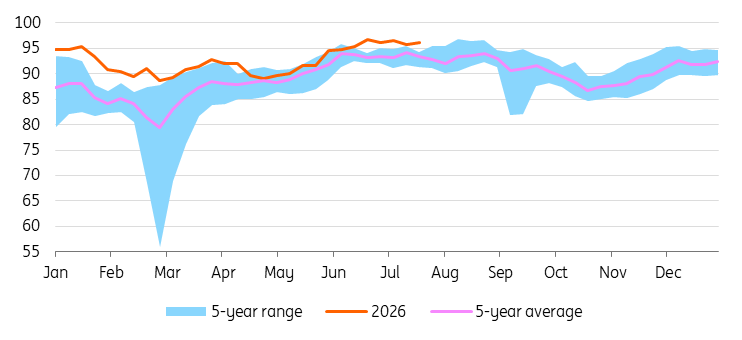
The refined products market is also screaming tightness. This is well reflected in the strength in cracks, particularly in the diesel market. And for the products market, there’s no quick fix to this tightness. To ease this supply tightness, we need to see a normalisation in oil flows from the Middle East, which would allow refiners in the Middle East and Asia to increase run rates. In addition, we’d need to see an easing in Ukrainian attacks on Russian refineries. This would allow for a recovery in Russian refined product exports. While the market has been relying on the US for additional supply since the war, room for further supply is limited as US refiners essentially operate at capacity.
The latest numbers from the API show that US crude oil inventories increased by 2.6m barrels over the last week, while inventories at the WTI delivery hub, Cushing, fell by 700k barrels. Gasoline stocks fell by 1.4m barrels. The distillate market received some relief, with inventories rising by 1.8m barrels. The more widely followed EIA inventory report will be released later today.
US refineries operating near capacity amid global tightness in refined product markets
Refinery utilisation (%)
Metals - Dip-buying lifts gold and silver
Gold and silver extended gains, supported by bargain hunting after recent weakness and investors continuing to assess geopolitical risks in the Middle East. The move came despite lingering concerns that higher energy prices could add to inflationary pressures, complicating the Federal Reserve's path towards interest rate cuts.
Gold climbed back above the $4,000/oz level, while silver outperformed, trading close to $60/oz. Silver’s performance reflects not only its safe-haven appeal but also support from improving sentiment across the industrial metals complex, particularly copper.
The rebound appears driven more by fresh buying interest following a period of consolidation rather than a material shift in the geopolitical or macroeconomic backdrop. While tensions in the Middle East remain supportive for precious metals, markets are weighing softer US economic data against the inflationary risks from higher energy costs.
Gold is likely to remain sensitive to developments in energy markets and expectations for US monetary policy. Silver could continue to outperform if strength in industrial metals persists alongside safe-haven demand.
In base metals, the Trump administration amended its Section 232 aluminium tariffs to encourage investment in domestic smelting. Companies that build, expand or refurbish US smelting capacity can apply to import qualifying volumes at a 25% tariff instead of the standard 50% rate. This is provided that they meet approved investment milestones. The shift reflects the limited success of tariffs in reviving US primary aluminium production.
US primary aluminium production continued to decline over the years despite years of tariff protection. The country now has only four operating primary aluminium smelters. This is down from more than 20 at the turn of the century, leaving the US heavily reliant on imported metal.
However, the latest changes are unlikely to materially alter the near-term US market. The programme should be viewed as a long-term industrial policy rather than a near-term solution to the country’s supply shortfall. If successful, it could support a gradual revival of US primary aluminium production. Until meaningful new capacity comes online, the US will remain structurally dependent on imports, keeping Midwest premiums well supported.
Agriculture – Black Sea grain exports under pressure
According to the Russian Grain Union, Russia’s grain shipments fell 13.6% year-on-year to 1.3mt during the first twenty days of July, amid disruptions to Black Sea export operations following recent Ukrainian strikes. Disruptions to Black Sea grain exports are not isolated to Russia. Ukrainian exports are also being heavily disrupted amid ongoing Russian attacks on port infrastructure. Supply disruptions in the Black Sea have led to CBOT wheat trading to more than a 2-year high, having recently broken above US$6.80/bushel.



Comments
Log in or sign up to join the conversation.