

Friday's employment report again highlights an ongoing conflict between the jobs number in the Establishment Survey versus the roughly comparable data in the Household Survey. The Nonfarm Payrolls of the former came it at a welcome 175K new jobs -- about 25K better than consensus forecasts. In contrast, the Household Survey reported a 42K increase in civilian employment age 16 and over.
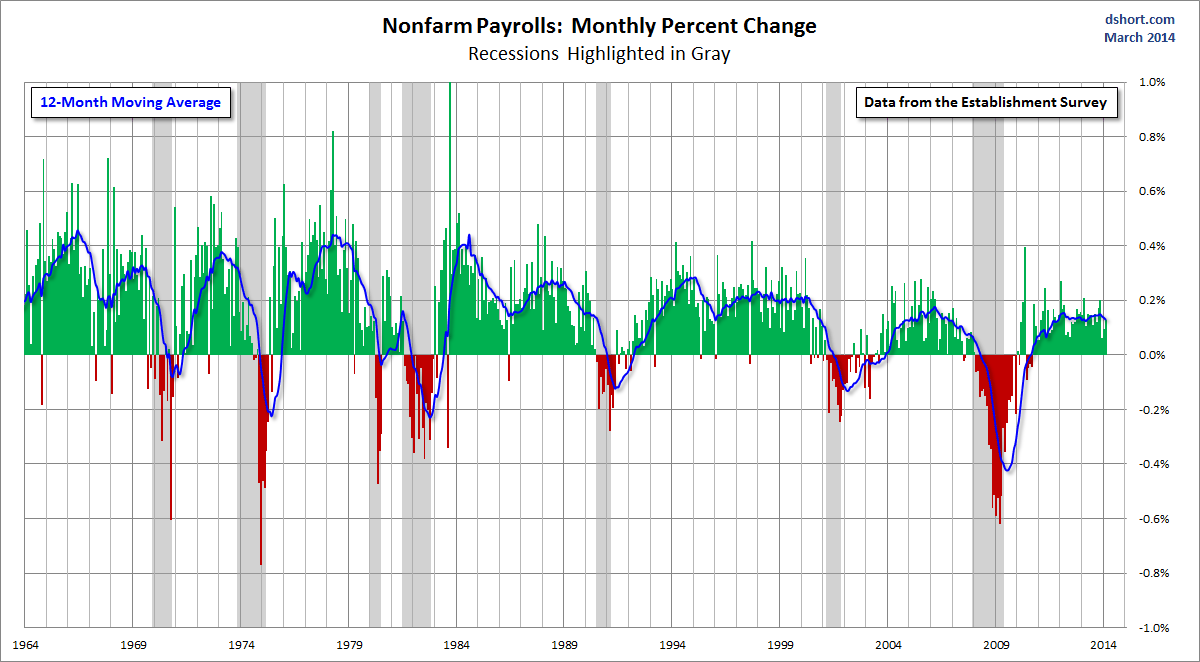
Here is a fifty-year snapshot (a wide one) of the Establishment Survey data on nonfarm employment. I've included a 12-month moving average overlay to help us visualize the trend patterns.
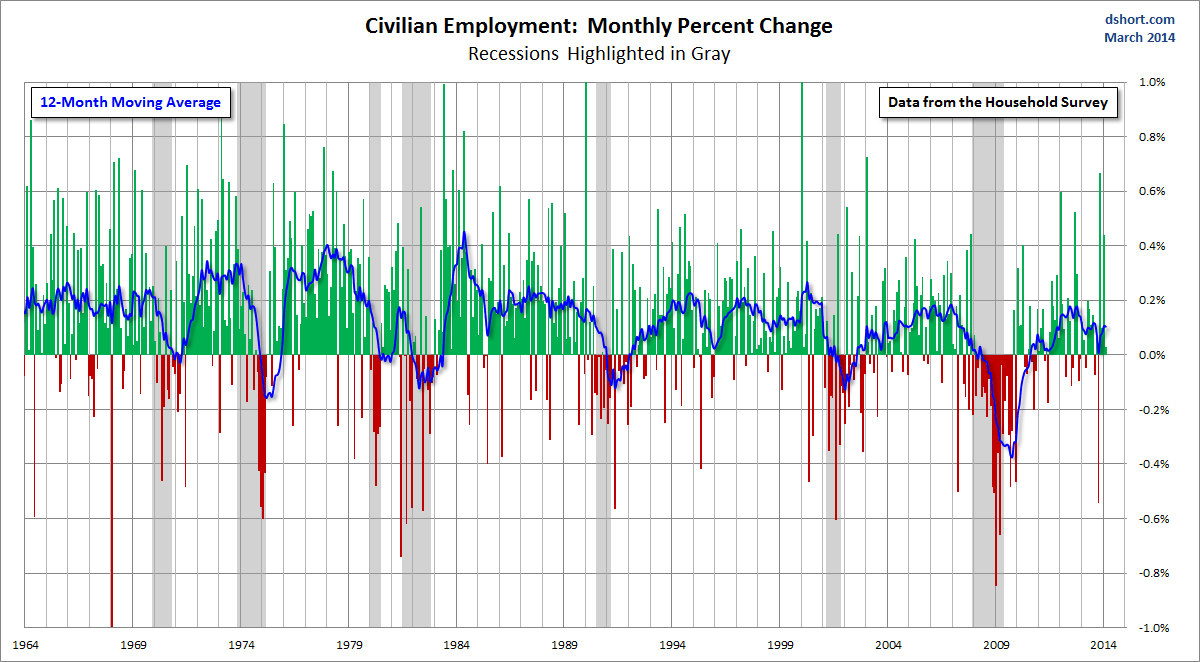
Now compare the data above with the Household Survey's far more volatile monthly series on the 16-and-over employed population. Note that I've used the same vertical scale to ensure an apples-to-apples comparison.
Now compare the data above with the Household Survey's far more volatile monthly series on the 16-and-over employed population. Note that I've used the same vertical scale to ensure an apples-to-apples comparison.
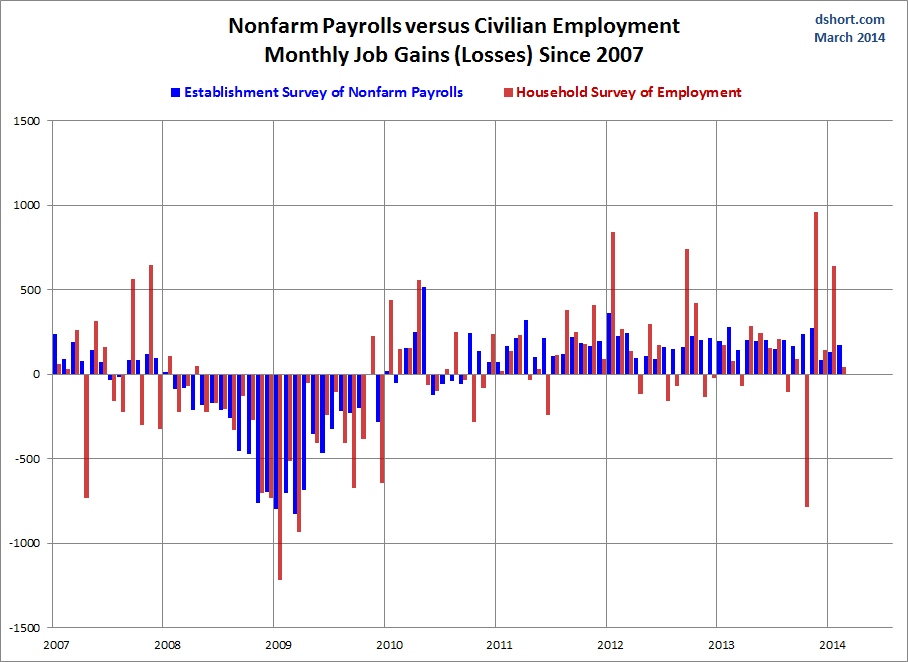
The dramatically higher volatility of the Household Survey comes as no surprise, given the much larger source of survey sampling. The column chart below illustrates the sometimes radical greater monthly change in the Household Survey data for the employed.
My general tendency in studying economic data is to focus on long-term trends. What I find most interesting in the first two charts chart above are the moving averages (MA). In addition to smoothing the volatility, they show us a subtle trend, especially in the Employment Survey. Over this timeframe, the MA highs have been progressively lower since the peak in the late 1970s. The change has been gradual and is in part a reflection of the demographics of the Boomer generation. However, over last the 10-15 years, the trend has also been impacted by the efficiencies of technology and the globalization of the economy, which continues to put pressure on national employment data.
In past business cycles, particularly in the Establishment Survey, the 12-month MA has generally sloped downward for several months before recessions start. The one conspicuous outlier is the second half of the 1980s double-dip recession, which was essentially engineered by the Fed to break the back of runaway inflation.
At this point it is impossible to see either employment series as a harbinger of a business cycle contraction. But the 12-month MA of this indicator is one we'll want to watch closely in the months ahead
Comments
Log in or sign up to join the conversation.