

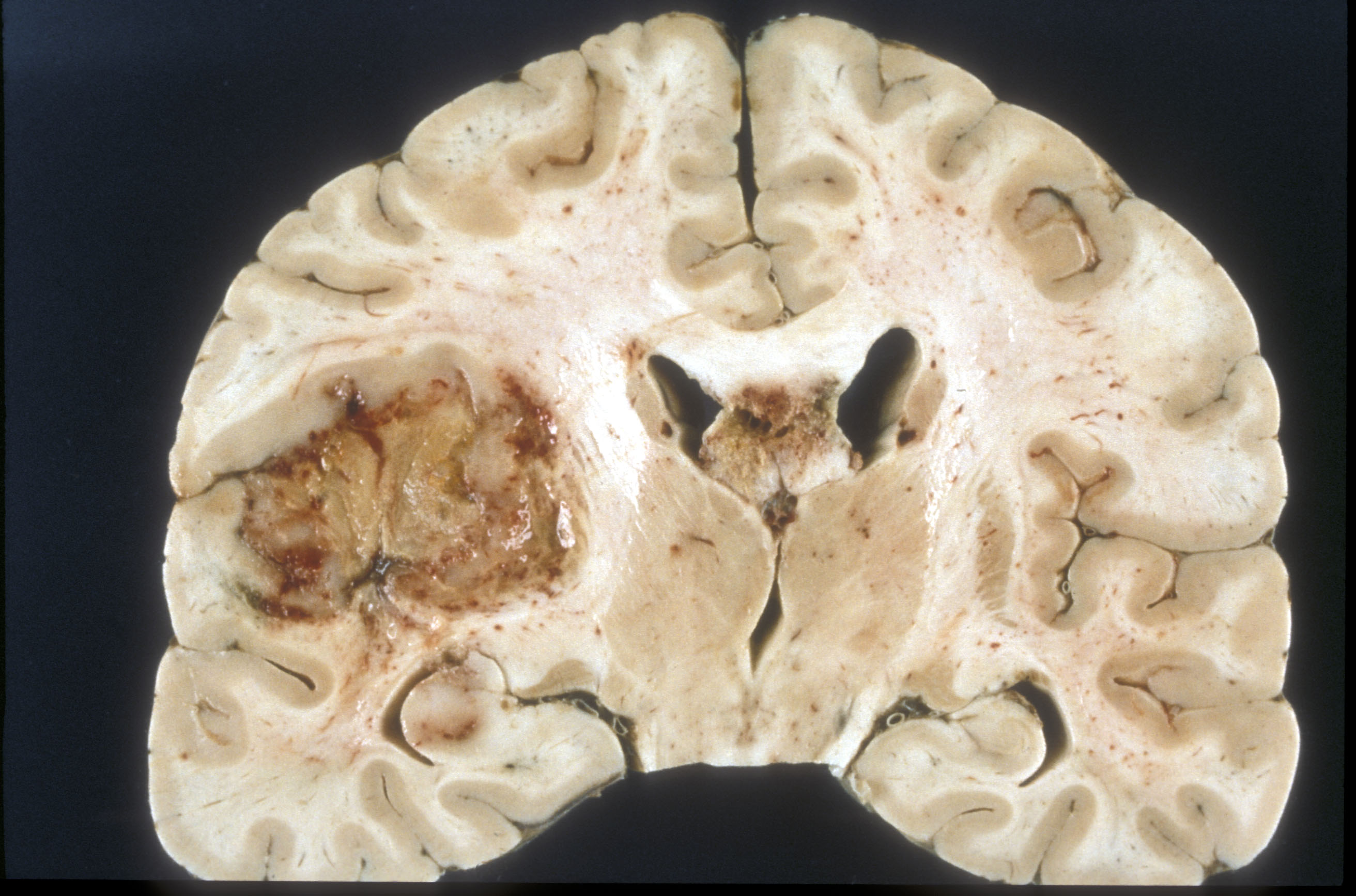
Glioblastoma multiforme (GBM), a tumor of brain tissue, is one of the rarest, most aggressive, and most lethal cancers. Prognosis is grim for those with the condition: despite significant improvements and progress in treatment, many diagnosed with the cancer do not live longer than one year. Less than 10 percent of patients survive for longer than five years after diagnosis. With fewer than 10 cases per 100,000 people, GBM is as rare as it is deadly. Its poor outcome and lack of treatment options makes GBM a condition in urgent need of study.
An emerging body of research suggests that the phytocannabinoid Cannabidiol (CBD) may have an anti-tumor effect on patients with GBM. How are these therapies theorized to work, and what’s in store for future research into the disease and its management?
Why are cannabinoids theorized to affect cancer cells?
Initial studies have demonstrated that GBM highly expresses the CB2 cannabinoid receptor, through which CBD is thought to exert anti-tumor effects. Specifically, multiple in vitro and human studies have shown that CBD reduces tumor size, potential for metastasis and invasion, and development of new tumor-associated blood vessels. This has been observed in solid tumors and blood cancers. Further reading can be found in this 2016 study published in Frontiers in Pharmacology and this 2013 study published in the British Journal of Clinical Pharmacology.
Researchers are exploring the effect of CBD alone and the impact of CBD in combination with the phytocannabinoid Tetrahydrocannabinol (THC). Some studies have observed anti-cancer activity in vivo when administering THC and CBD in a 1:1 ratio. Other studies, such as this 2014 study published in Molecular Cancer Therapies, found that a patient’s response to chemotherapy treatment “substantially increased” when a 1:1 THC-CBD formulation was administered. This ratio of phytocannabinoids was also found to shrink tumors, and specifically GBM tumors, even those tumors not affected by chemotherapy.
Of particular interest is the synergistic effect of standalone CBD in combination with other therapies. As an adjunct to standard of care treatment, CBD may improve the performance of chemotherapy treatments or other medications such as Clomiphene, an estrogen binding site inhibitor which has shown promise in the treatment of breast cancer [cite breast cancer study]. Studies of breast cancer patients have shown that CBD in combination with chemotherapy resulted in lower cancer cell viability (Ligresti, J Pharm Exp Ther, 2006). Jay Pharma has filed for a patent for this combination therapy.
One of the leading researchers in the field of cannabinoid science and palliative cancer care is Dr. Angus Dalgleish, an oncologist at St. George’s University of London and a Scientific Advisor with Jay Pharma. Widely regarded as a key opinion leader (KOL) in the oncology community, Dr. Dalgleish’s body of work has demonstrated that cannabinoid science has applications in palliative cancer care beyond simply tapering the side effects of cancer treatment.
In preclinical studies, Dr. Dalgleish has evaluated CBD alongside the immunomodulatory agent Lenalidomide (LEN) used in treatment for multiple myeloma, and preclinical results have found that CBD may enhance the ability of the immune system’s dendritic cells to produce the cytokine IL12p70, which supports the function of T-cells. Importantly, CBD “had little effect on dendritic cell maturation, differentiation, and uptake.”
Along with researchers like fellow Jay Pharma science advisor and St. George’s colleague Wai Liu, PhD., Dr. Dalgleish found clinical responses in 92% of 119 cases of solid tumors. Both a reduction in circulating tumor cells and a reduction in tumor size were observed. The study, published in the International Journal of Cancer Research and Treatment in 2018, concluded that synthetic CBD is a candidate for treatment of certain cancers, specifically for glioblastoma patients and breast cancer patients.
What does the research say about Glioblastoma and CBD?
In addition to the significant body of research on CBD and cancer cells in general, the research into the relationship between CBD and glioblastoma multiforme is encouraging. Several in vitro and in vivo studies have found that CBD reduced proliferation and survival of GBM cell lines by inducing apoptosis (programmed cell death) through the overproduction of ceramides and through the generation of reactive oxygen species, or ROS.
CBD is also shown to modulate local tissue invasion, a key aspect of cancer spread, particularly for glioblastoma. Glioma cell lines treated with CBD downregulated the expression of vascular-endothelial growth factor (VEGF) and other enzymes that fuel tumor growth. In this 2013 ex vivo study published in Cancer Research, CBD reduced the ability of glioma cells to invade through brain slices.
The cannabinoid can also impact the stemness of glial stem cells, thought to be a driver behind glioblastoma’s aggressive growth and recurrence. The same ex vivo study published in Cancer Research, plus a 2015 study in the International Journal of Cancer, discovered that CBD downregulated certain stem cell markers and promoted differentiation of glial stem cells, which impacts cell duplication.
The future of glioblastoma and CBD research
A strong, evidence-based foundation for cannabinoid-assisted palliative care for cancer patients has already been laid, thanks to the groundbreaking work of researchers around the world. That work is continuing through Jay Pharma, in partnership with the Rabin Medical Center, Petah Tikva, Israel.
A forthcoming study, which just received IRB approval from Rabin Medical Center and is expected to receive final approval from Israel’s Ministry of Health, will be performed at Rabin Medical Center under the guidance of Dr. Tali Siegal, director of the center’s neuro-oncology center and a clinical advisor to Jay Pharma.
The open-label, two-arm, randomized, prospective study is expected to examine the effect of orally administered synthetic CBD derived from citrus, for which Jay Pharma holds the patent, on patients with recurrent or progressive GBM tumors. In this Phase I/II study, one randomized group of 20 patients will take the CBD formula on its own, and a second randomized group of 20 patients will take the CBD in combination with Clomiphene. Results are expected by 2022.
While much progress has been made in Israel, the UK, and other countries, research on CBD and glioblastoma, and CBD in general, has lagged in the United States. However, the U.S. Food and Drug Administration (FDA) allows for expedited research programs for serious conditions like GBM. The rarity and aggressiveness of the cancer, coupled with the promise of prior studies, means that studies on GBM and cannabinoid care may be candidates for fast-track approval for further study and trial.
Jay Pharma’s role in the future of palliative cancer care
Jay Pharma, currently due to merge with Ameri Holdings (AMRH), continues to advance the study of how CBD can enhance the quality of life for cancer patients. In particular, the scientific evidence for the usage of CBD in helping treat glioblastoma multiforme in particular is promising, with repeated demonstrations that CBD may play a role in enhancing the efficacy of chemotherapy and shrink tumors on its own.
CBD has become widely used for a number of symptoms including pain, nausea, insomnia and anxiety; however, in November 2019 the FDA detailed safety concerns and issued warning letters to 15 companies for illegally selling products containing CBD. The FDA recently updated its guidance to focus on educating the public about the risks and the unknowns of CBD. GW Pharma’s Epidiolex for application to two rare, severe epilepsy disorders in children is the only application of CBD that has been approved by the FDA. In its planned launch of evidence-based proprietary cannabinoid formulations for both over the counter products and prescription medicines, Jay Pharma will follow strict FDA guidelines and regulations for safety and sales and marketing claims.
Jay Pharma continues to research the role of CBD and cannabinoid science in other areas of palliative care, particularly in the over the counter treatment of radiodermatitis, chemotherapy-induced nausea and vomiting and neuropathy, and overall quality of life for those experiencing the harsh side effects of chemotherapy and radiation treatments for cancer.
Comments
Log in or sign up to join the conversation.