


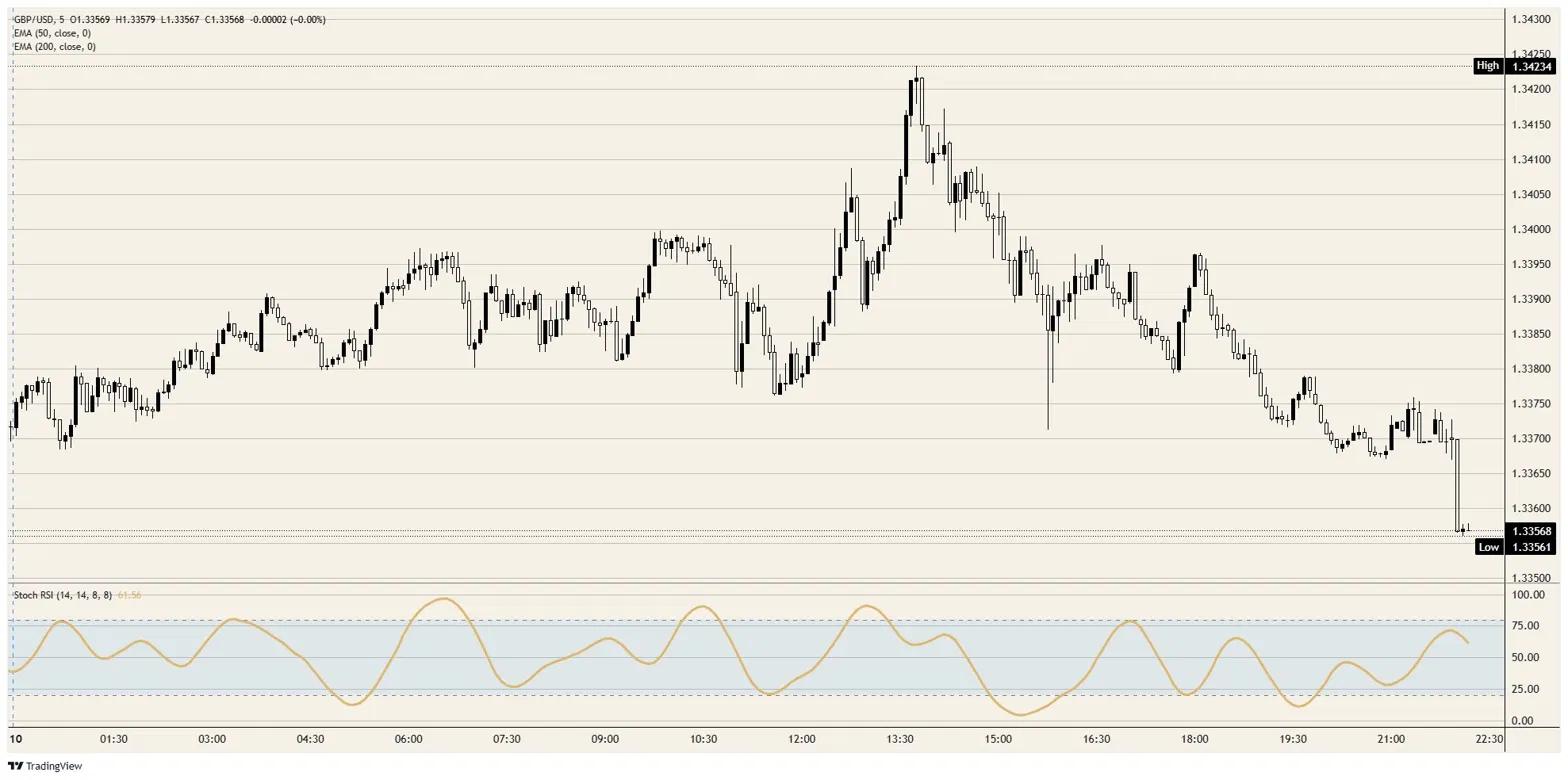
Pound Sterling was handed a gift on Wednesday and dropped it within the hour. A soft core reading inside the US Consumer Price Index (CPI) report knocked the Dollar back just long enough for GBP/USD to reclaim the 200-day Exponential Moving Average (EMA) around 1.3400, tagging session highs just beyond it before the entire move was methodically sold through the US afternoon to a close at the day's lows near 1.3350. A currency that cannot hold a rally on objectively helpful data is making a statement about what sits underneath, and what sits underneath Sterling is a rate story that looks hawkish on the screen and stagflationary in the detail.
Hawkish, but not the good kind
The repricing toward Bank of England (BoE) hikes is real enough that it already has a vote, with the last Monetary Policy Committee (MPC) decision splitting eight to one and the lone dissenter calling for a hike rather than a cut. The trouble is the company that vote keeps. The Strait of Hormuz disruption has kept Crude Oil elevated for months, forecasters see UK inflation climbing toward 3.6% this year against a last print of 2.8%, and meanwhile unemployment is holding at 5%, the number of payrolled employment keeps shrinking, and Friday's monthly Gross Domestic Product (GDP) release at 06:00 GMT is forecast to show the economy contracted 0.1% in April.
A committee drifting toward hikes while output shrinks is not projecting strength, it is admitting the energy shock has left it without good options, and currencies tend to punish that variety of hawkishness rather than reward it.
The gilt market is doing the talking
The cleaner read on Sterling's predicament still comes from the bond market, where 10-year gilt yields spent much of May at or above 5%, territory last visited during the financial crisis. That is a risk premium, not a growth signal, pricing in energy costs, fiscal arithmetic that deteriorates with every hike, and a political backdrop where pressure on the Prime Minister's position has become a tradeable variable. The pattern where higher yields fail to attract currency inflows is the classic fiscal-stress signature, and Wednesday's failed rally at the 200-day EMA was a textbook example of it capping the price.
Flying blind into a stacked week
The domestic calendar offers Sterling nothing of consequence for the rest of this week beyond that second-tier GDP print, which leaves the pair trading US data it cannot influence: Producer Price Index (PPI) figures Thursday at 12:30 GMT, with consensus near 6.4% YoY, and Friday's University of Michigan (UoM) survey at 14:00 GMT, where one-year inflation expectations last sat close to 4.8%. CME FedWatch has next Wednesday's Federal Reserve (Fed) hold roughly 98% priced, with about 70% odds of at least one hike by the December meeting.
Then the calendar flips violently, as UK CPI lands next Wednesday at 06:00 GMT, twelve hours before the Fed decision, followed by the labour market report and the BoE itself on Thursday, with the rate call due at 11:00 GMT. Sterling's June will effectively be decided inside that 30-hour window.
Levels and bias
Upside: the 200-day EMA around 1.3400 is now the proven ceiling after Wednesday's rejection, with the 50-day EMA close to 1.3450 and the bigger test near 1.3500 behind it. Downside: the early-June base around 1.3300 is first support, and a clean break opens the spring lows near 1.3150 before the BoE has even spoken. Bias: skeptical of Sterling strength into next week. Wednesday confirmed the market is selling rallies, the hawkish repricing raises borrowing costs faster than it raises the currency, and the gilt market still gets the final vote.
GBP/USD 5-minute chart


Comments
Log in or sign up to join the conversation.