
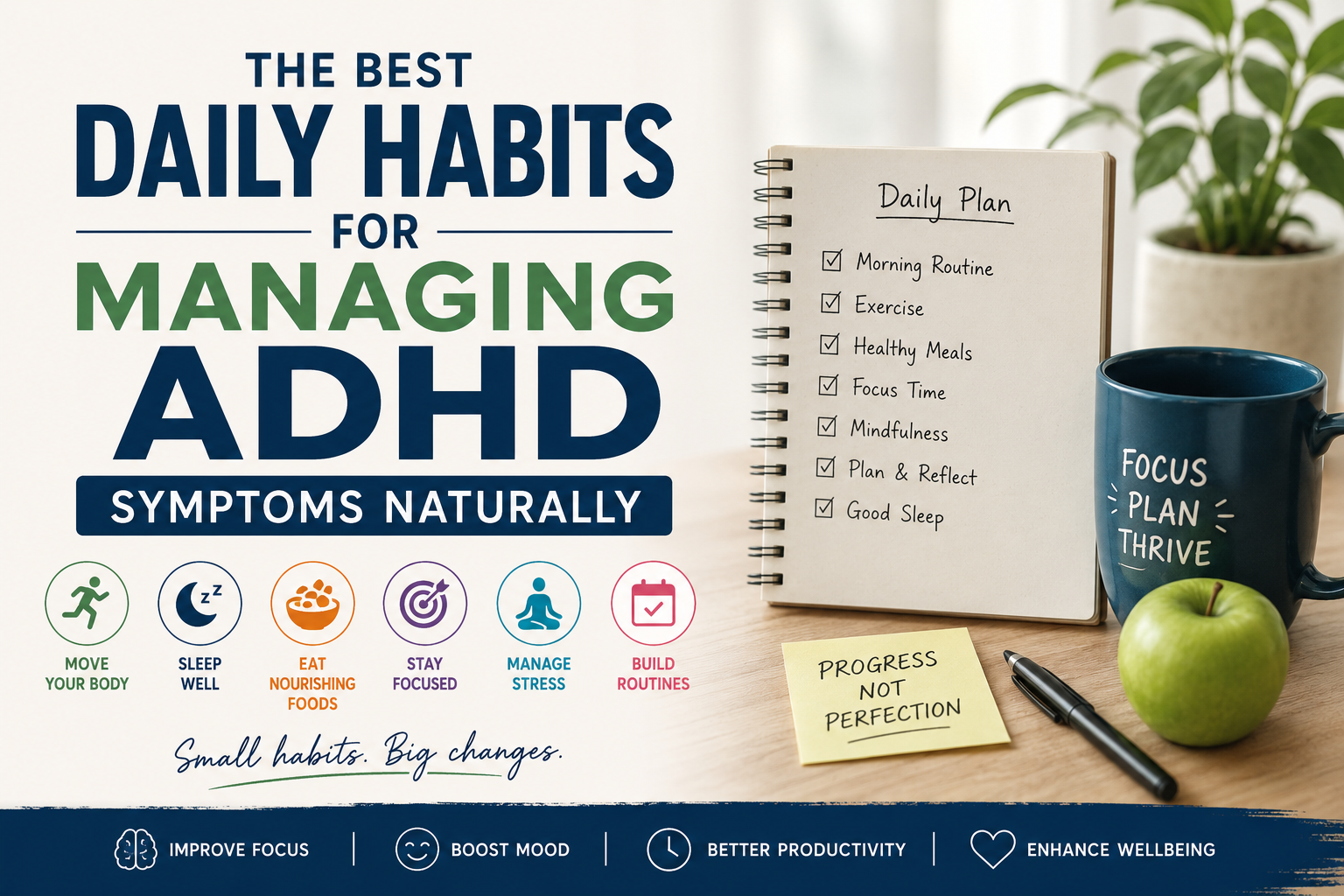
Living with ADHD can feel like a constant balancing act. Many Australians diagnosed with Attention Deficit Hyperactivity Disorder struggle with focus, impulsivity, forgetfulness, emotional regulation, and maintaining consistent routines. While professional support and treatment play an important role, many people often ask, What daily habits can improve ADHD and make everyday life more manageable?
The good news is that small, consistent lifestyle changes can have a significant impact on ADHD symptoms. Building healthy habits into your daily routine can improve concentration, reduce stress, increase productivity, and support overall well-being. Whether you're a student, professional, parent, or someone recently diagnosed with ADHD, adopting the right habits can help you thrive.
This guide explores the best daily habits for managing ADHD symptoms naturally and creating a more structured, balanced life.
Understanding ADHD and the Importance of Daily Habits
ADHD is a neurodevelopmental condition that affects how the brain regulates attention, behaviour, and executive functioning. Executive functions include planning, organising, remembering tasks, managing time, and controlling impulses.
Because ADHD affects routine behaviours, creating healthy daily habits can provide structure and consistency. Rather than relying solely on motivation, effective habits help automate positive behaviours and reduce the mental effort required to stay on track.
When practised consistently, healthy habits can:
Improve focus and attention
Reduce forgetfulness
Enhance emotional regulation
Support better sleep
Increase productivity
Lower anxiety and stress
Improve overall quality of life
Start Your Day with a Consistent Morning Routine
One of the most effective habits for ADHD management is establishing a predictable morning routine.
People with ADHD often experience difficulty transitioning between activities. A structured morning routine helps reduce decision fatigue and creates momentum for the day ahead.
Tips for Building a Strong Morning Routine
Wake up at the same time every day
Avoid immediately checking social media
Drink water after waking
Eat a balanced breakfast
Review your daily schedule
Prioritise your top three tasks
Keeping your mornings consistent trains your brain to transition smoothly into productive mode.
Prioritise Quality Sleep Every Night
Sleep and ADHD are closely connected. Poor sleep can worsen symptoms such as inattention, impulsivity, irritability, and emotional dysregulation.
Many people with ADHD struggle with falling asleep due to racing thoughts or difficulty winding down.
Healthy Sleep Habits for ADHD
Maintain a consistent bedtime
Limit screen use before bed
Avoid caffeine late in the day
Create a calming evening routine
Keep your bedroom cool and dark
Use relaxation techniques before sleep
Even small improvements in sleep quality can have a noticeable impact on focus and emotional well-being.
Exercise Daily to Improve Focus
Physical activity is one of the most effective natural tools for managing ADHD symptoms.
Exercise stimulates the release of dopamine, norepinephrine, and serotonin—neurotransmitters that play a key role in attention, mood, and motivation.
Best Types of Exercise for ADHD
Cardiovascular Exercise
Activities such as:
Walking
Running
Cycling
Swimming
Dancing
can improve concentration and reduce hyperactivity.
Strength Training
Resistance exercises can enhance self-discipline, confidence, and mental clarity.
Mind-Body Activities
Yoga and Pilates promote mindfulness, body awareness, and emotional regulation.
Aim for at least 30 minutes of movement most days of the week.
Eat a Balanced ADHD-Friendly Diet
Nutrition can influence energy levels, concentration, and mood.
While no specific diet cures ADHD, healthy eating habits may support better symptom management.
Focus on Nutrient-Rich Foods
Include:
Lean proteins
Whole grains
Fruits
Vegetables
Healthy fats
Omega-3-rich foods
Examples include:
Salmon
Tuna
Walnuts
Chia seeds
Eggs
Reduce Highly Processed Foods
Foods high in sugar and artificial additives may contribute to energy crashes and difficulty concentrating in some individuals.
Maintaining stable blood sugar levels throughout the day can help support attention and productivity.
Use Time Blocking to Stay Organised
Time blindness is a common challenge for people with ADHD. Tasks may take longer than expected, and deadlines can easily sneak up.
Time blocking helps by assigning specific periods of the day to particular tasks.
How Time Blocking Works
Instead of creating a simple to-do list:
9:00 AM – 10:00 AM: Emails
10:00 AM – 11:30 AM: Project Work
11:30 AM – 12:00 PM: Admin Tasks
This approach provides structure and helps reduce procrastination.
Digital calendars and reminders can further support this habit.
Break Large Tasks into Smaller Steps
Many people with ADHD feel overwhelmed when facing large or complex tasks.
Breaking projects into smaller, manageable steps can make them feel less intimidating and easier to start.
Example
Instead of:
"Write report"
Break it into:
Research topic
Create outline
Write introduction
Complete first section
Review and edit
Completing smaller tasks provides regular feelings of achievement, which can boost motivation.
Practise Mindfulness Every Day
Mindfulness helps train attention and improve emotional regulation.
Research suggests mindfulness techniques may help individuals with ADHD become more aware of distractions and redirect focus more effectively.
Simple Mindfulness Habits
Five-minute breathing exercises
Guided meditation
Mindful walking
Journalling
Body scan exercises
Consistency is more important than duration. Even a few minutes each day can make a difference.
Limit Digital Distractions
Smartphones, social media, and endless notifications can be particularly challenging for individuals with ADHD.
Creating boundaries around technology can significantly improve productivity.
Strategies to Reduce Distractions
Turn off non-essential notifications
Use website blockers
Keep your phone out of reach while working
Schedule social media breaks
Create dedicated focus periods
Reducing distractions allows the brain to stay engaged with important tasks for longer periods.
Keep a Daily Planner or Task List
External organisation systems can compensate for executive functioning difficulties.
A planner acts as a reliable memory aid and helps reduce mental clutter.
What to Include in Your Planner
Daily priorities
Appointments
Deadlines
Reminders
Personal goals
Whether digital or paper-based, choose a system you'll use consistently.
Build a Habit of Reviewing Your Day
Reflection helps strengthen self-awareness and identify patterns that affect productivity.
Spend five minutes each evening reviewing:
What went well
What was challenging
Tasks completed
Priorities for tomorrow
This habit can improve planning skills and reduce morning stress.
Stay Hydrated Throughout the Day
Dehydration can affect concentration, mood, and cognitive performance.
Many people underestimate how much water intake influences mental clarity.
Simple Hydration Tips
Keep a water bottle nearby
Set hydration reminders
Drink water with meals
Track daily intake if needed
Staying hydrated supports overall brain function and energy levels.
Develop Consistent Household Routines
Daily household responsibilities can become overwhelming when routines are inconsistent.
Creating structured systems can reduce stress and improve organisation.
Helpful Household Habits
Designated places for keys and wallets
Daily five-minute tidy-up sessions
Weekly meal planning
Scheduled laundry days
Automated bill payments
These routines minimise decision-making and prevent tasks from accumulating.
Practise Self-Compassion
Many adults with ADHD experience feelings of frustration, guilt, or self-criticism.
However, harsh self-judgement often reduces motivation and increases stress.
Ways to Practise Self-Compassion
Celebrate small wins
Focus on progress rather than perfection
Reframe setbacks as learning opportunities
Speak to yourself kindly
Building self-compassion supports resilience and long-term habit formation.
Create an ADHD-Friendly Environment
Your surroundings can either support or hinder productivity.
An organised environment helps reduce visual distractions and mental overload.
Environmental Strategies
Declutter workspaces regularly
Use labels and storage systems
Keep frequently used items accessible
Minimise background noise when possible
Creating an ADHD-friendly space can make focus feel more achievable.
Seek Professional Support When Needed
Natural habits can significantly improve daily functioning, but professional guidance remains valuable for many individuals with ADHD.
Healthcare professionals can help identify personalised strategies, treatment options, and behavioural techniques that align with your specific needs.
For Australians seeking flexible support, telehealth services provide convenient access to ADHD assessments, treatment planning, and ongoing care from the comfort of home. Providers such as ExpertMinds help individuals access professional ADHD support regardless of location.
Frequently Asked Questions
What daily habits can improve ADHD naturally?
Consistent sleep, regular exercise, healthy nutrition, mindfulness, time management strategies, and structured routines are among the most effective daily habits for improving ADHD symptoms naturally.
How long does it take for new ADHD habits to work?
Results vary from person to person. Some habits, such as exercise and improved sleep, may produce benefits within days, while others may require several weeks of consistent practice.
Can lifestyle changes replace ADHD treatment?
Lifestyle habits can significantly improve symptom management, but they should not replace professional advice or treatment plans recommended by qualified healthcare providers.
Which habit has the biggest impact on ADHD?
Sleep, exercise, and structured daily routines are often considered among the most influential habits for improving focus, emotional regulation, and productivity.
Conclusion
Managing ADHD naturally starts with small, sustainable daily actions. While there is no single solution that works for everyone, building healthy habits can create a strong foundation for improved focus, organisation, emotional well-being, and productivity.
If you've ever wondered, What daily habits can improve ADHD, the answer lies in consistency. Prioritising quality sleep, regular exercise, balanced nutrition, mindfulness, organisation, and self-compassion can help make daily challenges more manageable and support long-term success.
Remember, meaningful progress doesn't happen overnight. Start with one habit, build momentum, and gradually create a routine that works for your lifestyle and goals.
Comments
Log in or sign up to join the conversation.