

The biggest news story in Week 5 of August 2017 was the ongoing aftermath of Hurricane Harvey in Houston, Texas, which in addition to being almost at the center of damage produced by the natural disaster, is the fourth largest city in the United States and also the defacto capital of the nation's energy industry.
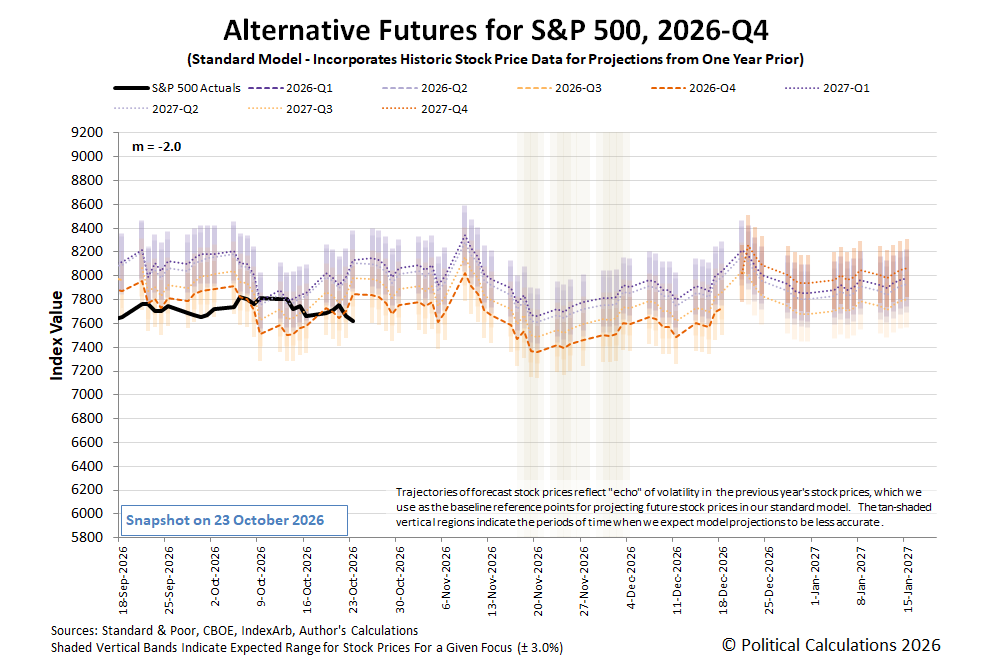
Surprisingly, the S&P 500 performed slightly better than our dividend futures-based forecasting model anticipated during the week, assuming that investors remain largely focused on the distant future quarter of 2018-Q2 in setting today's stock prices.

In response to the Hurricane Harvey, the CME Group's FedWatch tool is now indicating that there will be no change in short term U.S. interest rates from their current 1.00-1.25% target range through the first quarter of 2018. Investors are currently betting that the Fed will next change its Federal Funds Rate in 2018-Q2, at the 13 June 2018 meeting of the Federal Open Market Committee, when it is expected to boost it, most likely to the 1.25-1.50% range.
As to why the S&P 500 behaved as well as it did in the fifth week of August 2017, a beginning explanation may be found in the Gulf coast city of Corpus Christi, which has become a major export center for U.S.-produced oil and gas, which was also near the epicenter for where Hurricane Harvey made its landfall. The city's port facilities appear to have weathered the storm well despite some notable damage to vessels in the port, where the port itself and nearby refineries successfully reopened several days earlier than expected on Thursday, 31 August 2017.
Meanwhile, here were the other headlines of note that we flagged during the final week of August 2017.
Monday, 28 August 2017
- U.S. gasoline price jumps, crude falls as Harvey hits refiners
- Wall Street closes little changed as Harvey pummels Texas
Tuesday, 29 August 2017
- U.S. stock futures fall after North Korea missile report
- Harvey's rains shut in more U.S. refineries, sending fuel prices higher
- Gasoline jumps 4 percent, oil mixed as storm hits more refineries
- Wall Street ends higher as fear over North Korea dissipates
Wednesday, 30 August 2017
- Gasoline jumps, crude down; Harvey shuts 24 percent of U.S. refining
- Upbeat U.S. growth revision drives Wall Street higher
Thursday, 31 August 2017
- Oil rises, gasoline jumps 10 percent as U.S. refineries reel
- Wall Street gains on data and Mnuchin tax reform remarks
Friday, 1 September 2017
- U.S. gasoline in first slide since Harvey, oil under pressure
- Wall Street edges up as rate-hike bets in check after jobs data
Elsewhere, Barry Ritholtz captured the positives and negatives for the U.S. economy and markets in Week 5 of August 2017.
On a final note, if you look at our alternative futures chart above, you'll see that we're coming up on another one of those periods where the echoes of past volatility in stock prices will affect the accuracy of our standard forecasting model for the S&P 500, which will hit during the latter part of the upcoming week. At this time, we anticipate that the S&P 500 will largely continue to move mostly sideways, where the level of the S&P 500 will end the week somewhere around 50 points higher than where our unadjusted model indicates. We'll look at adjusting our forecast chart to account for the echo effect in next week's edition!
Comments
Log in or sign up to join the conversation.