
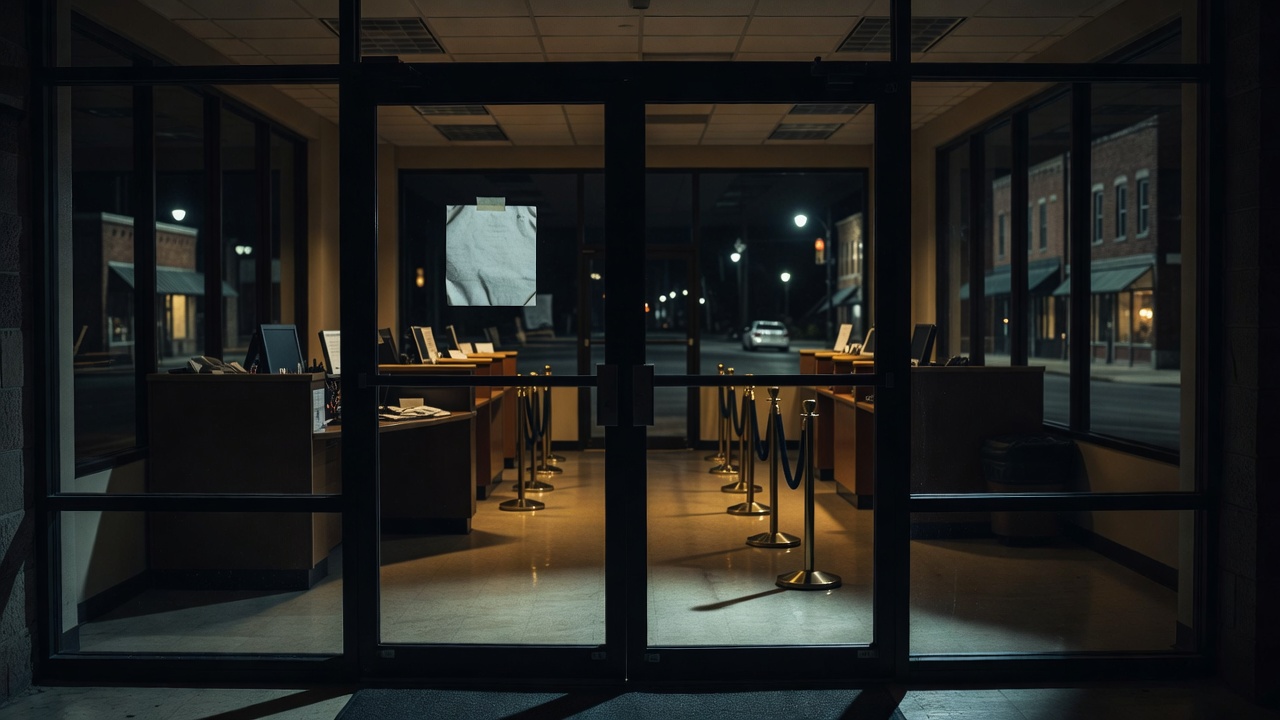
Friday night, federal regulators shut an Indiana lender most people outside Evansville had never heard of. By Saturday morning, its branches were already reopening under a new name.
United Fidelity Bank, a federal savings bank based in Evansville, was closed by the Office of the Comptroller of the Currency and handed to the FDIC. First-Citizens Bank & Trust of Raleigh, the same franchise that cleaned up Silicon Valley Bank in 2023, agreed to take substantially all deposits and buy substantially all assets. Depositors keep their money. Checks still clear. ATM cards still work.
That is the calm version of the story. The version that matters for people who own bank stocks is uglier.
My take
My take is simple. Regulators closed one already-troubled mid-size bank before the weekend, found a willing buyer, and protected depositors. That is a clean-up, not a 2008 sequel and not a free pass to ignore the balance sheet. The bill to the deposit insurance fund and the discount First Citizens forced on the loan book are the honest parts of the release. Treat those numbers as the real message, not the cable panic about another bank failure.
What actually happened
As of September 30, United Fidelity held about $5.9 billion in assets and $5.4 billion in deposits. First Citizens is assuming roughly $4.5 billion of those deposits and about $3.1 billion of loans. The bank ran 22 branches across Indiana, Illinois, Florida, Colorado, and the U.S. Virgin Islands.
The OCC said the bank was in an unsafe or unsound condition and was likely unable to pay its obligations or meet depositor demands in the normal course of business. In kitchen English, they did not trust this balance sheet to open Monday without a receiver.
The FDIC estimates the failure will cost the Deposit Insurance Fund about $1.83 billion. On a $5.9 billion balance sheet, that is roughly a 31% hit, an unusually large loss rate for a resolution of this size. First Citizens’ winning offer included an asset discount of about $2.6 billion and no premium for the deposits. The buyer only took the loans after marking them down hard.
This is the biggest U.S. bank failure since Republic Bank closed in April 2024 with about $6 billion in assets. It is also the seventh bank failure of 2026, according to the FDIC’s year brief. That is more than the two-a-year pace of 2024 and 2025. It is still a long way from a systemic wave.
The watch list that never left
People who only discovered United Fidelity on Reddit this weekend missed the earlier chapters.
In October 2023, the OCC put the bank under a consent order and labeled it in troubled condition over board oversight, capital planning, credit review, data, audit, and controls. In June 2024, the Federal Reserve hit the Pedcor Financial and Fidelity Federal Bancorp holding stack with a written agreement on the same family of problems: capital planning, risk management, contingency funding, and board oversight.
Coverage at the time tied a lot of that pressure to how fast the bank had grown through acquisitions, including failed-bank deals. Growth can look like a victory lap until the loan book and the controls fail to keep up. Friday night did not invent that story. It ended it.
Holding-company shareholders are on the wrong side of the table. The FDIC notes that stock of the holding company was not part of the First Citizens transaction. Depositors got a clean handoff. Equity in the failed bank’s parents did not.
What this means if you own stocks
First Citizens BancShares (FCNCA) is the public name in the deal. This is its second high-profile FDIC whole-bank purchase after SVB. The market usually likes a deep discount and sticky deposits when the buyer is competent. The test is credit quality after the honeymoon. A $2.6 billion asset discount is protection, not free money. If the loans are worse than the mark, the discount shrinks in real life.
Regional and community banks do not automatically reprice because one Indiana thrift died. The system still has a working resolution machine. What can move the sector over time is the insurance fund. When the fund takes a nearly $2 billion hit, the industry eventually pays more in assessments, and banks try to earn that back through spreads and fees. That is slow plumbing, not a Monday gap-down thesis.
What would change my mind is a cluster of same-size failures with the same loss rate in a short window, or clear evidence the stress sits in a loan type the whole industry still holds heavy. Day-one releases have not handed the public a clean loan-mix autopsy. Until they do, inventing a commercial-real-estate cartoon from a social thread is lazy.
Bottom Line
United Fidelity was already on the regulatory watch list. Regulators closed it, First Citizens bought the mess at a steep discount, and depositors kept their money. The $1.83 billion insurance bill and the $2.6 billion asset haircut are the parts that still matter on Monday. One mid-size failure is a clean-up. A string of them with the same loss rate would be a different conversation.



Comments
Log in or sign up to join the conversation.