

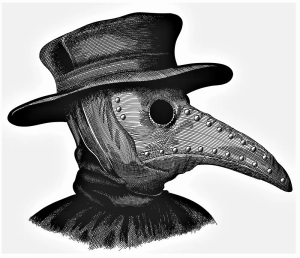
The behavior of individuals betraying or informing on others, has been a recurrent theme throughout history and across cultures. “Handles” have been ascribed to such individuals, often reflecting the context and severity of their actions; betrayer, blabbermouth, canary, double-crosser, fink, informant, rat, snitch, source, squealer, stoolie, tipster, and whistle-blower.
Be mindful though that the outward intention may mask a purposely darker malicious intent.
Witch Hunts: During the witch trials in Europe and the American colonies, individuals accused of witchcraft were often turned in by their neighbors or even family members. The accusers in these contexts were sometimes referred to as "informants" or "accusers."
French Revolution: During the Reign of Terror, individuals who reported others as enemies of the revolution were known as "denouncers." These actions were often motivated by personal grudges, fear, or ideological zeal.
Nazi Occupation of France: During World War II, some French citizens collaborated with the Nazis by turning in Jews and resistance members. These informers were derogatorily called "collaborateurs" (collaborators) or "mouchards" (snitches).
Cold War Era: In the United States, during the McCarthy era, those who accused others of being communists were often referred to as "informants" or "whistleblowers," though the latter term has evolved to have more positive connotations in modern usage.
Soviet Union: Informers in the Soviet Union who reported on their neighbors, colleagues, or even family members to the secret police (KGB) were known as "stukachi."
The act of betraying or informing on others can be driven by various psychological and social factors.
Fear and Self-Preservation: during totalitarian regimes or periods of intense social or political upheaval, fear for one’s safety or survival could compel individuals to betray others.
Conformity and Social Pressure: humans have a strong desire to conform to social norms and the expectations of authority figures and often betray others to align themselves with the prevailing power structure or ideology.
Moral Justification: justifies informer actions by believing they are serving a higher moral or social purpose.
Personal Grudges and Revenge: informing drives personal vendettas. History shows that many accusations during the witch trials, the French Revolution, The Inquisition, and other periods of strife were motivated by personal animosities and desires for revenge.
Incentives and Rewards: can be material, such as money or property, or social, such as status, power, or jobs as those is power dangle to get weak actors to acquiese.
Psychological Projection: of their own guilt, fears, or undesirable traits onto others, they deflect attention from themselves and assume a sense of moral superiority.
There are times when the accuser is silent, but the covert reaction to their admonition is anything but silent, it morphs into a “bad seed” from which a poison tree sprouts and matures into a forest of ill will.
Presently, the "accuser" personality profile is becoming a predominant source of social media content. Deservedly called "Karen" as a pejorative, but not unlike the Spanish Inquisition accuser, anyone with any underlying intention can find fault with one, another, or many and repudiate them for even an absurd reason.
This phenomenon describes individuals who use social media platforms to call out, criticize, or "cancel" others for various perceived transgressions. This behavior is highly visible and prevalent, often driven by a complex interplay of psychological and social factors, and at times as a malicious propagandist tool to alter mindsets, and the behaviors of others.
Need To Control: some individuals have a deep-seated need to control their environment and the people within it. Social media provides a platform where “freaks” can exert influence and feel a sense of power over others.
Need for Power: calling out others can give actors a sense of superiority and dominance. By criticizing or canceling someone, they place themselves in a position of moral authority.
Validation From Likes and Shares: social media operates on a currency of likes, shares, and comments. Calling out others, especially on popular or controversial topics, can garner attention, followers, and validation.
Echo Chambers: reinforce like-minded individuals with repetition promoted by distribution emboldening accuser behavior as they receive acknowledgement from their community.
Social Identity Theory Dynamics: individuals derive part of their identity from the social groups they belong to. Distinguishing oneself from an "outgroup" by calling out perceived transgressions helps reinforce the boundaries and values of the "ingroup."
Tribalism: is a natural human tendency to form tight-knit groups and view those outside the group with suspicion or hostility. Social media can amplify tribalistic behavior as people rally against those perceived as different or opposing.
Narcissistic Traits: Actors use social media to enhance their self-image. Publicly accusing others is a tool to manifest themselves as morally superior and enlightened.
Self-Righteousness: Satisfaction derived from believing they are upholding higher moral standards than others despite the absence of rational thinking.
Uncertainty: the anxious among us accuse others to assert a false sense of control over their environment to address their fears and insecurities.
Scapegoating: is a tool to deal with unfettered fear and anxiety by projecting these feelings onto a specific individual or group, blaming them for broader issues.
Moral Outrage: social media can amplify feelings, which can be cathartic for individuals. allowing them to vent emotionally and feel part of a collective cause while maintaining distance.
Emotional Regulation: can be achieved for some by shifting focus away from their personal issues onto external targets. An avoidance bias.
Anonymity and Distance: provided by social media can nullify empathy to make it easier for actors to chastise others without fear of facing direct consequential reprisals.
Viral Nature of Content: can amplify accusations and criticisms, often beyond their original context or intent.
The deliberate use of accusations to the detriment of others, especially through coordinated communication campaigns, indeed aligns with the concept of prurient propaganda and character assassination…A form of intellectual guillotine, where the goal is to destroy the reputation, social standing, or career of the target through malicious means.
Prurient Propaganda: involves spreading salacious, scandalous, or morally outrageous information designed to provoke public interest and disapproval to incite public condemnation. This type of propaganda leverages the sensational nature of the accusations to ensure they gain traction quickly, exploiting human interest in gossip and scandal.
Character Assassination: is the deliberate and sustained effort to damage someone's reputation. This can involve spreading false information, exaggerating faults, and manipulating public perception. Techniques include spreading rumors, creating misleading narratives, and mobilizing others to amplify the negative portrayal.
Envy and Resentment: actors engage in these behaviors out of jealousy or resentment towards the target’s success, status, perceived advantages, or contrarian postures.
Power and Control: the actor accuser derives a sense of power and satisfaction from their ability to manipulate others’ perceptions and committing character assassination.
Gaslighting: accuser actors employ gaslighting techniques to make the target doubt their own experiences and perceptions, thereby weakening their ability to defend themselves.
Projecting: their own insecurities, faults, or misdeeds onto the target, thereby diverting attention from the accuser’s own shortcomings.
Mob Mentality: accusers incite a mob mentality, where a group collectively engages in character, social or political assassination, often without critical examination of the accusations.
Echo Chambers: social media echo chambers can amplify and validate a malicious campaign, as individuals within the group reinforce each other’s beliefs and actions…Conformation Bias.
It has happened before, it is happening again.
McCarthyism: during the Red Scare in the United States, accusations of communism were often based on flimsy evidence and used to destroy careers and lives.
Regimes: such as Nazi Germany or Stalinist Russia, false accusations were used to eliminate political opponents and consolidate power. This is still true today.
Online Harassment campaigns involve doxxing (publishing private information), spreading false allegations, and inciting others to join in the attack.
Cancel Culture: Originally intended to hold individuals accountable for detrimental behaviors, cancel culture has been weaponized to unjustly target and ostracize individuals, events, and, ideas based on false or exaggerated accusations.
Malicious accusers who engage in prurient propaganda and character assassination represent a deeply deleterious aspect of human behavior. Our culture is being contaminated by the misuse of communication platforms. That something is said, does not make it so. If you do not condemn the ACTS and ACTORS that abuse the gifts of technology and the “do unto others” rule, you are condoning these behaviors. Silence in this instance is not “golden” in fact it might be of value to consider what has not been said before becoming an echo yourself.
More By This Author:



Comments
Log in or sign up to join the conversation.