

Introduction
The textile industry is continuously adopting advanced biotechnology solutions to improve fabric quality, reduce chemical usage, and increase production efficiency. Among these solutions, textile enzymes have become an important part of modern textile processing.
Textile enzymes are biological catalysts that help manufacturers modify, clean, and improve fabrics through controlled enzymatic reactions. They are used in various stages of textile manufacturing, including desizing, bio-polishing, denim washing, bleaching, and finishing.
Understanding textile enzyme usage, dosage, working process, and industrial applications helps textile manufacturers achieve better fabric performance while maintaining sustainable production practices.
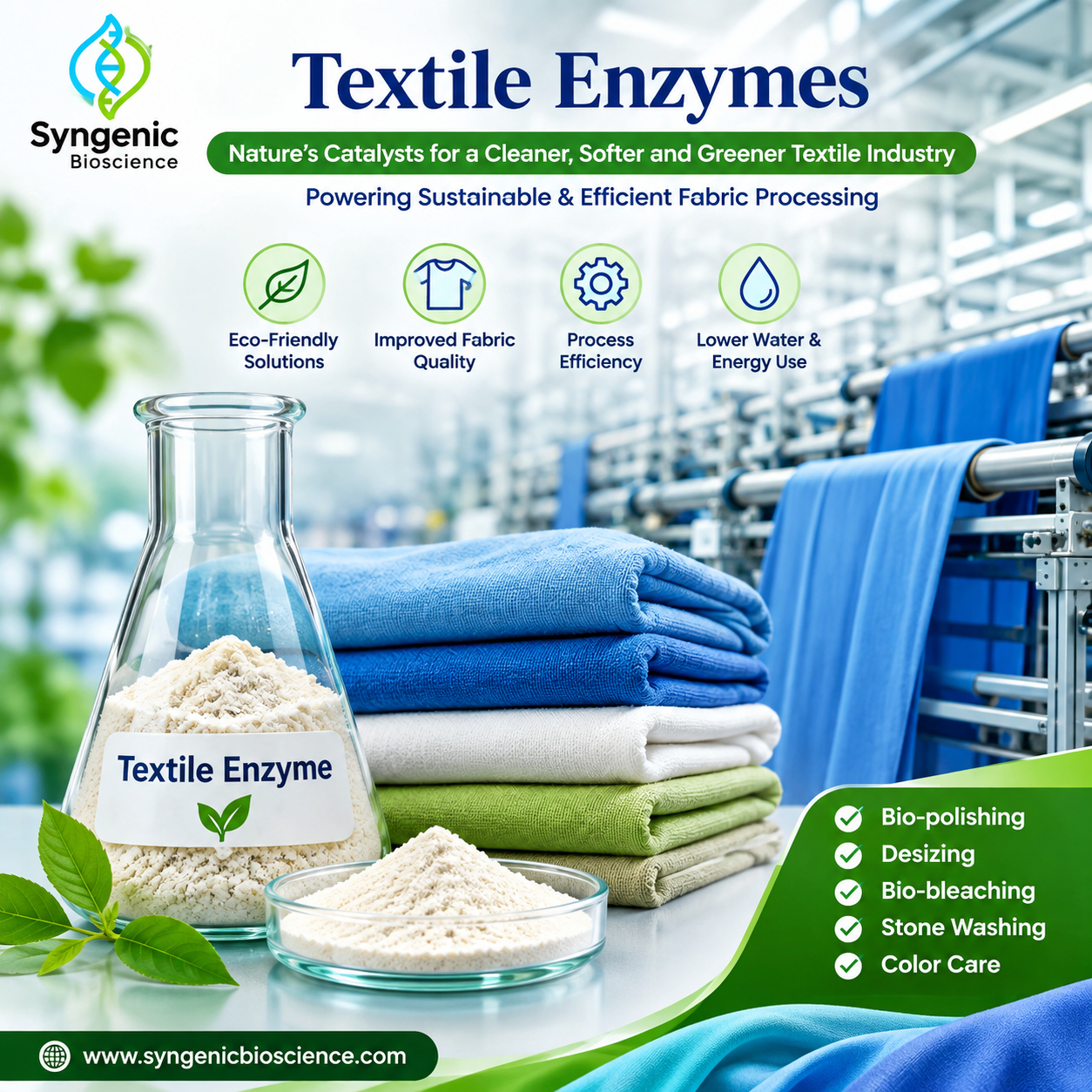
What Are Textile Enzymes?
Textile enzymes are specialized proteins produced through biotechnology that accelerate specific chemical reactions during textile processing.
Unlike traditional chemical treatments, enzymes work selectively on targeted materials such as starch, cellulose, pectin, and other unwanted substances present in fabrics.
Common textile enzymes include:
Cellulase enzymes
Amylase enzymes
Catalase enzymes
Pectinase enzymes
Protease enzymes
Each enzyme has a specific function and is selected according to the fabric type and processing requirement.
Why Are Textile Enzymes Used in the Textile Industry?
Textile enzymes are used because they provide several advantages compared to conventional chemical methods.
Major benefits include:
Improved fabric softness
Better surface appearance
Reduced fiber damage
Lower chemical consumption
Improved processing efficiency
Eco-friendly textile production
Better wastewater management
Enzymes help manufacturers achieve high-quality fabrics while supporting sustainable textile manufacturing practices.
Working Process of Textile Enzymes
Textile enzymes work through biological reactions that target specific materials present in fabrics.
The basic working process includes:
1. Enzyme Application
The selected enzyme is added to the textile processing bath according to fabric requirements and recommended dosage.
2. Enzyme Activation
Environmental conditions such as temperature, pH level, and processing time activate the enzyme activity.
3. Target Material Breakdown
The enzyme breaks down unwanted substances present on the fabric.
For example:
Amylase breaks down starch during desizing.
Cellulase removes loose cellulose fibers during bio-polishing.
Catalase removes hydrogen peroxide after bleaching.
4. Washing and Finishing
After enzyme treatment, fabrics are washed and processed further to achieve the desired quality.
Types of Textile Enzymes and Their Applications
1. Cellulase Enzymes
Cellulase is one of the most widely used textile enzymes.
Applications:
Denim washing
Bio-polishing
Cotton fabric finishing
Benefits:
Removes unwanted surface fibers
Improves fabric smoothness
Enhances color appearance
Reduces pilling
2. Amylase Enzymes
Amylase enzymes are mainly used during the desizing process.
Applications:
Cotton fabric preparation
Removal of starch sizing materials
Benefits:
Improves fabric absorbency
Prepares fabric for dyeing
Provides uniform processing
3. Catalase Enzymes
Catalase enzymes are used after bleaching processes.
Applications:
Hydrogen peroxide removal
Dyeing preparation
Benefits:
Improves dye absorption
Reduces water consumption
Shortens processing time
4. Pectinase Enzymes
Pectinase enzymes are used for cotton pretreatment.
Applications:
Cotton scouring
Fabric preparation
Benefits:
Improves fabric wetting ability
Removes natural impurities
5. Protease Enzymes
Protease enzymes are used for specialized textile treatments.
Applications:
Fiber modification
Protein-based material treatment
Important Factors Affecting Textile Enzyme Performance
Temperature
Every enzyme works effectively within a specific temperature range. Incorrect temperature can reduce enzyme activity.
pH Level
Enzymes require suitable pH conditions for maximum performance.
Processing Time
Proper treatment time ensures effective enzymatic action without damaging fabric quality.
Water Quality
Water quality can influence enzyme performance during textile processing.
Safety Guidelines for Using Textile Enzymes
Proper safety practices are important while handling industrial enzymes.
Recommended safety measures:
Use protective gloves and masks during handling
Avoid direct contact with enzyme concentrates
Follow supplier safety instructions
Store enzymes in recommended conditions
Keep containers properly closed
Train workers about safe handling procedures
Proper handling ensures workplace safety and maintains product effectiveness.
Industrial Applications of Textile Enzymes
Textile enzymes are used in different textile sectors:
Cotton Processing
Used for:
Desizing
Scouring improvement
Bio-polishing
Denim Industry
Used for:
Stone-wash effects
Soft finishing
Color improvement
Garment Manufacturing
Used for:
Fabric finishing
Improved appearance
Better comfort
Sustainable Textile Production
Used to reduce chemical dependency and support environmentally friendly manufacturing.
How Textile Enzymes Improve Textile Quality
Textile enzymes help improve:
Fabric softness
Smoothness
Appearance
Dye absorption
Comfort level
Overall product quality
They provide controlled processing without excessive damage to textile fibers.
Future of Textile Enzymes in Textile Industry
With increasing demand for sustainable manufacturing, textile enzymes are expected to play a larger role in the future.
Future developments may include:
Advanced enzyme formulations
Improved enzyme stability
Smart textile processing solutions
More environmentally friendly production methods
Conclusion
Textile enzymes have become an essential part of modern textile manufacturing because they improve fabric quality, increase processing efficiency, and support sustainable production.
Understanding textile enzyme types, working processes, dosage requirements, safety measures, and industrial applications helps manufacturers select the right enzymatic solutions for their textile operations.
By using proper enzyme selection and controlled processing conditions, the textile industry can achieve better quality fabrics while reducing environmental impact.
Comments
Log in or sign up to join the conversation.