

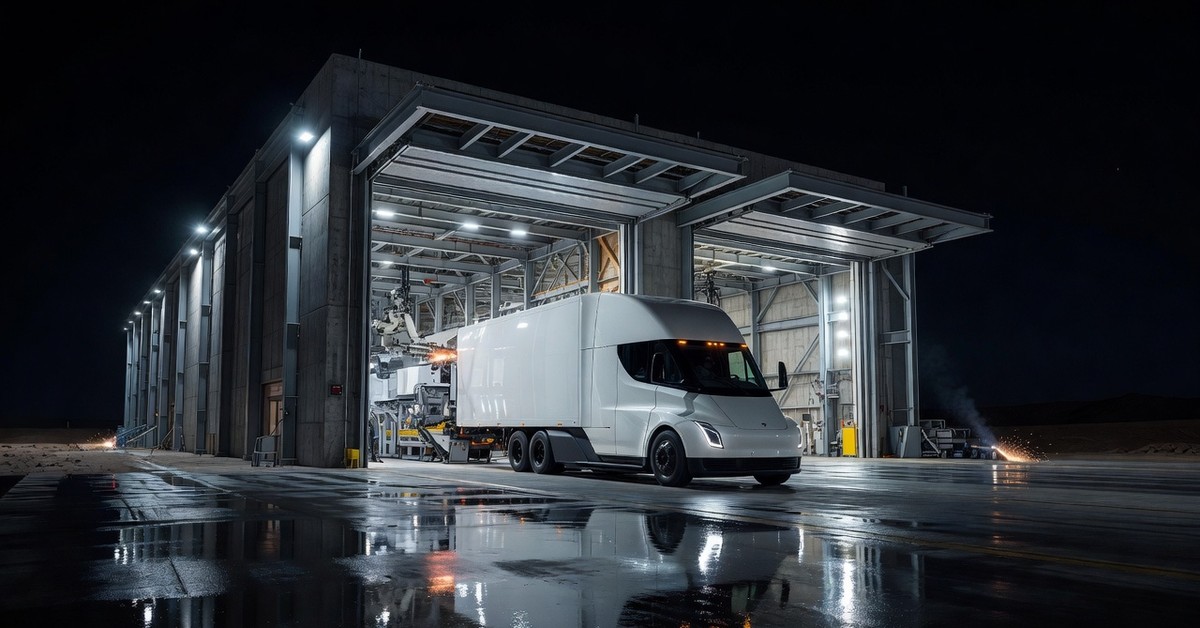
Nine years after the first unveil, Tesla (TSLA) finally treated the Semi like a product with a factory door, not a concept video.
At the Sparks, Nevada rollout, executives said customer deliveries are beginning this week. The dedicated plant covers about 1.7 million square feet and is sized for up to 50,000 trucks a year at full clip. That number has lived in Tesla decks for a long time. Putting logos on trucks outside the building is the part that matters now.
PepsiCo (PEP), DHL, and US Foods (USFD) were invited on stage. Trucks carrying those brands were parked outside. Fleet theater is still theater. It is also how Class 8 programs prove they have a buyer, not only a keynote.
The Specs That Sell the Route
Tesla said the long-range variant can do 500 real-world miles loaded on one charge, with customer validation behind the claim. Dan Priestley, Tesla's Semi engineering lead, pushed that number hard. Range is the whole argument in freight. Miss it and the truck becomes a local special, not a line-haul tool.
Elon Musk did not attend. In a recorded message he told the room the waiting list is already long and that more orders would not hurt. Separately, clean-transport group Catalyst Mobility said a shipper coalition that includes names like Microsoft (MSFT) and PepsiCo placed an order for 2,500 Semis this week. That would nearly double the existing U.S. electric Class 8 fleet on paper if those units land.
Orders are not the same as delivered trucks earning money on a route. Tesla has burned years learning that lesson across other products. The factory open is still a step the stock needed if the commercial EV story is going to stop living only in robotaxi headlines.
What Investors Should Actually Track
Three numbers will decide whether this event was a milestone or a costume. Weekly or monthly Semi delivery counts. Charging network density on the lanes fleets actually run. And whether the 50,000 annual run-rate is a 2027 story or a 2030 wish.
Diesel prices, driver shortages, and corporate carbon targets all help the pitch. So do high interest rates, which make expensive fleet capex harder to green-light. Tesla is selling a truck into that tension, not into a free-money world.
For the equity, Semi will not move the market cap the way robotaxi dreams do. It can still change the narrative from "Tesla only sells cars to consumers" toward "Tesla sells industrial hardware that has to work at 2 a.m. on a highway." That is a harder bar. It is also a cleaner business if they clear it.
Bottom line: The Semi finally has a factory party and the start of real deliveries. Believe the 50,000 target when the weekly build rate stops needing a press release to prove it.



Comments
Log in or sign up to join the conversation.