

On March 24th, Tencent Holdings (00700.HK) – a Chinese social media and video game giant – released its 2021 fourth quarter and annual results.
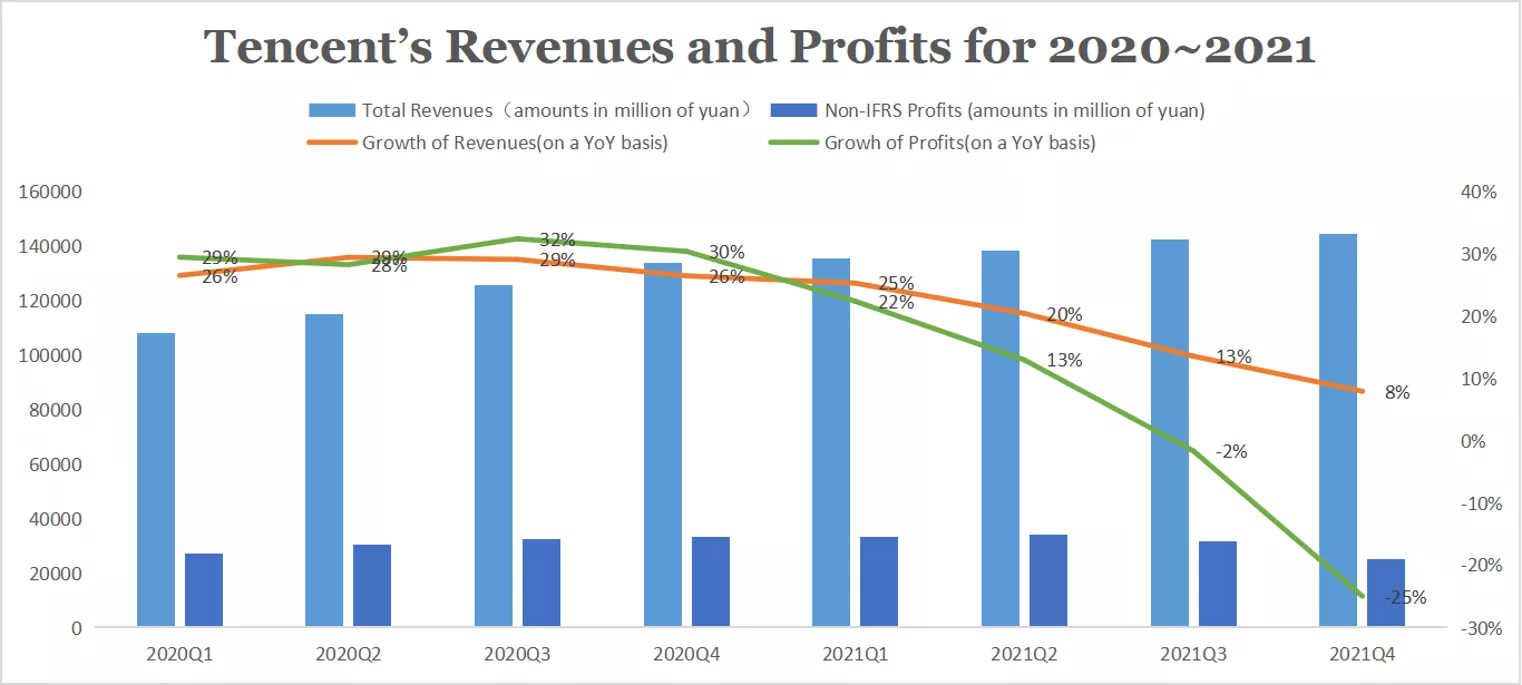
The data showed that total revenues for the year were RMB560.1 billion (US$87.9 billion), up 16% year-on-year. However, profits (non-IFRS) rose to RMB123.8 billion (US$19.4 billion), accounting for a mere 1% increase from 2020, and representing the company's slowest profit growth in nearly a decade.
In the fourth quarter alone, Tencent posted a revenue of RMB144.2 billion (US$22.6 billion), up 8% from a year earlier. However, non-IFRS profit for the quarter fell 25% compared to the previous year, to RMB24.9 billion (US$3.9 billion).
March's data reinforces a negative trend for the tech giant. Looking at Tencent's quarterly financials for the past two years, we can observe that both the company's revenue growth and profit growth are on a downward track, with the decline worsening in 2021.
Data source: Company's earnings report
So, what are the factors that have led to the decline in Tencent's net income growth and profit? How will the Chinese internet behemoth perform going forward?
A year of sluggish performance
Tencent's revenue comes predominantly from three business segments, namely value-added services (VAS), fintech and corporate services, and online advertising. In the fourth quarter of 2021, VAS accounted for 50% of total revenue, while the other two segments made up 33% and 15% respectively.
Data source: Company's earnings report
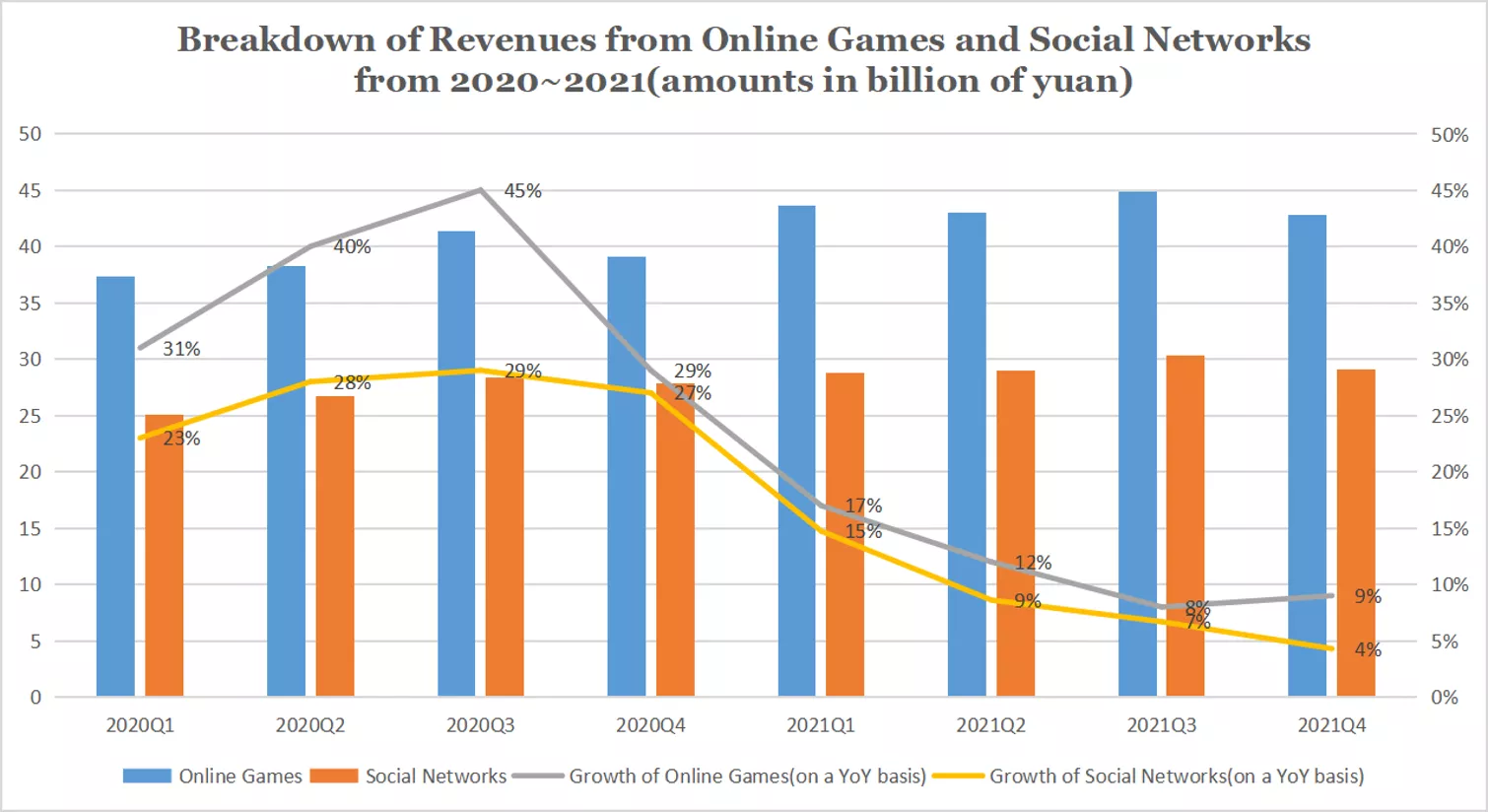
There were some positive signs from the firm’s fourth-quarter data. Tencent’s income from VAS, which is split into online games and social networks, increased to RMB71.9 billion (US$11.3 billion), representing a 7% year-on-year growth. Specifically, games revenue grew by 9% to RMB42.8 billion (US$6.72 billion), driven by online games, including Honour of Kings, as well as recently launched Battle of the Golden Spatula and League of Legends: Wild Rift. These successes were partly offset by the decline in income from Moonlight Blade and Peacekeeper Elite. Games targeting the global market, such as Valorant and Clash Royale, also posted impressive results.
Income from social networks also rose by 4% to RMB29.1 billion (US$4.57 billion), driven by the company's live streaming, video, and music subscription services. But while Tencent's online games and social networks businesses both grew in the fourth quarter, performance was sluggish compared with the impressive results posted a year earlier.
Data source: Company's earnings report
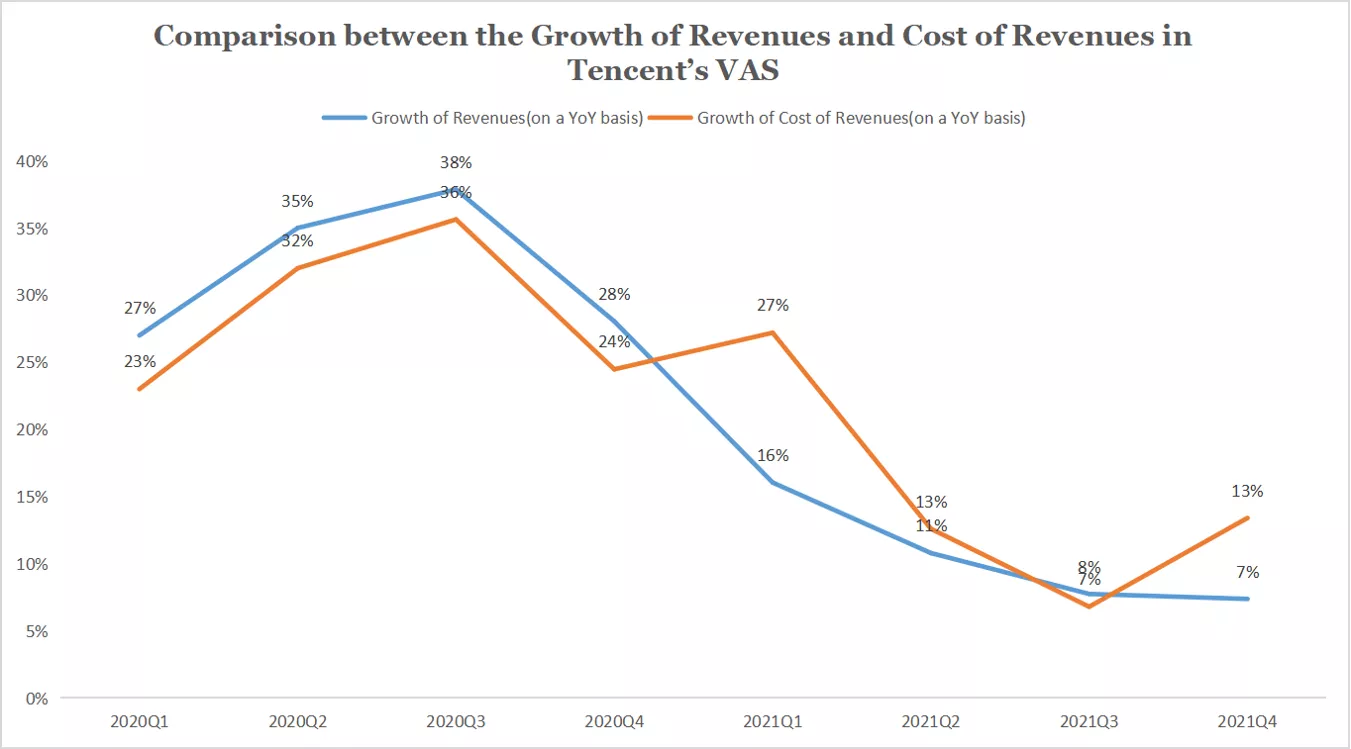
Reviewing Tencent's performance over the past two years, we can obverse that the company was well-positioned to turn profits as VAS revenue growth outstripped costs in the sector. However, the segment's revenue trajectory has been on a downward path since the beginning of 2021, with increasing costs exceeding the revenue growth, impacting the company's capacity to turn a profit in the sector.
During the fourth quarter, gross profit growth from VAS collapsed to a mere 2% year-on-year increase, down from 32% profit growth in Q4 of 2020. Tencent suggested increased costs were the cause of the slowing profit growth. In turn, the company explained that this was due to an increase in the content and channel costs of games, as well as the cost of revenue sharing related to its live broadcast services.
Advertising business losses steam
Tencent's revenues from the advertising business fell by 13% year-on-year to RMB21.5 billion (US$3.38 billion) in the fourth quarter of 2021. The contraction was the result of poor performance in certain advertising sectors including education, games, and internet services, although this was partially offset by advertising revenue from the merger with Sogou.
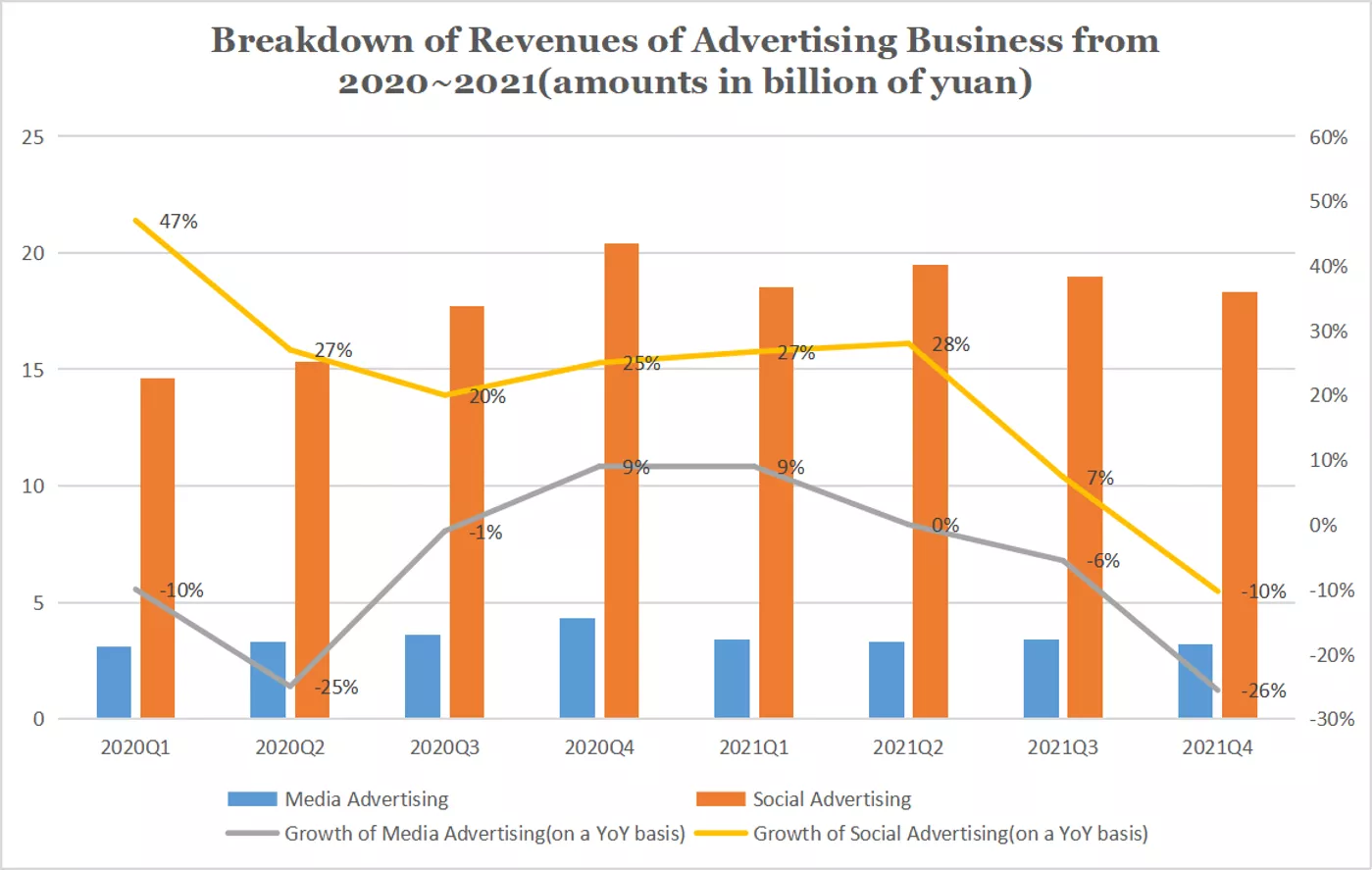
A breakdown of the data shows that media advertising-income plunged by 25% to RMB3.2 billion (US$502 million), primarily due to lower advertising revenues from Tencent Video and Tencent News services. Likewise, social media advertising revenues dropped by 10% to RMB18.3 billion (US$2.87 billion), primarily because of reduced income from its mobile advertising network and Weixin Moments.
Data source: Company's earnings report
In recent years, Tencent has benefitted from the rapid growth of social media advertising, while more conventional advertising services faltered. However, it is clear that social media advertising is currently lacking in momentum, impacting Tencent's overall growth in the sector.
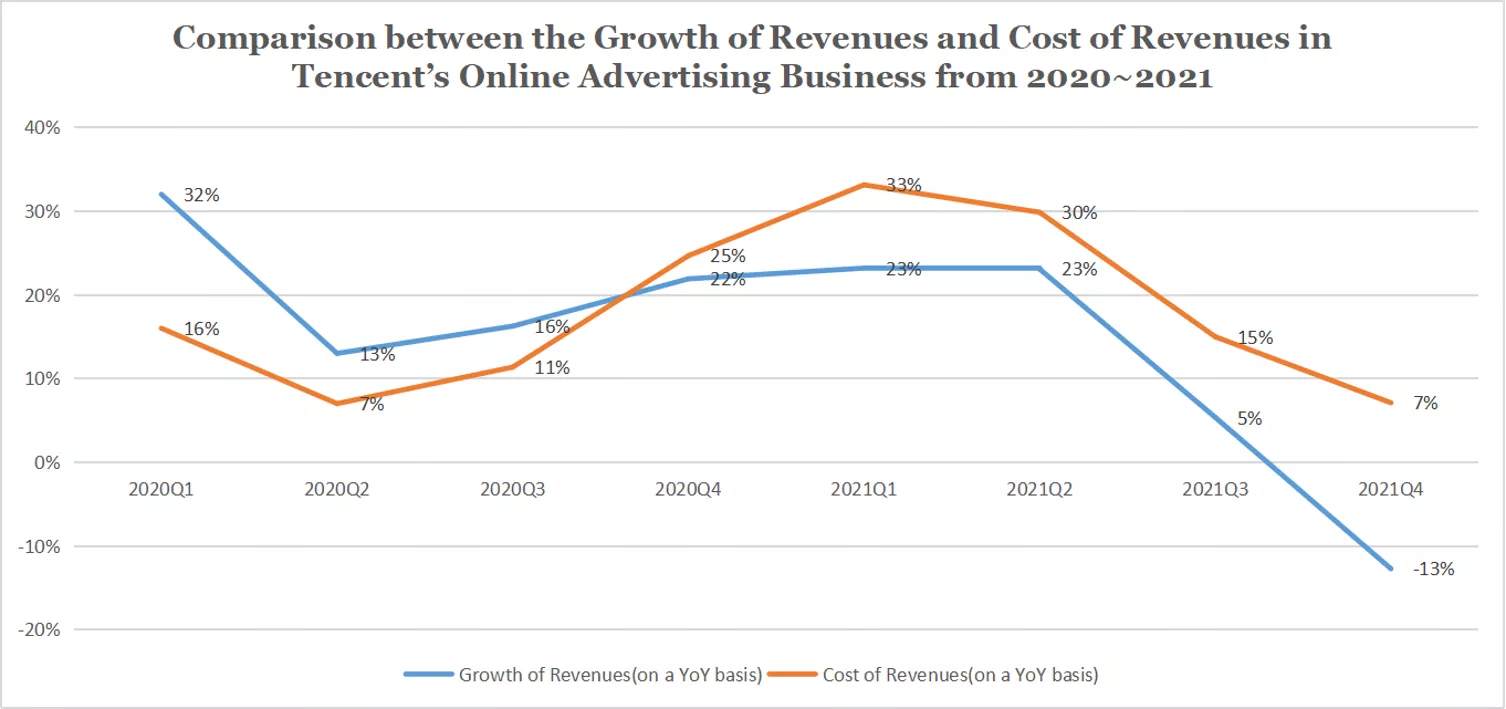
Cost increases in Tencent's advertising business began to surpass the revenue growth in the fourth quarter of 2020. Costs accelerated in the fourth quarter of 2021, further impacting the company's ability to turn a profit in the sector. With negative revenue growth, Tencent's gross profits for the advertising business sharply declined by 30% year-on-year to RMB9.2 billion (US$1.44 billion) in the fourth quarter. The company explained that the setback was driven by increased server and bandwidth costs, including those associated with the live streaming, video, and music subscription services, as well as increased content costs.
A new growth engine for Tencent: Fintech and business services
Fintech and business services are expected to become the main vehicle for new growth in the years ahead. In the fourth quarter of 2021, the segment yielded revenues of RMB48 billion (US$7.54 billion), representing an increase of 25% year on year, making it Tencent's faster-growing business sector. Its share of total revenue has also risen, becoming larger than the games business for the first time.
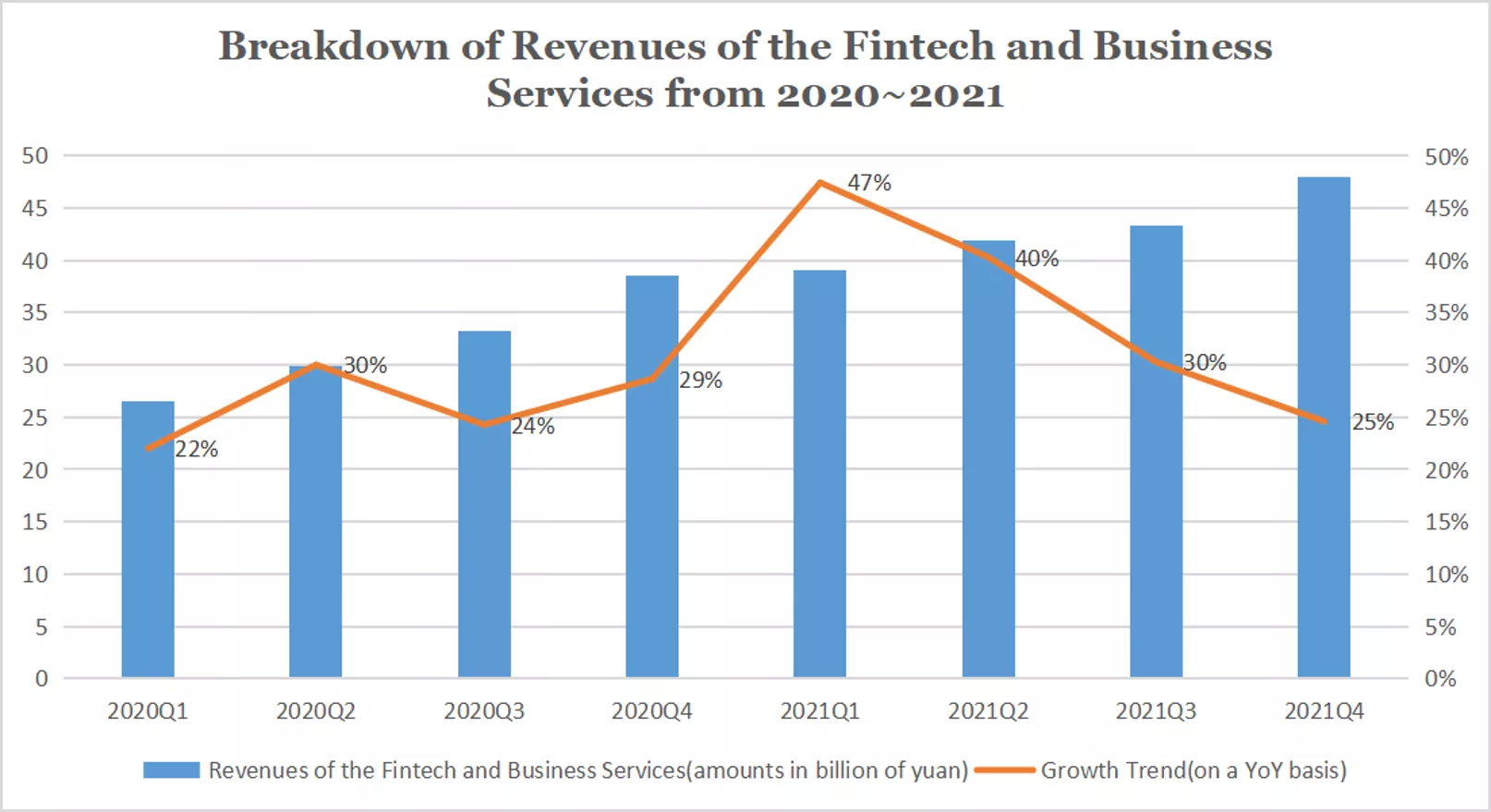
Tencent's fintech and business services boomed in the second half of 2020 as authorities in China brought the first wave of Covid-19 under control and citizens were able to resume their normal lives. The segment continued its rapid growth throughout 2021, reflecting increasing commercial payment volume and revenues growth driven by increased use of the company's services related to the internet, public transport, and retail industries.
While the pandemic wreaked havoc on the global economy in 2020, it was a golden year for internet companies around the world. But while Tencent was no exception, the company's latest results offer reasons for caution. In the face of the existing uncertainty, the company said it was preparing itself to navigate headwinds, reallocating resources, and investing money to improve its services. Despite Tencent's challenges, the company may benefit from the slowdown if it can establish a platform for healthy and stable growth.


Comments
Log in or sign up to join the conversation.