

Quick Summary
Target (TGT) operates just over 1,850 "big box" (130,000+ square foot) general merchandise retail stores in the United States. Household items make up 27% of sales, 19% are from groceries, 19% apparel and accessories, 19% home furnishings and decor, and 16% of sales are from "hardlines" (electronics, toys, media, etc.). The company also collects rent revenue from CVS (which runs in-store pharmacies) and Starbucks (in-store coffee shops). Target has rapidly expanded its e-commerce operations, growing from just 2.6% of sales in 2014 to about 9% in 2019. During the COVID pandemic of 2020, digital sales increased to over 16%.
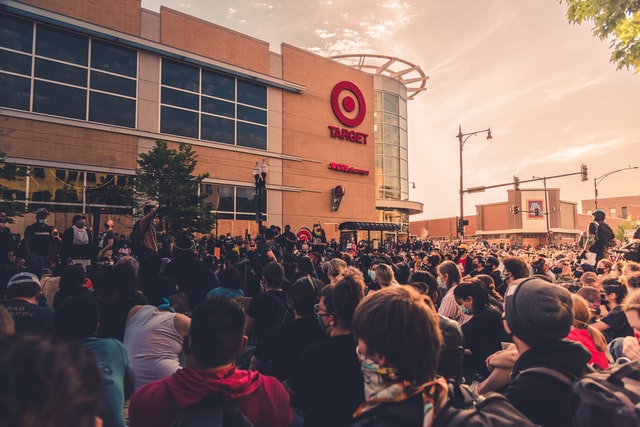
Photo by Max Bender on Unsplash
Does The Company Have Rising and Recurring Revenues?
NO. Target is a basic general retailer where sales are transactional and have no structurally recurring nature. Up until 2020, revenue growth and comparable store sales had turned negative in both 2018 and 2019. The COVID pandemic and the fact that Target's stores remained open (and offered a solid online presence) boosted sales close to 20% during 2020. But this is unlikely to last as life turns back towards more pre-pandemic patterns. Target's store base growth has been anemic at under 0.5% annually since 2011, and with the company already exiting Canada, further meaningful expansion seems unlikely. While Target's e-commerce arm has been growing nicely, many of these sales will come at the expense of in-store sales, limiting their overall impact on top line growth.
Does The Company Have Durable Competitive Advantages?
NO. General retail is as competitive a business as there is, with the only real durable moat being enormous economies of scale. Target is less than 1/4th the size of Walmart and 1/3rd the size of Amazon, by sales. Its e-commerce efforts, while improving, also lag far behind each of these primary competitors. Target also does not have a particularly differentiated business model that protects its sales. Consumers can find the same products in any number of competing retailers, both offline and online. We don't see any durable moat here.
GreenDot Rating: RED

Target's stock performed well through the 2020 COVID pandemic, but this still looks like a RED (unattractive) business long-term. The category is highly competitive, Target is not a category leader, the business model and product assortment is not differentiated in any way, and the recent revenue growth bump is very likely short-lived and could be followed by a few years of declines from this base. There is little store growth potential and e-commerce gains will partially take away from any same-store sales growth. From a business standpoint, it does not look like an attractive investment option over the long-term.



Comments
Log in or sign up to join the conversation.